Representative John Motley Morehead
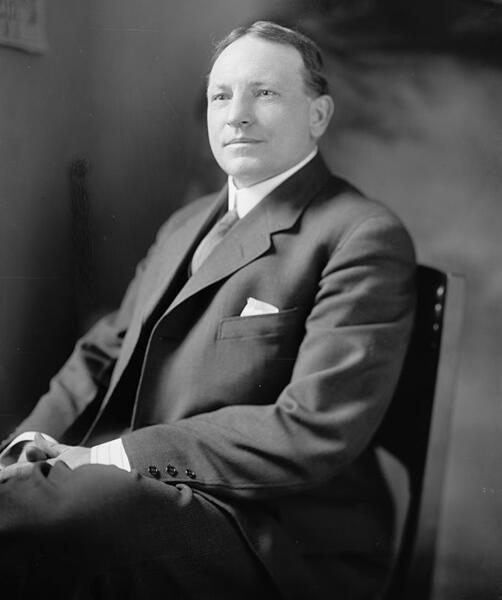
Here you will find contact information for Representative John Motley Morehead, including email address, phone number, and mailing address.
| Name | John Motley Morehead |
| Position | Representative |
| State | North Carolina |
| District | 5 |
| Party | Republican |
| Status | Former Representative |
| Term Start | March 15, 1909 |
| Term End | March 3, 1911 |
| Terms Served | 1 |
| Born | July 20, 1866 |
| Gender | Male |
| Bioguide ID | M000940 |
About Representative John Motley Morehead
John Motley Morehead (July 4, 1796 – August 27, 1866) was an American lawyer, legislator, governor, and later a Representative to the Provisional Confederate Congress, who became known as “the Father of Modern North Carolina.” He was born in Pittsylvania County, Virginia, the son of Obedience (Motley) Morehead and John Morehead. When he was two years old, his parents moved the family to Rockingham County, North Carolina, where he spent his childhood and early youth. This move into the Piedmont region of North Carolina would shape his lifelong identification with the state and his later efforts to modernize its institutions and infrastructure.
Morehead received a private education, including instruction from tutors in and around Greensboro, North Carolina. He later enrolled at the University of North Carolina at Chapel Hill, where he became a member of the Dialectic and Philanthropic Societies, organizations that fostered debate, oratory, and civic engagement among students. He graduated from the university in 1817. After completing his formal studies, he read law under the prominent North Carolina jurist and reformer Archibald Murphey. In 1819, he was admitted to the North Carolina bar and began practicing law in Wentworth, Rockingham County, establishing himself as a capable attorney and entering the public life of the state.
Morehead’s political career began in the North Carolina House of Commons, where Rockingham County voters first elected him to serve in 1821. By the mid-1820s he had shifted his base of representation to Guilford County, whose voters elected him to the House of Commons beginning in 1826 and returned him for a second term. Over the next two decades, he emerged as a leading advocate of internal improvements and constitutional reform. In 1835, he served as a delegate to the North Carolina Constitutional Convention, where he supported representation based on population, a position that favored the more lightly enslaved western counties and sought to rebalance political power within the state. His work at the convention reflected his broader commitment to modernization and more equitable political structures.
In 1840, North Carolina voters elected Morehead governor, and he was inaugurated in 1841 as the 29th governor of the state, becoming the first to be sworn in at the new State Capitol in Raleigh. Serving two consecutive terms from 1841 to 1845, he pursued an ambitious program of reform and development that earned him the title “the Father of Modern North Carolina.” He strongly supported the emerging statewide public school system, advocated the extension of railroad lines, and promoted river and harbor improvements, canals, and turnpikes to stimulate commerce and connect the state’s regions. Although the Democratic majority in the state legislature blocked or limited many of his proposals, he secured important advances, including support for internal improvements and, in his final year in office, the creation of a school for the deaf, later named in his honor.
After leaving the governorship in 1845, Morehead returned to his home, Blandwood, in Greensboro, North Carolina. Blandwood, originally a modest farmhouse, had been transformed into an Italianate villa by New York architect Alexander Jackson Davis and became a social and political center in the Piedmont. There, Morehead entertained leading figures of his day, including social reformer Dorothea Dix. He continued to champion economic development, helping to raise private funds to complement $2 million in state-authorized capital for what became the North Carolina Railroad. In 1854, he was chosen as the railroad’s first president, and in recognition of his role in its creation, the coastal terminus established in 1860 was named Morehead City, North Carolina. He also invested in manufacturing by building a cotton mill in Leaksville (in present-day Rockingham County) and served on the Board of Trustees of the University of North Carolina, maintaining close ties to his alma mater.
Morehead returned to elective office in 1858, when he once again took a seat in the North Carolina House of Commons. As the sectional crisis deepened, he participated in efforts to avert armed conflict. In 1861, he represented North Carolina at a peace conference intended to preserve the Union and avoid war. When those efforts failed and North Carolina seceded from the United States later in 1861, Morehead aligned with the Confederacy. During the Civil War, he served as a Representative from North Carolina to the Provisional Confederate Congress, taking part in the legislative process of the nascent Confederate government and representing the interests of his state during a critical and turbulent period in American history.
In his later years, Morehead continued to be regarded as a central figure in North Carolina’s political and economic transformation. He died on August 27, 1866, at Rockbridge Springs, Virginia, a popular resort area where he had gone for his health. His remains were returned to North Carolina and interred in the Old First Presbyterian Church Cemetery, now part of the Greensboro Historical Museum complex in Greensboro. His legacy extended through his descendants and the institutions that bore his name. His grandson, John Motley Morehead III, who served as United States Ambassador to Sweden from 1930 to 1933, bequeathed approximately $130 million to the University of North Carolina, commissioned the university’s planetarium, and funded the John Motley Morehead Foundation. His granddaughter Lily Morehead Mebane received decorations from the governments of France and Serbia for her relief work after World War I and later served two terms in the North Carolina state legislature. His great-grandson Gordon Johnston was awarded the Medal of Honor. Governor Morehead School, a state school for the blind, and the city of Morehead City both commemorate his name, underscoring his enduring influence on North Carolina’s public life and development.