Representative John Morrissey
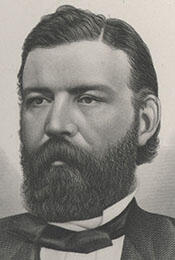
Here you will find contact information for Representative John Morrissey, including email address, phone number, and mailing address.
| Name | John Morrissey |
| Position | Representative |
| State | New York |
| District | 5 |
| Party | Democratic |
| Status | Former Representative |
| Term Start | March 4, 1867 |
| Term End | March 3, 1871 |
| Terms Served | 2 |
| Born | February 12, 1831 |
| Gender | Male |
| Bioguide ID | M001001 |
About Representative John Morrissey
John Morrissey (February 12, 1831 – May 1, 1878), also known as “Old Smoke,” was an Irish American bare-knuckle boxing champion, professional gambler, and Democratic politician who rose from street fighting and organized crime to serve as a United States Representative from New York from 1867 to 1871 and later as a New York State senator. Backed initially by the Tammany Hall political machine and later its determined opponent, he became a prominent and controversial figure in mid‑nineteenth‑century American politics.
Morrissey was born on February 12, 1831, in Templemore, County Tipperary, Ireland. His family emigrated to the United States when he was a child, settling first in Troy, New York, an industrial city on the Hudson River. Growing up in a working‑class immigrant environment, he received little formal education and instead entered the workforce at an early age, taking on a variety of manual jobs. In Troy he became known for his physical toughness and involvement in street brawls, experiences that laid the foundation for his later career in prizefighting and for his reputation as a formidable enforcer in the rough world of antebellum urban politics.
By the early 1850s Morrissey had drifted into the world of professional fighting and gambling, and he spent a period in California during the Gold Rush era. It was there that he first appeared in a professional prizefighting ring. On August 31, 1852, at Mare Island, California, he defeated George Thompson in the 11th round, earning a purse of $5,000, a very substantial sum for the time. This success encouraged him to return to New York to challenge the reigning American boxing champion, “Yankee Sullivan.” Because prizefighting was illegal in most jurisdictions, bouts were often held in remote locations under the London Prize Ring Rules, which governed conduct in the ring, prohibited striking a downed opponent or grasping below the waist, and allowed fights to continue for many rounds until a fighter could not come to scratch within thirty seconds.
Articles for the Sullivan–Morrissey fight were signed on September 1, 1853, with $1,000 a side at stake and the London Prize Ring Rules explicitly adopted. The contest took place on October 12, 1853, at Boston Corners, then a remote hamlet in Massachusetts effectively beyond the reach of local authorities, and drew an estimated crowd of more than 3,000 spectators. Sullivan dominated much of the fight, but Morrissey held his ground through 37 rounds. A melee erupted when a struggle on the ropes spilled into the crowd, and a general riot ensued. The referee ultimately awarded the victory to Morrissey, variously reported as being due to a foul blow by Sullivan, Sullivan’s failure to come to time, or his stepping out of the ring before a decision was rendered. The bout lasted 55 minutes. Morrissey was later indicted by a Berkshire County grand jury for his role in the illegal fight and, upon surrendering to the court, was fined $1,200.
Morrissey’s success in the ring coincided with his deepening involvement in New York City’s violent political underworld. He became associated with Democratic organizations and developed a bitter rivalry with William Poole, known as “Bill the Butcher,” the leader of the nativist Bowery Boys and an enforcer for the anti‑immigrant Know‑Nothing Party. On August 8, 1854, a much‑publicized fight between Morrissey and Poole took place at the corner of West and Amos Streets in New York. Contemporary accounts reported that after some sparring, Poole threw Morrissey to the ground and, “pounding, gouging, bucking and biting,” forced him to concede the fight. The feud escalated, and in February 1855 two of Morrissey’s associates, Lew Baker and Jim Turner, shot and fatally wounded Poole at Stanwix Hall, a saloon on Broadway. Morrissey and Baker were indicted for murder, but after three trials ended in hung juries, the charges were dropped.
Although he had apparently retired from prizefighting and returned to Troy, Morrissey was drawn back into the ring by the emergence of another Troy native, John C. Heenan, who had built a reputation as a formidable fighter after time in California. In December 1857 Heenan appeared in New York in a sparring exhibition, and by July 1858 a prizefight between Morrissey and Heenan was arranged for October 20, 1858, with the venue set in Canada to evade American law. The bout was held on Long Point Island, Ontario. Heenan, hampered by a leg sore that disrupted his training, started strongly and was said to have the better of the first three rounds, but he tired as the fight wore on. By the 11th and final round he was unable to defend himself, and Morrissey knocked him out, thereby retaining his title. Morrissey retired from active boxing in 1859, after which Heenan claimed the championship. Though no longer fighting, Morrissey remained closely connected to the sport. In the spring of 1860 he traveled to England to witness the celebrated contest between Heenan and English champion Tom Sayers. Arriving in London on March 26, 1860, he visited the offices of Bell’s Life in London and Sporting Chronicle, wagered £600 on Sayers, and visited Sayers at his training quarters, where he was reported to have offered “valuable advice.” On his return voyage later that spring, he stopped briefly at Queenstown, County Cork, where he attracted a large crowd of admirers and was presented with a blackthorn stick grown in Tipperary.
Parallel to his fighting career, Morrissey became a successful professional gambler and entrepreneur. During the 1850s and 1860s he owned and operated gambling houses in New York City, enterprises that brought him substantial wealth and influence but also entangled him in criminal indictments and public controversy. His reputation as a tough enforcer and his connections in the city’s Irish immigrant neighborhoods made him a valuable ally to Democratic political organizations, especially Tammany Hall, which relied on such figures to mobilize voters and maintain control over local politics. By the mid‑1860s he had emerged as a powerful political figure in his own right.
In 1866 Morrissey ran for Congress from New York with the backing of Tammany Hall, despite opponents’ efforts to highlight his numerous indictments and occasional convictions for various crimes. He was elected as a Democrat to the Fortieth and Forty‑first Congresses and served as a Representative from New York from March 4, 1867, to March 3, 1871. His tenure in the House of Representatives coincided with the turbulent Reconstruction era, a significant period in American history marked by debates over civil rights, the reintegration of the former Confederate states, and the balance of power between the federal government and the states. As a member of the House, Morrissey participated in the legislative process, represented the interests of his New York constituents, and was particularly known for advocating on behalf of Irish Americans. Contemporary accounts credited him with using strong‑arm tactics to advance his legislative aims, and he was reputed to have boasted that he could “lick any man in the House,” a reflection of both his physical confidence and his combative political style.
After leaving Congress in 1871, Morrissey remained active in New York politics but gradually broke with his former allies in Tammany Hall as he opposed the excesses and corruption associated with the machine, particularly under the leadership of William M. “Boss” Tweed. Recasting himself as a reform‑minded Democrat, he ran for the New York State Senate as an anti‑Tammany candidate and was elected, serving from 1876 until his death in 1878. In the State Senate he continued to wield considerable influence, drawing on his long experience in urban politics and his base among working‑class and immigrant voters. His later political career also intersected with his business interests, which included a leading role in the development of Saratoga Springs, New York, as a resort and racing center.
Morrissey died on May 1, 1878, in Saratoga Springs, New York, while still serving as a Democratic State Senator. By the time of his death he had transformed himself from an Irish immigrant street fighter and bare‑knuckle champion into a prominent, if controversial, public figure who had served two terms in the United States House of Representatives and held high office in New York State government. His life, marked by prizefighting triumphs, underworld entanglements, entrepreneurial ventures, and significant political achievements, reflected both the opportunities and the turbulence of nineteenth‑century American urban society.