Representative John McKenzie Moss
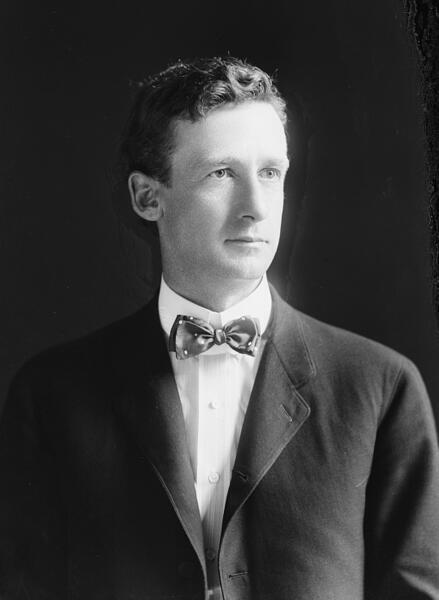
Here you will find contact information for Representative John McKenzie Moss, including email address, phone number, and mailing address.
| Name | John McKenzie Moss |
| Position | Representative |
| State | Kentucky |
| District | 3 |
| Party | Republican |
| Status | Former Representative |
| Term Start | December 2, 1901 |
| Term End | March 3, 1903 |
| Terms Served | 1 |
| Born | January 3, 1868 |
| Gender | Male |
| Bioguide ID | M001036 |
About Representative John McKenzie Moss
John McKenzie Moss (January 3, 1868 – June 11, 1929) was an American politician, lawyer, and federal judge who served as a U.S. Representative from Kentucky and later as a judge of the United States Court of Claims. A member of the Republican Party, he represented his Kentucky constituency in the United States House of Representatives during the early years of the twentieth century and subsequently held a significant judicial post in the federal government from 1926 until his death in 1929.
Moss was born on January 3, 1868. Details of his early life, including his family background and upbringing, are not extensively documented in the public record, but his later professional achievements indicate that he pursued a course of study that prepared him for the practice of law and public service. Coming of age in the post–Civil War era, he entered adulthood at a time when Kentucky and the nation were undergoing substantial political and economic change, conditions that would shape the environment in which he began his legal and political career.
By the closing years of the nineteenth century, Moss had established himself sufficiently in law and public affairs to enter electoral politics. As a member of the Republican Party in a border state with complex partisan alignments, he emerged as a figure capable of representing his district at the national level. His legal training and experience provided a foundation for his later legislative and judicial work, and his professional trajectory reflected the broader pattern of lawyers moving into elective office during this period in American history.
Moss served as a Representative from Kentucky in the United States Congress from 1901 to 1903, completing one term in the House of Representatives. His service in Congress is also recorded as spanning from 1902 to 1903, reflecting the specific dates of the congressional term in which he sat. During this time he participated in the legislative process at the federal level, representing the interests of his constituents and contributing to debates and decisions in the House. His tenure coincided with a significant period in American history marked by the presidency of Theodore Roosevelt, the rise of progressivism, and growing national attention to economic regulation and federal authority. As a Republican member of the House, Moss took part in the democratic process at a time when the role of the federal government was expanding and the United States was asserting a more prominent position on the world stage.
After leaving Congress, Moss continued his career in the law, a path that ultimately led to his appointment to the federal judiciary. His post-congressional years were devoted to legal practice and public service, and his experience as a legislator informed his understanding of federal statutes and governmental structure. This combination of legislative and legal expertise positioned him for higher responsibilities within the federal system and reflected the common progression of former members of Congress into judicial roles.
In 1926, Moss was appointed a judge of the United States Court of Claims, a specialized federal court in Washington, D.C., responsible for hearing monetary claims against the United States government. He served on that court from 1926 to 1929. In this capacity, he adjudicated complex disputes involving federal contracts, takings, and other claims arising under federal law, contributing to the development of jurisprudence governing the financial obligations of the United States. His work on the Court of Claims placed him at the intersection of law and public finance, requiring careful interpretation of statutes and precedents that defined the government’s liability to private parties.
John McKenzie Moss remained on the Court of Claims until his death on June 11, 1929. His career encompassed both legislative and judicial service at the national level, reflecting a lifetime of engagement with the institutions of the federal government. As a U.S. Representative from Kentucky from 1901 to 1903 and as a judge of the Court of Claims from 1926 to 1929, he participated in shaping federal policy and law during a transformative era in American history.