Senator John Peter Gabriel Muhlenberg
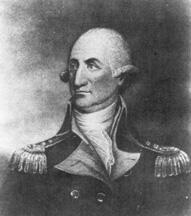
Here you will find contact information for Senator John Peter Gabriel Muhlenberg, including email address, phone number, and mailing address.
| Name | John Peter Gabriel Muhlenberg |
| Position | Senator |
| State | Pennsylvania |
| Party | Democratic |
| Status | Former Representative |
| Term Start | March 4, 1789 |
| Term End | December 31, 1801 |
| Terms Served | 4 |
| Born | October 1, 1746 |
| Gender | Male |
| Bioguide ID | M001066 |
About Senator John Peter Gabriel Muhlenberg
John Peter Gabriel Muhlenberg (October 1, 1746 – October 1, 1807) was an American clergyman, military officer, and politician who served during the American Revolutionary War and later in the United States Congress. A member of Pennsylvania’s prominent Muhlenberg family political dynasty, he became a respected figure in the newly independent United States as a Lutheran minister, Revolutionary War general, member of the United States House of Representatives, and United States Senator from Pennsylvania. He served as a Senator from Pennsylvania in the United States Congress from 1789 to 1801 according to contemporary accounts, and was more precisely elected to the United States Senate in February 1801, resigning on June 30 of that same year. Over the course of four terms in Congress, he was associated with the emerging Republican (often called Democratic-Republican) movement and is described in later sources as a member of the Democratic Party, contributing to the legislative process during a formative period in the nation’s history.
Muhlenberg was born on October 1, 1746, in Trappe, in the Province of Pennsylvania, to Anna Maria Weiser and Henry Melchior Muhlenberg. His mother was the daughter of Conrad Weiser, a noted Pennsylvania Dutch pioneer and diplomat, and his father was a German Lutheran pastor who became a leading figure in organizing Lutheran congregations in colonial America. Raised in a family that would produce several influential churchmen and politicians, including his brother Frederick Augustus Muhlenberg, later the first Speaker of the U.S. House of Representatives, John Peter Gabriel grew up in a milieu that combined religious leadership, German-American community life, and public service.
In 1763, Muhlenberg and his brothers Frederick Augustus and Gotthilf Henry Ernst were sent to Halle in Germany, where they were educated in Latin at the Francke Foundations, a center of Pietist Lutheran learning. In 1767 he left school to begin work as a sales assistant in Lübeck, but he returned to Pennsylvania the same year. He briefly served in the British Army’s 60th Regiment of Foot and for a short time in the German dragoons, where his bold demeanor earned him the nickname “Teufel Piet” (“Devil Pete”). Returning to Philadelphia in 1767, he received a classical education at the Academy of Philadelphia, the institution that later became the University of Pennsylvania. He was ordained in 1768 and took charge of a Lutheran congregation in Bedminster, New Jersey, before moving to Woodstock in Dunmore County, Virginia, to minister to a largely German-speaking Lutheran community.
In 1772, Muhlenberg traveled to England and was ordained into the priesthood of the Anglican Church, a requirement for serving a congregation in Virginia, where the Anglican Church was the established church, even though he continued to lead a Lutheran flock. In addition to his pastoral duties, he quickly emerged as a political leader in the Shenandoah Valley. He headed the Committee of Safety and Correspondence for Dunmore County and was elected to the Virginia House of Burgesses in 1774. He also served as a delegate to the First Virginia Convention, aligning himself with the Patriot cause as tensions with Great Britain escalated. Like many Virginia planters of his time, Muhlenberg owned slaves, a fact that underscores the contradictions between the ideals of liberty advanced in the Revolution and the realities of the social order in which he lived.
With the outbreak of the American Revolutionary War in 1775 and the formation of the Continental Army, Muhlenberg was authorized to raise and command the 8th Virginia Regiment of the Virginia Line as its colonel, a role for which he was likely chosen because of his influence among German-American settlers. At twenty-nine, he was the youngest of the eight colonels in the Virginia Line; only Patrick Henry had less formal military experience. A famous but partly legendary account, first recorded by his great-nephew in the mid-nineteenth century, describes a dramatic sermon delivered on January 21, 1776, in the Lutheran church at Woodstock. Preaching from Ecclesiastes 3—“To every thing there is a season”—Muhlenberg is said to have read the words “a time of war, and a time of peace,” then declared, “And this is the time of war,” removed his clerical robe to reveal a colonel’s uniform, and immediately led men from the congregation to enlist. While historians accept his central role in raising and leading the 8th Virginia Regiment, they have questioned the literal accuracy of this sermon narrative, noting the lack of contemporary documentation.
Muhlenberg’s regiment was first deployed to the South to help defend the coasts of South Carolina and Georgia. In early 1777, the 8th Virginia was ordered north to join General George Washington’s main army. Muhlenberg was promoted to brigadier general of the Virginia Line and commanded a brigade in Major General Nathanael Greene’s division during the winter encampment at Valley Forge in 1777–1778. His headquarters there, designated by Washington, was the Moore–Irwin House in what is now King of Prussia, Pennsylvania, a property Washington later noted visiting during a break from the Constitutional Convention in 1787. Muhlenberg saw action in major engagements including the Battles of Brandywine, Germantown, and Monmouth. After Monmouth, most of the Virginia Line was sent to the southern theater, while Muhlenberg was assigned to organize and direct the defense of Virginia, relying largely on militia forces.
At the decisive Siege of Yorktown in 1781, Muhlenberg commanded the First Brigade in the Marquis de Lafayette’s Light Division. His brigade formed part of the Corps of Light Infantry, composed of light companies drawn from line regiments of Massachusetts, Connecticut, New Hampshire, Rhode Island, and New Jersey. Positioned on the right flank, his troops helped man the siege trenches that brought American artillery closer to British General Charles Cornwallis’s defenses. During the climactic night assault of October 14, 1781, American Lieutenant Colonel Alexander Hamilton and French Lieutenant Colonel Jean-Joseph Sourbader de Gimat led the bayonet attack that stormed Redoubt No. 10, an operation supported by the light infantry forces to which Muhlenberg’s brigade belonged. At the close of the war in 1783, he was brevetted major general in recognition of his service and settled in Montgomery County, Pennsylvania. He was also an original member of the Pennsylvania Society of the Cincinnati, an organization of Continental Army officers formed to preserve the memory and principles of the Revolution.
Following his return to civilian life, Muhlenberg entered Pennsylvania state politics. In 1784 he was elected to the Supreme Executive Council of the Commonwealth of Pennsylvania, the state’s chief executive body under its 1776 constitution. On October 31, 1787, he was chosen Vice-President of the Council, a position roughly analogous to that of lieutenant governor, serving under President Benjamin Franklin. His tenure ended under somewhat mysterious circumstances. On October 14, 1788, the Council’s minutes recorded that Muhlenberg had left Philadelphia without tendering his resignation; a messenger was dispatched to obtain it, and that evening, after the resignation was returned, the Council met at Franklin’s home and elected David Redick as his successor.
Muhlenberg’s national legislative career began with his election as one of Pennsylvania’s at-large representatives to the First United States Congress, serving from 1789 to 1791, a period described in some later accounts as service in the Senate but in fact conducted in the House of Representatives. He returned to the House as an at-large representative in the Third Congress (1793–1795), during which his brother Frederick served as Speaker of the House. In 1793 he was recognized as the first founder of the Democratic-Republican Societies in Pennsylvania, organizations that supported the emerging Jeffersonian Republican cause and opposed Federalist policies. He ran unsuccessfully as the Anti-Administration (anti-Federalist) nominee in the 1795 United States Senate election in Pennsylvania. Muhlenberg later represented Pennsylvania’s 4th congressional district as a Republican in the Fifth Congress from 1799 to 1801, having previously campaigned for that seat in 1796. Over these four terms in Congress, he participated in the early legislative debates that shaped the federal government and represented the interests of his Pennsylvania constituents during a critical era in American political development.
In February 1801, the Pennsylvania legislature elected Muhlenberg to the United States Senate on a second ballot, defeating George Logan. Although some later summaries describe him as serving in the Senate from 1789 to 1801, his actual Senate tenure was brief; he resigned on June 30, 1801. That same year, President Thomas Jefferson appointed him supervisor of revenue for Pennsylvania, reflecting Jefferson’s confidence in his administrative abilities and Republican loyalty. In 1802, Jefferson further appointed him customs collector for the port of Philadelphia, one of the most important federal revenue posts in the nation. Muhlenberg held this office until his death, overseeing customs operations in a major commercial center during the early years of the Jefferson and Madison administrations.
Muhlenberg also remained active in Pennsylvania’s partisan politics. On August 3, 1805, he addressed a letter to German-speaking residents of Northampton and Berks counties in support of incumbent Governor Thomas McKean, who was seeking reelection with Federalist backing amid a bitter split within the state’s Republican Party. Although McKean’s opponent, Simon Snyder, was of German descent, Muhlenberg warned that Snyder’s victory would empower the party’s radical Democratic faction and its calls for a constitutional convention to increase legislative power at the expense of the governor and judiciary, which he argued would lead to instability and “anarchy.” McKean’s strong margins in Northampton and Berks counties—6,772 votes to Snyder’s 3,216—were decisive in his narrow statewide victory of 43,644 to 38,483, demonstrating Muhlenberg’s continuing influence among Pennsylvania’s German-American electorate.
On November 6, 1770, Muhlenberg married Anna Barbara “Hannah” Meyer, the daughter of a successful potter. The couple had six children. Among them was Francis Swaine Muhlenberg (1795–1831), who later served as a U.S. Representative from Ohio. Francis married Mary Barr Denny (1806–1893) in 1831, shortly before his death in December of that year; after his death, his widow married Richard Hubbell Hopkins. Through his descendants and his wider family network, John Peter Gabriel Muhlenberg helped establish the Muhlenbergs as one of the early republic’s notable political dynasties, with family members serving in various ecclesiastical and civil offices across several states.
On his sixty-first birthday, October 1, 1807, Muhlenberg died at Gray’s Ferry, Pennsylvania, while still serving as customs collector for Philadelphia. He was buried at Augustus Lutheran Church in his native Trappe, Pennsylvania, returning in death to the community where his family’s American story had begun. His memory has been preserved in numerous memorials and place names. Muhlenberg County, Kentucky, bears his name, reflecting the westward spread of his reputation. A memorial to him stands on Connecticut Avenue in Washington, D.C., and another is located behind the Philadelphia Museum of Art. Two statues of him are situated in front of the Shenandoah County Courthouse in Woodstock, Virginia, where the Emmanuel Lutheran congregation preserves communion vessels, a baptismal font, and an altar cloth associated with his ministry. Peter Muhlenberg Middle School in Shenandoah County, Virginia, and Muhlenberg College in Allentown, Pennsylvania—which displays a statue of him in front of the Haas College Center—also commemorate his legacy as clergyman, soldier, and statesman of the Revolutionary generation.