Representative John L. Napier
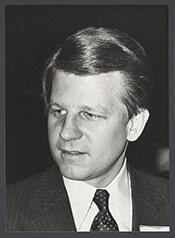
Here you will find contact information for Representative John L. Napier, including email address, phone number, and mailing address.
| Name | John L. Napier |
| Position | Representative |
| State | South Carolina |
| District | 6 |
| Party | Republican |
| Status | Former Representative |
| Term Start | January 5, 1981 |
| Term End | January 3, 1983 |
| Terms Served | 1 |
| Born | May 16, 1947 |
| Gender | Male |
| Bioguide ID | N000005 |
About Representative John L. Napier
John Light Napier (born May 16, 1947) is an American lawyer, jurist, and politician who served one term in the United States House of Representatives from 1981 to 1983. A member of the Republican Party, he represented South Carolina’s 6th congressional district and later served as a judge of the United States Court of Federal Claims from 1986 to 1989. Over the course of his career, he has been active in private law practice, congressional service, federal judicial service, and governmental relations at the national level.
Napier was born in Blenheim, Marlboro County, South Carolina, and attended public schools in Marlboro County before pursuing higher education. He graduated from Davidson College in Davidson, North Carolina, in 1969. He then attended the University of South Carolina School of Law, where he earned a Juris Doctor in 1972. During this period, he also served in the United States Army Reserve, attaining the rank of first lieutenant; he continued his service in the Army Reserve until 1977, balancing his military obligations with his legal education and early professional responsibilities.
In 1972, Napier was admitted to the bar and began his legal and legislative career in Washington, D.C. That same year he became a legislative assistant to United States Senator Strom Thurmond of South Carolina. While on Thurmond’s staff, he served as minority counsel on the Senate Subcommittee on Administrative Practices and Procedures and on the Senate Committee on Veterans’ Affairs, gaining experience in administrative law and veterans’ policy. In 1976, he was promoted to Senator Thurmond’s chief legal assistant and legal counsel. The following year, in 1977, he was named Chief Republican Counsel to the Senate Select Committee on Official Conduct, which was charged with drafting the initial Code of Ethics and Financial Disclosure requirements for the United States Senate, a foundational effort in modernizing congressional ethics standards. In 1978, Napier returned to South Carolina and entered the private practice of law in Bennettsville, a practice he maintained until 1980.
In 1980, Napier was elected as a Republican to the 97th United States Congress from South Carolina’s 6th congressional district, serving from January 3, 1981, to January 3, 1983. His service in Congress occurred during a significant period in American history, early in the administration of President Ronald Reagan, when major debates over economic policy, agriculture, and veterans’ affairs were underway. As a member of the House of Representatives, John Light Napier participated in the democratic process and represented the interests of his constituents. He was named a Deputy Whip in the House Republican leadership and served on the Committee on Agriculture and the Committee on Veterans’ Affairs. Working closely with his congressional neighbor, Representative Charlie Rose, a Democrat from North Carolina, Napier was widely credited with coalition building and helping to craft bipartisan legislation for the tobacco stabilization program, a measure considered vital to the agricultural community of the southeastern United States. He sought reelection in 1982 but was defeated by Democrat Robin Tallon, concluding his single term in the House.
Following his congressional service, Napier returned to legal work and soon reentered federal public service in a judicial capacity. In 1986, President Ronald Reagan nominated him to serve as a judge on the United States Court of Federal Claims, a specialized federal court with jurisdiction over monetary claims against the United States. He was unanimously confirmed by the United States Senate and took up his duties on the court. At the request of the Chief Judge and his colleagues, Napier chaired a special committee of the judges that led to a restructuring of the clerk’s office and the financial office of the Court of Federal Claims, contributing to administrative reforms and improved court operations. He resigned from the court in 1989 and returned to private practice.
In the years after leaving the bench, Napier continued to play a role in congressional oversight and investigative matters. In 1992, he served as special outside counsel to the House Committee on House Administration in its investigation of the Congressional Post Office scandal, assisting the committee in examining allegations of misconduct and administrative irregularities in the House Post Office. More broadly, in private practice he developed a national law and governmental relations practice based in Washington, D.C., and the Carolinas. His work has included representation of national associations, state and local government entities, private industry, and individual clients on a wide range of governmental, regulatory, and legislative issues, reflecting a career that has spanned legislative service, judicial responsibilities, and advocacy before federal and state institutions.