Representative John Parks Newsome
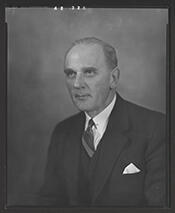
Here you will find contact information for Representative John Parks Newsome, including email address, phone number, and mailing address.
| Name | John Parks Newsome |
| Position | Representative |
| State | Alabama |
| District | 9 |
| Party | Democratic |
| Status | Former Representative |
| Term Start | January 6, 1943 |
| Term End | January 3, 1945 |
| Terms Served | 1 |
| Born | February 13, 1893 |
| Gender | Male |
| Bioguide ID | N000073 |
About Representative John Parks Newsome
John Parks Newsome (February 13, 1893 – November 10, 1961) was a Democratic member of the United States House of Representatives from Alabama who served one term in Congress from 1943 to 1945. His congressional service took place during World War II, a significant period in American history, during which he participated in the legislative process and represented the interests of his constituents in the Seventy-eighth Congress.
Newsome was born in Memphis, Tennessee, on February 13, 1893. He spent his youth in Thompsons Station, Tennessee, where he attended local schools. He later continued his education at Battle Ground Academy in nearby Franklin, Tennessee. These early years in rural Tennessee provided the foundation for his later pursuits in business, military service, and public life.
Following his graduation from Battle Ground Academy, Newsome entered the business world in 1912, working for a wholesale hardware company. In 1913 he became a salesman for the firm, a position he held until the United States entered World War I. On November 27, 1917, he received a commission as a first lieutenant in the United States Army. He was subsequently promoted to captain of Infantry in the Fifth Division and served in that capacity until April 29, 1919. After his discharge from military service, he returned to his sales position with the hardware company and remained there until 1920, when he advanced in the business community by becoming president and treasurer of an electrical company.
By the early 1940s, as World War II again drew the United States into global conflict, Newsome was active in Alabama’s wartime mobilization efforts. He served as chair of Appeals Board 2 of the State of Alabama Selective Service System from 1942 to 1943, overseeing matters related to military conscription and deferments. His role in the Selective Service System highlighted both his prior military experience and his standing in the community, and it preceded his entry into national elective office.
Newsome was elected as a Democrat to the Seventy-eighth Congress in November 1942 and served as a Representative from Alabama from January 3, 1943, to January 3, 1945. During his single term in the House of Representatives, he contributed to the legislative process at a time when Congress was deeply engaged with wartime policy, national defense, and economic measures related to World War II. A member of the Democratic Party, he participated in the democratic process and represented the interests of his Alabama constituents. He sought reelection in November 1944 but was unsuccessful, bringing his congressional career to a close after one term.
Following his service in Congress, Newsome returned to private life and continued to play a prominent role in Alabama’s business and civic affairs. He served as president of Associated Industries of Alabama from 1953 to 1955, a position that placed him at the center of efforts to promote industrial development and represent the interests of the state’s business community. In addition, he served as a director of Exchange Security Bank and of Alabama Gas Corporation, further underscoring his influence in the financial and utility sectors of the state’s economy.
John Parks Newsome died in Birmingham, Alabama, on November 10, 1961. He was interred in Elmwood Cemetery in Birmingham. His career encompassed military service in World War I, leadership in business and industry, participation in Alabama’s Selective Service administration during World War II, and a term in the United States House of Representatives during a critical era in American and world history.