Representative John Ignatius Nolan
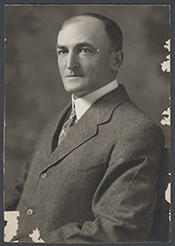
Here you will find contact information for Representative John Ignatius Nolan, including email address, phone number, and mailing address.
| Name | John Ignatius Nolan |
| Position | Representative |
| State | California |
| District | 5 |
| Party | Republican |
| Status | Former Representative |
| Term Start | April 7, 1913 |
| Term End | March 3, 1923 |
| Terms Served | 5 |
| Born | January 14, 1874 |
| Gender | Male |
| Bioguide ID | N000124 |
About Representative John Ignatius Nolan
John Ignatius Nolan (January 14, 1874 – November 18, 1922) was an American iron molder, trade union leader, and Republican politician who represented California’s 5th congressional district in the United States House of Representatives for five terms from 1913 to 1922. A prominent labor progressive and San Francisco’s first labor congressman in eight years, he was elected to a sixth consecutive term but died before the start of the new Congress, concluding a decade of service during a significant period in American political and social history.
Nolan was born in San Francisco, California, on January 14, 1874. He attended the public schools of San Francisco until the age of fourteen, when he left formal education to become an apprentice iron molder. Immersed early in the industrial workforce, he worked in the iron molding trade for many years, gaining firsthand experience of the conditions and concerns of working men in the city’s foundries. This background shaped his later career as a labor organizer and legislator and grounded his political identity in the interests of organized labor.
By the early twentieth century, Nolan had emerged as a leader in the labor movement. In 1907 he was elected secretary of the San Francisco Iron Molder’s Union, and later that same year he was chosen to serve on the executive board of the international union, extending his influence beyond the local level. From 1909 to 1911 he served as the San Francisco Labor Council’s legislative agent to the California Legislature, advocating for labor interests in state policymaking. An active member of the Union Labor Party, he was appointed in 1911 by Mayor P. H. McCarthy to the San Francisco Board of Supervisors. On the Board he served on the Finance Committee and chaired the Street Committee, participating in the municipal governance of a rapidly growing city. He ran for re-election to the Board of Supervisors in 1911 but was narrowly defeated. In 1912, he was elected secretary of the San Francisco Labor Council, further consolidating his role as a key representative of organized labor in the region.
Nolan entered national politics in the 1912 elections, when he was elected as a Bull Moose Republican to the 63rd United States Congress. He took his seat on March 4, 1913, as a Representative from California and would serve continuously until his death in 1922. A member of the Republican Party and a staunch progressive, he was reelected to the four succeeding Congresses, representing California’s 5th congressional district for five full terms. During his tenure, he participated actively in the legislative process and represented the interests of his San Francisco constituents, particularly organized labor. In the 66th Congress he served as chairman of the United States House Committee on Patents, and in the 67th Congress he was chairman of the United States House Committee on Labor, positions that gave him significant influence over legislation affecting industrial relations, workers’ rights, and intellectual property.
Nolan’s congressional record reflected both his progressive commitments and the complex political currents of his era. Initially opposed to American entry into World War I, he ultimately voted to declare war on the German Empire, aligning with the majority in support of U.S. participation in the conflict. After the war, he strongly supported American membership in the League of Nations, viewing international cooperation as a means to secure lasting peace. Domestically, he voted for the Immigration Act of 1917, which barred immigration from most of the Asia–Pacific region, and he voted against the Dyer Anti-Lynching Bill of 1922. He opposed the Volstead Act, which established Prohibition in the United States. His consistent advocacy for labor legislation earned him a 100 percent “labor record” from the American Federation of Labor in 1920, underscoring his standing as one of organized labor’s most reliable allies in Congress.
Among Nolan’s most notable legislative efforts was his work on minimum wage protections for federal employees. In 1916 he introduced H.R. 7625, a bill that would have established a $3 per day minimum wage for federal workers. The proposal was endorsed by both the American Federation of Labor and the National Federation of Federal Employees, reflecting broad support within the labor movement. Nevertheless, opponents in the House prevented the measure from coming to a vote. In 1918, U.S. Senator Hiram Johnson of California co-sponsored similar legislation in the Senate, and the proposal became known as the Johnson–Nolan Minimum Wage Bill. It passed the House in September 1918 but stalled in the Senate Committee on Education and Labor. Reintroduced two years later, the measure passed both the House and Senate, but in conference it was filibustered by Southern Democrats who opposed it in part because it would have paid African American employees the same wages as white employees. This prolonged struggle highlighted both Nolan’s commitment to improving conditions for federal workers and the racial and regional tensions that shaped labor policy in the early twentieth century.
John Ignatius Nolan continued to serve in the House of Representatives until his death on November 18, 1922. He had been elected to a sixth consecutive term and was preparing to continue his work in the 68th Congress when he died in office, bringing an abrupt end to a career that linked San Francisco’s labor movement to the national legislative arena. His decade in Congress, from 1913 to 1922, spanned the Progressive Era, World War I, and the contentious postwar years, and he remained throughout a significant figure in the representation of labor interests within the Republican Party and the United States Congress.