Senator John Norvell
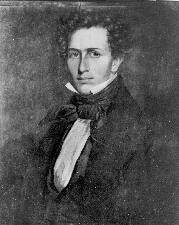
Here you will find contact information for Senator John Norvell, including email address, phone number, and mailing address.
| Name | John Norvell |
| Position | Senator |
| State | Michigan |
| Party | Democratic |
| Status | Former Representative |
| Term Start | September 4, 1837 |
| Term End | March 3, 1841 |
| Terms Served | 1 |
| Born | December 21, 1789 |
| Gender | Male |
| Bioguide ID | N000158 |
About Senator John Norvell
John Norvell (December 21, 1789 – April 24, 1850) was an American newspaper editor, lawyer, and Democratic politician who became one of the first United States Senators from Michigan. A co‑founder of the Pennsylvania Inquirer, later known as The Philadelphia Inquirer, the third-longest continually operating daily newspaper in the United States, he served a single term in the U.S. Senate from 1837 to 1841 and played a notable role in the early political and institutional development of Michigan.
Norvell was born on December 21, 1789, in Danville, Kentucky, then still a part of Virginia, where he attended the common schools. He was the son of Lieutenant Lipscomb Norvell, an officer of the Virginia Line in the American Revolutionary War, and Mary Hendrick. Lipscomb Norvell was taken prisoner when British forces captured Charleston, South Carolina, in 1781, and later became an original member of the Society of the Cincinnati. He was a descendant of Captain Hugh Norvell (1666–1719), one of the original trustees of Williamsburg, Virginia, and a vestryman at Bruton Parish Church. The family’s connections extended into later American history: Mary Norvell, Lipscomb’s daughter, married James Walker, who was the father of William Walker (1824–1860), the soldier of fortune and filibuster in Nicaragua in the 1850s. Lipscomb Norvell was later buried in the Nashville City Cemetery in Nashville, Tennessee, underscoring the family’s long-standing ties across the early American frontier.
From an early age, Norvell showed a strong interest in public affairs and the press. In 1807 he wrote to former President Thomas Jefferson seeking advice on how a newspaper “to be most extensively beneficial” should be conducted, explaining that he expected to become a publisher. Jefferson’s reply, which Norvell did not publish until after Jefferson’s death in 1826, combined recommendations of authors on government and history with a scathing critique of contemporary newspapers, lamenting their “abandoned prostitution to falsehood” and asserting that “nothing can now be believed which is seen in a newspaper.” Rather than discouraging him, Jefferson’s skepticism appears to have challenged Norvell to reform journalistic practice and to learn the printing trade. The original letter was reported to be in the possession of Norvell’s son as late as 1880, though it is now lost.
Norvell’s early career blended journalism, law, and military service. By 1813 he was editor of the Baltimore Whig, a position he held from 1813 to 1814. During this period he studied law, was admitted to the bar in 1814, and began a private legal practice in Baltimore. He enlisted as a private in the War of 1812 and took part in the Battle of Bladensburg. His wartime experiences, shared with his brother‑in‑law Spencer Houghton Cone, were later chronicled in Some Account of the Life of Spencer Houghton Cone, A Baptist Preacher in America. After the American defeat at Bladensburg, Norvell and Cone returned to Washington, D.C., to rescue their wives. Amid the panic following the British advance, they secured a wagon for Catherine Cone Norvell, who was eight months pregnant, and, after Cone’s feet became badly blistered, Norvell captured a pony from a nearby field so they could continue their escape. They briefly stopped at the White House for water, crossed the Potomac River, and, exhausted, fell asleep on a bag of clothes in a house three miles outside the city. During the night, Cone’s wife Amelia awoke and saw in the distance the burning White House and Capitol, an episode that linked Norvell personally to one of the most dramatic moments of the war.
After the War of 1812, Norvell resumed and expanded his work in journalism. From 1815 to 1817 he worked for the Baltimore Patriot, remaining there for nearly two years before abruptly returning to Kentucky, possibly at the encouragement of Henry Clay. In 1817 he took over the Lexington Kentucky Gazette, the state’s oldest newspaper, where he helped maintain Clay’s political support at home, though with little financial reward. Seeking more secure prospects, he again looked toward federal clerkships in Washington and soon moved east to Philadelphia. There he became editor of an anti‑Federalist newspaper and by 1819 joined the Franklin Gazette, which he published with Richard Bache Jr., brother of Benjamin Franklin Bache and grandson of Benjamin Franklin. The Franklin Gazette, which supported Jeffersonian politics, was issued from offices on Carpenter’s Lane near the Bank of the United States. In June 1829 Norvell and John R. Walker co‑founded the Pennsylvania Inquirer, the newspaper that would later become The Philadelphia Inquirer. Financial pressures forced them to sell the paper in November 1829 to Jesper Harding, but Norvell’s role as co‑founder permanently linked his name to one of the nation’s major newspapers. During these years he also held an appointment in the U.S. Department of the Treasury, secured through his friend Alexander J. Dallas, who had served as Secretary of the Treasury in the Madison administration.
Norvell’s political and journalistic loyalties to the Jacksonian wing of the Democratic‑Republican movement led to his relocation to the Old Northwest. In 1831 he moved to Michigan Territory after being appointed postmaster of Detroit by President Andrew Jackson, a patronage reward similar to those given to many printers who had supported the Republican (Democratic) cause. He served as postmaster of Detroit from 1831 until 1836. During this period the people of Michigan Territory approved a state constitution and elected state officials in 1835, even though admission to the Union was delayed until 1837 because of the boundary dispute with Ohio known as the Toledo War. Norvell was an influential and active participant in Michigan’s first constitutional convention in 1835 and was selected that year to be a United States Senator. Because Michigan had not yet been formally admitted as a state, he was granted only “spectator” status in Washington until the state’s admission.
Upon the admission of Michigan as a state into the Union in January 1837, Norvell entered the United States Senate as a member of the Democratic Party, aligned with the Jacksonian wing of the Democratic‑Republican tradition. He served one term in the 24th, 25th, and 26th Congresses, from January 26, 1837, to March 3, 1841. As one of Michigan’s first U.S. Senators, he represented the interests of the new state during a formative period in American history marked by economic upheaval, westward expansion, and intense partisan conflict. During his tenure he contributed to the legislative process and participated in the broader democratic debates of the era, helping to establish Michigan’s voice in the federal government. He did not seek reelection at the end of his term and returned to Detroit, where he resumed the practice of law. Concurrent with his early federal service, Norvell also supported the development of public institutions in the new state, serving as a member of the Board of Regents of the University of Michigan from 1837 to 1839.
After leaving the U.S. Senate, Norvell remained active in Michigan politics and public service. He was elected to the Michigan State Senate in 1841 and served in the Michigan State House of Representatives in 1842, continuing to shape state legislation during Michigan’s first decade of statehood. From 1846 to 1849 he held the position of United States district attorney in Michigan, further extending his career in federal service and the law. His combined roles as legislator, attorney, and former senator made him a prominent figure in the civic life of Detroit and the state at large.
Norvell’s private life was extensive and closely intertwined with the nation’s military and political history. He had ten sons by three wives. His third wife, Isabella Hodgkiss Freeman (1804–1873), was the adopted daughter of Tristram B. Freeman, a noted Philadelphia printer and founder of the Freeman auction house; her parents were Michael Hodgkiss and Sarah DeWeese. With Isabella, Norvell had two daughters and eight sons, one of whom fought in the Mexican–American War and six of whom fought in the American Civil War; all of these sons survived their wartime service. Colonel Freeman Norvell served as a Marine lieutenant and fought at the Battle of Chapultepec in September 1847 and later at the Battle of Gettysburg in 1863. Another son, Lieutenant Dallas Norvell, served on the staff of General George A. Custer. A further son, Colonel Stevens Thompson Norvell, became an officer in the 10th Cavalry “Buffalo Soldiers” after the Civil War and fought at the Battle of San Juan Hill alongside Theodore Roosevelt during the Spanish–American War. Norvell’s older daughter, Isabella Gibson Norvell, married Captain Angus Keith, a Great Lakes boat captain, and his younger daughter, Emily Virginia Norvell, married Henry Nelson Walker, a newspaper owner, lawyer, and attorney general of Michigan, extending the family’s connections into both maritime commerce and state politics.
John Norvell died in Detroit on April 24, 1850, the same day news arrived from Washington that he had been appointed United States consul to Turkey, an office he did not live to assume. He was interred in Elmwood Cemetery in Detroit. His legacy is reflected not only in his role as one of Michigan’s first U.S. Senators and as co‑founder of The Philadelphia Inquirer, but also in the enduring recognition of his name in Michigan; Norvell Township in Jackson County, Michigan, is named in his honor.