Senator John Holmes Overton
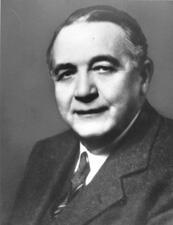
Here you will find contact information for Senator John Holmes Overton, including email address, phone number, and mailing address.
| Name | John Holmes Overton |
| Position | Senator |
| State | Louisiana |
| Party | Democratic |
| Status | Former Representative |
| Term Start | December 7, 1931 |
| Term End | January 3, 1949 |
| Terms Served | 4 |
| Born | September 17, 1875 |
| Gender | Male |
| Bioguide ID | O000146 |
About Senator John Holmes Overton
John Holmes Overton Sr. (September 17, 1875 – May 14, 1948) was an attorney and Democratic U.S. representative and U.S. senator from Louisiana who served in Congress during a significant period in American history. Born in Marksville in Avoyelles Parish, Louisiana, he was the youngest son of Judge Thomas Overton and the former Laura Waddill. He came from a prominent political and legal family: his great-uncle was General and U.S. Representative Walter Hampden Overton, and another distant relative was Thomas Overton Moore, the governor of Louisiana during the American Civil War. His nephew, Thomas Overton Brooks, later served as a U.S. representative from Louisiana’s Shreveport-based 4th congressional district.
Overton was educated in Louisiana’s leading institutions. He graduated from Louisiana State University in Baton Rouge in 1895 and went on to earn a law degree from Tulane University Law School in New Orleans in 1897. Admitted to the Louisiana bar in 1898, he quickly established himself in the legal profession. He opened a law practice in Alexandria, Louisiana, forming a partnership with four other attorneys, and also served as the city attorney. In addition to his legal work, he remained closely connected to his alma mater as a member of the LSU Board of Supervisors, reflecting his ongoing engagement with higher education and public service in the state.
In his personal life, Overton married Ada Ruth Dismukes of Natchitoches in 1905. The couple had four children: three daughters, Katharine (1910–1988), Ruth (1912–1973), and Mary Elizabeth (1916–1988), and a son, John H. Overton Jr. (1914–1946). While building his family and legal career, Overton also pursued political ambitions. In 1918 he ran for the United States Senate but was defeated by Edward J. Gay of Plaquemine in Iberville Parish, near Baton Rouge. Despite this early setback, he remained active in state politics and legal affairs.
Overton emerged as a staunch supporter of Governor Huey P. Long and became a key figure in Long’s political circle. He served as Long’s counsel during the impeachment proceedings against the governor in the spring of 1929, publicly defending Long’s efforts to challenge entrenched political interests in Louisiana. Explaining his support for Long, Overton declared that he had “supported every governor that has been elected in Louisiana for twenty-five years, all on promises that they have made to the people. Not one of them has been able or, if able, willing to carry out what was expected of him. The present governor is throwing out of office the clique that all other governors promised to throw out. He is backed to the wall in his efforts to redeem his campaign pledges.” This alignment with Long’s populist program helped define Overton’s political identity and set the stage for his own congressional career.
Overton entered national office in the early 1930s. In 1931 he was elected as a Democrat to the United States House of Representatives to fill the vacancy in Louisiana’s now-defunct 8th congressional district caused by the death of Representative James B. Aswell of Natchitoches. He served in the House from May 12, 1931, to March 4, 1933, completing less than a full term but gaining experience in federal legislative work and national politics. During this period he represented the interests of his central Louisiana constituents as the country grappled with the onset of the Great Depression.
In 1932, Overton sought higher office and challenged two-term U.S. Senator Edwin S. Broussard of New Iberia for the Democratic nomination, which at that time was effectively equivalent to election in Louisiana. Strongly endorsed by Huey Long, who would soon become his Senate colleague, Overton won a sweeping victory. Long later recalled in his autobiography that Overton carried all sixty-four parishes in the state, including Broussard’s home parish of Iberia, and noted that Overton had “always been very kind to me” and had allowed Long to speak at his meetings whenever he ran for the Senate. Broussard, despite the lopsided defeat, alleged fraud and voter irregularities, prompting a Senate investigating committee to hold months of hearings beginning in February 1933. Nonetheless, Overton was seated without opposition on March 4, 1933, the first day of the congressional session. He thus began a Senate career that, according to existing records, extended from 1931 to 1949 and encompassed four terms in office, though his final term was cut short by his death in 1948.
As a U.S. senator from Louisiana, Overton generally voted with the Conservative Coalition of Midwestern Republicans and Southern Democrats, much as Broussard had before him. He was re-elected in 1938 and again in 1944, following the long-standing pattern of strong support for incumbent Democratic senators in Louisiana. His committee assignments included Appropriations, Manufactures, Commerce, and Irrigation and Reclamation, positions that gave him influence over federal spending and economic and infrastructure policy. His chief legislative interests lay in flood control and river and harbor development, issues of particular importance to Louisiana and the Mississippi River basin. During his years in the Senate, he participated actively in the legislative process and represented the interests of his constituents through the New Deal era, World War II, and the early postwar period.
Overton attempted to withdraw from the 1944 re-election race, but his colleagues in the Senate urged him to continue. His Louisiana colleague, Senator Allen J. Ellender, circulated a letter encouraging Overton to run again, and the letter was signed by all of the Senate Democrats, reflecting the esteem in which he was held within the chamber. Overton continued his service until his health declined. His last term was cut short by his death at the National Naval Medical Center in Bethesda, Maryland, on May 14, 1948, while still in office. He was interred at Mount Olivet Cemetery in Pineville in Rapides Parish, Louisiana.
In the decades after his death, Overton’s legacy in Louisiana politics and public life continued to be recognized. In 1985, his former residence at 1128 8th Street in Alexandria was added to the National Register of Historic Places, commemorating his role in the state’s political history. In 1998, he was posthumously inducted into the Louisiana Political Museum and Hall of Fame in Winnfield. His career, marked by his alliance with Huey Long, his service in both the House of Representatives and the Senate, and his focus on infrastructure and flood control, placed him among the notable Louisiana political figures of the first half of the twentieth century.