Representative John Black Packer
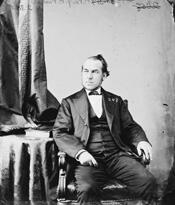
Here you will find contact information for Representative John Black Packer, including email address, phone number, and mailing address.
| Name | John Black Packer |
| Position | Representative |
| State | Pennsylvania |
| District | 14 |
| Party | Republican |
| Status | Former Representative |
| Term Start | March 4, 1869 |
| Term End | March 3, 1877 |
| Terms Served | 4 |
| Born | March 21, 1824 |
| Gender | Male |
| Bioguide ID | P000008 |
About Representative John Black Packer
John Black Packer (March 21, 1824 – July 7, 1891) was a Republican member of the U.S. House of Representatives from Pennsylvania who served four consecutive terms in Congress from 1869 to 1877. Over the course of his legislative career, he represented his Pennsylvania constituents during a pivotal era in American history, contributing to the work of the House of Representatives in the years following the Civil War.
Packer was born in Sunbury, Northumberland County, Pennsylvania, on March 21, 1824. He was initially educated as a private student and later attended the Sunbury Academy in his hometown. His early training combined formal instruction with practical exposure to the developing infrastructure of the Commonwealth, experiences that would later inform his professional and political interests.
From 1839 to 1842, Packer served with the corps of engineers employed by the Commonwealth of Pennsylvania in the survey and construction of public improvements. This work placed him at the center of the state’s efforts to expand and modernize its transportation and internal improvement systems. After completing his legal studies, he was admitted to the bar on August 6, 1844, and commenced the practice of law in Sunbury. In addition to his legal work, he became engaged in banking, establishing himself as a figure in both the legal and financial communities of his region.
Packer’s public career began in state legal service when he was appointed deputy attorney general of the Commonwealth of Pennsylvania, a position he held from 1845 to 1847. He then entered elective office as a member of the Pennsylvania House of Representatives, serving in the state legislature in 1850 and 1851. During this period he also participated in the development of the state’s transportation infrastructure, becoming one of the organizers of the Susquehanna Railroad Company in 1851, an endeavor that reflected his continuing interest in internal improvements and economic development.
A member of the Republican Party, Packer was elected to the United States House of Representatives as a Republican to the Forty-first Congress and was subsequently reelected to the three succeeding Congresses, serving from March 4, 1869, to March 3, 1877. His service in Congress thus spanned four terms during Reconstruction and the postwar transformation of the nation. As a member of the House of Representatives, he participated in the democratic process and represented the interests of his Pennsylvania constituents at a time of significant political, economic, and social change.
During his congressional tenure, Packer held important committee leadership positions. He served as chairman of the United States House Committee on Railways and Canals during the Forty-second Congress, where his background in engineering and railroad organization was particularly relevant to federal policy on transportation and internal improvements. In the Forty-third Congress, he served as chairman of the United States House Committee on Post Office and Post Roads, overseeing legislative matters related to the postal system and the development of the nation’s communications and transportation networks. Through these roles, he contributed to shaping federal infrastructure and communications policy during a critical period of national expansion.
After declining to be a candidate for renomination in 1876, Packer left Congress at the close of his fourth term in 1877 and returned to private life in Sunbury. He resumed the practice of law and continued his involvement in banking, remaining an active figure in the professional and economic life of his community. He lived in Sunbury until his death on July 7, 1891. John Black Packer was interred in Pomfret Manor Cemetery in Sunbury, Pennsylvania, closing a life marked by service in state government, leadership in infrastructure development, and four terms of national legislative service.