Senator John O. Pastore
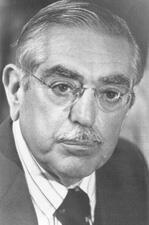
Here you will find contact information for Senator John O. Pastore, including email address, phone number, and mailing address.
| Name | John O. Pastore |
| Position | Senator |
| State | Rhode Island |
| Party | Democratic |
| Status | Former Representative |
| Term Start | January 3, 1949 |
| Term End | January 3, 1977 |
| Terms Served | 14 |
| Born | March 17, 1907 |
| Gender | Male |
| Bioguide ID | P000100 |
About Senator John O. Pastore
John Orlando Pastore (March 17, 1907 – July 15, 2000) was an American lawyer and Democratic politician who served as a United States Senator from Rhode Island from 1950 to 1976 and as the 61st governor of Rhode Island from 1945 to 1950. He was the first Italian American elected to the Senate and, with his election to a full term as governor in 1946, is widely recognized as the first Italian American elected governor in the United States. Over five terms in the Senate, he contributed to the legislative process during a significant period in American history, representing the interests of his Rhode Island constituents and playing a notable role in national debates on civil rights, social welfare, and communications policy.
Pastore was born in the Federal Hill neighborhood of Providence, Rhode Island, the second of five children of Michele and Erminia (née Asprinio) Pastore, both Italian immigrants. His father, a tailor who had moved from Potenza, Italy, to the United States in 1899, died when John was nine years old. To support the family, his mother worked as a seamstress and later married her late husband’s brother, Salvatore, who also operated a tailoring business. As a child, Pastore contributed to the family income by delivering coats and suits for his uncle and stepfather, working as an errand boy in a law office, and serving as a foot-press operator in a jewelry factory. These early experiences in a working-class immigrant household shaped his understanding of economic hardship and social mobility.
Pastore graduated with honors from Classical High School in Providence in 1925. After high school, he spent a year working as a claims adjuster for the Narragansett Electric Company, earning $15 a week. In 1927, he enrolled in an evening law course offered by Northeastern University at the YMCA in Providence. He received a Bachelor of Laws degree in 1931, equivalent to a modern Juris Doctor, and was admitted to the Rhode Island bar in 1932. He opened a law office in the basement of his family’s home, but the onset of the Great Depression made it difficult to attract clients, and he continued to balance legal work with the practical demands of supporting himself and his family.
Pastore entered public life in 1934, when he was elected as a Democrat to the Rhode Island House of Representatives. He was re-elected in 1936 and rose to become chairman of the House Corporations Committee. In 1937 he was appointed an assistant attorney general of Rhode Island, serving until 1938, when he lost the position after a Republican sweep of statewide offices. He remained active in public affairs as a member of the Providence Charter Revision Commission from 1939 to 1940. When the Democratic Party returned to power in 1940, he was again appointed assistant attorney general, this time in charge of the criminal calendar, a post he held until 1944. On July 1941, he married Elena Caito; they remained married until his death and had one son and two daughters.
In 1944, Pastore was elected lieutenant governor of Rhode Island. On October 6, 1945, he succeeded to the governorship when Governor J. Howard McGrath resigned to become U.S. Solicitor General under President Harry S. Truman. During his first year as governor, Pastore established a one-percent sales tax to stabilize state finances. In 1946 he was elected to a full term as governor, defeating Republican John G. Murphy by a margin of 54 percent to 46 percent. With this victory, he became the first Italian American elected governor in the United States; Charles Poletti of New York, an earlier Italian American governor, had acceded to office but was never elected in his own right. Pastore was re-elected in 1948, defeating Warwick mayor Albert P. Ruerat by 61 percent to 38 percent. As governor, he enacted Rhode Island’s first primary election law and a corporate income tax, created a program to combat water pollution, and secured a $20 million bonus for World War II veterans. As chairman of the New England Governors’ Conference, he advocated a uniform nationwide unemployment insurance tax, to be achieved either through federalization of the program or some form of federal reinsurance.
In 1950, Pastore was elected to the United States Senate in a special election to succeed J. Howard McGrath, who had resigned in 1949 to become United States Attorney General; Edward L. Leahy had held the seat during a 16‑month interim appointment. Pastore won re-election in 1952, 1958, 1964, and 1970, serving five full terms and remaining in office until his retirement in 1976. His 1970 campaign was particularly notable: he defeated Republican challenger John McLaughlin, then a Catholic priest and supporter of the Vietnam War, by a margin of 68 percent to 32 percent. McLaughlin later left the priesthood and became widely known as the host of the television program “The McLaughlin Group.” During his Senate career, Pastore participated actively in the democratic process at a time marked by the Cold War, the civil rights movement, and the expansion of federal social programs.
Pastore developed a reputation as a reliable supporter of civil rights and social welfare legislation. He voted in favor of the Civil Rights Acts of 1957 and 1960, the 24th Amendment to the U.S. Constitution abolishing the poll tax in federal elections, the landmark Civil Rights Act of 1964, the Voting Rights Act of 1965, the Medicare program, the Civil Rights Act of 1968, and the confirmation of Thurgood Marshall as the first African American justice of the U.S. Supreme Court. In 1971, he was one of twenty-five senators to co-sponsor the Health Security Act, a proposal for universal health coverage through a government-run health insurance program. In 1964, his prominence within the Democratic Party was underscored when he delivered the keynote address at the Democratic National Convention in Atlantic City, New Jersey, which nominated President Lyndon B. Johnson for a full term; the address later came to be known as “The Speech Heard Round the World.”
As chairman of the United States Senate Subcommittee on Communications, Pastore played a central role in shaping federal communications and broadcasting policy. He is particularly remembered for his participation in a 1969 hearing on a proposed $20 million grant to fund the Public Broadcasting Service (PBS) and the Corporation for Public Broadcasting, initially advanced under President Lyndon B. Johnson. President Richard Nixon, citing the financial pressures of the Vietnam War, sought to cut the funding to $10 million. During the hearing, Fred Rogers, host of “Mister Rogers’ Neighborhood,” testified in favor of the full $20 million appropriation, emphasizing the importance of social and emotional education provided by public television. Although Pastore was initially unfamiliar with Rogers’ work and was often described as gruff and impatient, he was visibly moved by the testimony, telling Rogers that his words had given him goose bumps. After Rogers recited the lyrics to his song “What Do You Do with the Mad that You Feel?,” Pastore responded, “I think it’s wonderful. I think it’s wonderful. Looks like you just earned the $20 million.” The following year’s appropriation increased PBS funding from $9 million to $22 million. Pastore’s public profile also made him a target for satire; he was mocked on the unaired final episode of “The Smothers Brothers Comedy Hour” in April 1969, where he was to be given a “Flying Fickle Finger of Fate” award, with Tommy Smothers criticizing Pastore’s complaints about “filth and gore” on television and his remarks that a French actress in a low-cut gown on “The Merv Griffin Show” should not have been allowed on television.
In 1976, after more than a quarter-century in the Senate, Pastore chose not to seek re-election and retired from Congress. In private life he remained active in business and civic affairs, serving on the board of directors of the Providence-based Columbus National Bank until its merger with Hospital Trust Bank in the late 1980s. He and his wife Elena raised three children and had seven grandchildren. The couple lived in Cranston, Rhode Island, where Pastore remained a respected elder statesman of the state’s Democratic Party. His contributions were recognized in various ways, including the naming of Pastore Hall at the University of Rhode Island, completed in 1953 and originally home to the university’s Department of Chemistry.
John Orlando Pastore died in Cranston on July 15, 2000, from kidney failure. His private funeral service was held there shortly after his death. He was remembered by colleagues and political leaders for his pioneering role as an Italian American in high office and for his long record of public service. Senator Edward M. “Ted” Kennedy eulogized him by recalling that President John F. Kennedy “had thought the world of him” and remarking that “John had a great heart,” a tribute that reflected both Pastore’s legislative legacy and his personal impact on those who served with him.