Representative John McPherson Pinckney
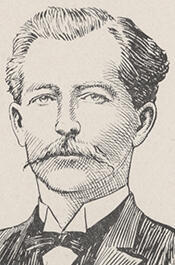
Here you will find contact information for Representative John McPherson Pinckney, including email address, phone number, and mailing address.
| Name | John McPherson Pinckney |
| Position | Representative |
| State | Texas |
| District | 8 |
| Party | Democratic |
| Status | Former Representative |
| Term Start | November 9, 1903 |
| Term End | March 3, 1907 |
| Terms Served | 2 |
| Born | May 4, 1845 |
| Gender | Male |
| Bioguide ID | P000356 |
About Representative John McPherson Pinckney
John McPherson Pinckney (May 4, 1845 – April 24, 1905) was a United States Representative from Texas who served in Congress from 1903 until his death in 1905. A member of the Democratic Party, he represented his Texas district during a significant period in American history and contributed to the legislative process during two terms in office. He was shot and killed in Hempstead, Texas, in 1905 while still in office, making him one of the members of Congress who died as a result of political violence.
Pinckney was born near Hempstead in the Republic of Texas and was raised on his family’s farm near Fields Store in what later became Waller County. His father, Thomas Shubrick Pinckney, was crippled in a farming accident, which forced the young John to assume most of the physical labor and responsibilities on the farm. His mother, Carolene (née Finney), died in 1861, leaving him the principal provider for his disabled father and three siblings. Despite these burdens, Pinckney enlisted in the Confederate States Army at age sixteen during the American Civil War. He served with the 4th Texas Infantry in General John Bell Hood’s famed Texas Brigade, one of the best-known Confederate units in the Army of Northern Virginia.
After the end of the Civil War, Pinckney returned to Texas and resumed civilian life, initially working as a cotton weigher to support his family. His early public service began when he was elected a justice of the peace, a position that introduced him to the administration of local law and government. Motivated by this experience, he decided to study law. He read law in the traditional manner of the time and was admitted to the bar in 1875, thereafter commencing a legal practice in Hempstead, Texas. His growing reputation as a lawyer and community leader led to further responsibilities in public office.
In 1890, Pinckney was appointed district attorney for the Twenty-third Judicial District of Texas. He served in that capacity for ten years, prosecuting criminal cases and representing the state in court, which further solidified his standing in the region. In 1900 he was elected county judge of Waller County, a role that combined judicial and administrative duties and placed him at the center of local governance. His work as county judge, together with his earlier service as district attorney and justice of the peace, established him as a prominent Democratic figure in Texas politics at the turn of the twentieth century.
Pinckney entered national politics when he was elected to the U.S. House of Representatives as a Democrat in a special election in 1903, following the resignation of Representative Thomas H. Ball. He took his seat in the Fifty-eighth Congress and was subsequently reelected to a full term in 1904, serving in the Fifty-ninth Congress. His tenure in the House of Representatives coincided with an era of rapid economic change and political realignment in the United States, and he participated in the democratic process by representing the interests of his Texas constituents in national legislative deliberations. He continued to serve in Congress until his death in 1905.
Pinckney’s death occurred amid intense local conflict over the issue of prohibition. On April 24, 1905, a crowd of concerned citizens gathered in front of the Waller County Courthouse in Hempstead to discuss a petition by the Prohibition League to Governor S. W. T. Lanham. The petition requested that the governor dispatch the Texas Rangers to enforce local prohibition ordinances, allowed under the state’s local option law, because existing police and sheriffs were deemed insufficiently effective in enforcing those laws. Tensions between “wets,” who opposed prohibition, and “drys,” who supported it, were high, and both sides were well represented at the gathering. Pinckney, who favored the petition, was the first speaker and was repeatedly shouted down by opponents in the crowd.
As the confrontation escalated, J. N. Brown, a local lawyer and a “wet” who had been among those shouting at the congressman, drew a pistol and began firing. His son, Roland Brown, also produced a weapon, and armed “drys” in the crowd returned fire. In the ensuing chaos, Pinckney attempted to intervene to stop the violence but was shot in the back and fatally wounded as his brother Tom tried to pull him away from the gunfire and protect him. The brief but deadly exchange of shots lasted about thirty seconds, and more than seventy-five bullets were later found in the courthouse wall. In addition to John McPherson Pinckney, Tom Pinckney and J. N. Brown were killed at the scene, and John Mills, a leader of the Prohibition League, died of his wounds the following day. Pinckney’s private secretary, “Doc” Tompkins, and Roland Brown were also shot but survived.
Both John and Tom Pinckney were buried in Hempstead City Cemetery, underscoring the deep local roots of the congressman whose life and career had been closely tied to Waller County and its surrounding communities. In the aftermath of the shooting, Roland Brown was tried as an accomplice to the murders but was acquitted when the court concluded that he had drawn his pistol only in an attempt to protect his father. The identity of the person who fired the fatal shot that killed Pinckney was never definitively established, and the assassin’s identity remains a mystery. Pinckney’s death while serving in the House of Representatives placed him among the small number of members of Congress who have been killed or assassinated while in office.