Representative John Pope
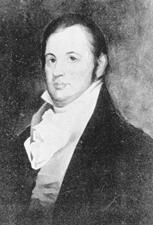
Here you will find contact information for Representative John Pope, including email address, phone number, and mailing address.
| Name | John Pope |
| Position | Representative |
| State | Kentucky |
| District | 7 |
| Party | Whig |
| Status | Former Representative |
| Term Start | October 26, 1807 |
| Term End | March 3, 1843 |
| Terms Served | 4 |
| Gender | Male |
| Bioguide ID | P000431 |
About Representative John Pope
John Pope, a prominent early nineteenth-century American politician, was born in February 1770 in Prince William County, Virginia. He was the son of William Pope and Penelope Edwards Pope, members of a family that would later migrate westward as new territories opened for settlement. In his youth, Pope lost his right arm in an accident, a physical disability that became a well-known feature of his public persona but did not impede his rise in law and politics. During the 1780s his family moved to the Kentucky country—then still part of Virginia—where he came of age amid the turbulence and opportunity of the early frontier.
Pope’s formal education was limited by frontier conditions, but he read law and pursued the customary legal apprenticeship of the period. Settling in Kentucky, he studied under established attorneys and prepared for admission to the bar through independent reading in English common law and American legal practice. By the 1790s he had been admitted to the bar and commenced practice in Harrodsburg, Mercer County, Kentucky, one of the principal early settlements in the region. His legal training and growing reputation as an able advocate provided the foundation for his entry into public life.
Pope’s political career began in the Kentucky legislature. He served as a member of the Kentucky House of Representatives in 1802 and again in 1806, representing the interests of a rapidly growing frontier population. His legislative work, combined with his legal practice, brought him increasing prominence within the state’s political circles. In 1807 he was elected by the Kentucky General Assembly to the United States Senate, where he served as a senator from Kentucky from March 4, 1807, to March 3, 1813. During his Senate tenure he aligned with the Jeffersonian Republican tradition, though he became particularly noted for his independent stance on foreign policy, including his controversial opposition to the War of 1812, a position that damaged his standing among many Kentucky voters.
Following his service in the Senate, Pope remained active in Kentucky politics and public affairs. He served again in the Kentucky House of Representatives in 1816 and 1817 and continued his legal practice. In the 1820s and early 1830s he held various state and local offices, including service as a judge and as a member of the state constitutional convention, reflecting the trust placed in his legal and political judgment. Over time, as the Second Party System emerged, Pope gravitated toward the Whig Party, which attracted many former National Republicans and advocates of internal improvements and a more active federal role in economic development.
Pope’s career in the United States House of Representatives came later in his life and formed a significant chapter in his long public service. John Pope served as a Representative from Kentucky in the United States Congress from 1807 to 1843, holding office during four terms in the House of Representatives. A member of the Whig Party during this phase of his career, he contributed to the legislative process at a time when the nation confronted issues such as westward expansion, banking policy, and the evolving balance between federal and state authority. As a member of the House of Representatives, John Pope participated in the democratic process and represented the interests of his Kentucky constituents, bringing to bear decades of experience in law and politics during a significant period in American history.
In addition to his congressional service, Pope played a notable role in the governance of the western territories. President John Quincy Adams appointed him governor of Arkansas Territory, and he served in that capacity from March 9, 1829, to March 9, 1835, residing in Little Rock. As territorial governor he oversaw the administration of a sparsely settled but strategically important region, dealing with land issues, relations with Native American nations, and the early institutional development of the territory. His tenure coincided with the broader national debates over removal policy and the organization of new states and territories in the trans-Mississippi West.
In his later years, after concluding his formal public service, Pope returned to Kentucky. He resided near Springfield, Washington County, where he continued to be regarded as an elder statesman of the Whig Party and a figure of historical importance in the state’s early political development. He remained engaged in legal and civic affairs on a more limited scale, drawing on a lifetime of public experience that had spanned the early republic, the rise of party politics, and the expansion of the United States across the continent.
John Pope died on July 12, 1845, near Springfield, Kentucky. He was interred in the family burying ground on his estate. His career—encompassing service in the Kentucky legislature, the United States Senate, the House of Representatives, and as governor of Arkansas Territory—placed him among the more consequential Kentucky politicians of his generation. Through his long participation in legislative and territorial governance, he helped shape the institutions and policies of both his home state and the expanding American republic.