Representative John Van Schaick Lansing Pruyn
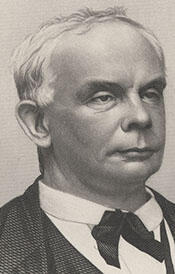
Here you will find contact information for Representative John Van Schaick Lansing Pruyn, including email address, phone number, and mailing address.
| Name | John Van Schaick Lansing Pruyn |
| Position | Representative |
| State | New York |
| District | 14 |
| Party | Democratic |
| Status | Former Representative |
| Term Start | December 7, 1863 |
| Term End | March 3, 1869 |
| Terms Served | 2 |
| Born | June 22, 1811 |
| Gender | Male |
| Bioguide ID | P000554 |
About Representative John Van Schaick Lansing Pruyn
John Van Schaick Lansing Pruyn (June 22, 1811 – November 21, 1877) was an American lawyer, businessman, and Democratic politician from Albany, New York, who served as a Representative from New York in the United States Congress from 1863 to 1869. Most notable for his terms as a United States Representative during the latter half of the American Civil War and the early days of Reconstruction, he contributed to the legislative process during two terms in office and represented the interests of his constituents during a significant period in American history. His surname, pronounced to rhyme with “shine,” reflected his Dutch heritage; Van Schaick, Lansing, and Pruyn were all prominent Dutch family names in upstate New York.
Pruyn was born in Albany, New York, on June 22, 1811, the son of David Pruyn and Hibertje Lansing Pruyn. Of Dutch descent, he grew up in a community where Dutch families played a major role in the region’s commercial and civic life. He pursued classical studies and graduated from The Albany Academy in 1826. He then studied law in the office of Albany attorney James King, was admitted to the bar in 1832, and commenced the practice of law in Albany. His intellectual interests extended beyond his legal training; he was elected a member of the Albany Institute in 1831, an early indication of his engagement with scholarly and cultural affairs.
In addition to his legal career, Pruyn became a prominent businessman in banking and railroads, often in partnership with his longtime friend Erastus Corning, who was also the uncle of Pruyn’s first wife. He was an incorporator and longtime vice president of the Albany City Bank, reflecting his influence in regional finance. He helped organize the New York Central Railroad system and became one of its principal shareholders, participating in the consolidation and expansion of rail transportation in New York State. Over time, his business interests extended westward; he became a stockholder in the Central Pacific Railroad and a director of the Union Pacific Railroad, placing him among the national figures involved in the development of the transcontinental rail network.
Pruyn’s public service began at the state level and in educational and charitable governance. He was elected a member of the Albany Institute in 1831 and served as its president from 1857 until his death. In 1844 he was appointed a regent of the University of the State of New York, the statewide body overseeing education, and he later served as its chancellor from 1868 until his death. He was a founding trustee of St. Stephen’s College, later renamed Bard College, and also served on the New York State Board of Charities. In addition, he was a member of the commission that designed and built the New York State Capitol in Albany; in 1869 he had the honor of laying the new capitol’s first stone in a ceremony attended by Governor John T. Hoffman and other dignitaries. His contributions were recognized by several institutions of higher learning: he received an honorary Master of Arts degree from Rutgers College in 1835, an honorary Master of Arts from Union College in 1845, and an honorary LL.D. from the University of Rochester in 1852. Politically, he advanced within New York’s Democratic Party and served as a member of the New York State Senate from the 13th District in 1862 and 1863.
Pruyn entered national politics during the Civil War. A member of the Democratic Party, he was elected as a Democrat to the Thirty-eighth United States Congress to fill the vacancy caused by the resignation of Erastus Corning, taking his seat on December 7, 1863, and serving until March 3, 1865. Like Corning, Pruyn was a pro-Union Democrat who supported the war effort on the principle that states did not have the right to secede from the Union. At the same time, consistent with the views of many pro-Union Democrats, he argued that in prosecuting the war the administration of President Abraham Lincoln at times overstepped its authority with respect to individual liberties and civil rights. He returned to Congress as a Democrat in the Fortieth Congress, serving from March 4, 1867, to March 3, 1869, during the early Reconstruction era. Across his two terms in the House of Representatives, he participated in the democratic process at a moment of profound constitutional and political transformation, representing New York and contributing to debates over war, peace, and the reordering of the Union.
During his second term in Congress, Pruyn’s name appeared in connection with the Crédit Mobilier affair, which involved the distribution of stock in a construction company closely tied to the Union Pacific Railroad. He was identified as one of the members of Congress who owned shares in Crédit Mobilier. However, records showed that he had paid for his stock, and he was never accused of receiving it as a bribe or of any wrongdoing. After leaving Congress in 1869, he resumed his law practice and continued to manage his extensive business interests in banking and railroads, while maintaining his leadership roles in educational and charitable institutions in New York.
Pruyn’s personal life was closely intertwined with other prominent New York families. On October 22, 1840, he married Harriet Corning Turner (June 18, 1822 – March 22, 1859), the niece of Erastus Corning. They had six children, two of whom survived to adulthood: Erastus Corning Pruyn and John V. L. Pruyn Jr. After Harriet’s death in 1859, he married Anna Fenn Parker (March 26, 1840 – October 7, 1909), the daughter of jurist and politician Amasa J. Parker. They had two daughters, Harriet Langdon Pruyn and Huybertje (also spelled Huybertie or Hibertje) Lansing Pruyn. His extended family included his cousin Robert H. Pruyn, a prominent lawyer, militia general, diplomat, and politician, further underscoring the family’s longstanding public prominence.
Several of Pruyn’s children achieved distinction in their own right. Erastus Corning Pruyn (August 24, 1841 – February 1, 1881) served as an agent of the United States Department of State in Caracas, Venezuela, in the 1860s and traveled extensively as a student and businessman before his death in Tenerife. John V. L. Pruyn Jr. (March 14, 1859 – September 22, 1904) graduated from Union College in 1880 and practiced law in Albany, continuing the family’s legal tradition. Harriet Langdon Pruyn (January 31, 1868 – July 3, 1939) married William Gorham Rice, who served as an aide to Governor Samuel Tilden and President Grover Cleveland and later succeeded Theodore Roosevelt as a member of the United States Civil Service Commission. Active in Albany civic and philanthropic causes, she authored a biography, Harmanus Bleecker: an Albany Dutchman, 1779–1849, published in 1924; her access to Bleecker’s papers stemmed in part from the involvement of John V. L. Pruyn and Amasa J. Parker in the disposition of Bleecker’s estate. Huybertje Lansing Pruyn (April 8, 1878 – March 6, 1964) married Charles Sumner Hamlin, a leading figure in federal financial policy, and wrote Memories of an Albany Girlhood (also published as An Albany Girlhood), preserving recollections of the city and milieu in which her father had risen to prominence.
John Van Schaick Lansing Pruyn died in Clifton Springs, New York, on November 21, 1877. He was buried at Albany Rural Cemetery in Menands, New York, not far from the city where he had been born, educated, and spent his professional and political life.