Representative John Edward Raker
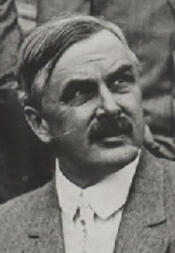
Here you will find contact information for Representative John Edward Raker, including email address, phone number, and mailing address.
| Name | John Edward Raker |
| Position | Representative |
| State | California |
| District | 2 |
| Party | Democratic |
| Status | Former Representative |
| Term Start | April 4, 1911 |
| Term End | March 4, 1927 |
| Terms Served | 8 |
| Born | February 22, 1863 |
| Gender | Male |
| Bioguide ID | R000019 |
About Representative John Edward Raker
John Edward Raker (February 22, 1863 – January 22, 1926) was an American lawyer, jurist, and Democratic politician who served as a member of the United States House of Representatives from California for eight consecutive terms from 1911 until his death in 1926. Over the course of his congressional career, which spanned a significant period in American history, he represented first California’s 1st Congressional District and, after reapportionment, the 2nd Congressional District, contributing actively to the legislative process and the representation of his constituents.
Raker was born near Knoxville, Knox County, Illinois, on February 22, 1863, to Christian Raker and Mary E. (née Rambo) Raker. In 1873 he moved with his parents to Lassen County, California, where he was raised in the rural northern part of the state. He attended public schools in California and later enrolled at the state normal school at San Jose (now San Jose State University) from 1882 to 1884. After his normal school studies, he read law and prepared for a legal career.
In 1885 Raker was admitted to the bar and began the practice of law in Susanville, Lassen County, California. The following year, in 1886, he moved to Alturas in Modoc County, where he continued his legal practice and became increasingly involved in local public affairs. On November 21, 1889, he married Iva G. Spencer. Outside his professional and political life, he was active in fraternal organizations, including membership in the Freemasons and the Independent Order of Odd Fellows.
Raker’s public career began at the county level. He served as District Attorney of Modoc County from 1895 to 1899, gaining experience in criminal prosecution and county administration. In 1898 he was an unsuccessful candidate for the California State Senate, but he remained a prominent figure in regional Democratic politics. He was elected Judge of the Modoc County Superior Court, serving from January 5, 1903, until December 19, 1910. During this period he also rose in party leadership, serving as chairman of the Democratic State Central Committee from 1908 to 1910 and as a delegate to the Democratic National Convention at Denver in 1908. He resigned from the superior court bench in December 1910 after winning election to the United States House of Representatives.
Elected as a Democrat to the Sixty-second Congress in 1910 and to the seven succeeding Congresses, Raker served in the House of Representatives from March 4, 1911, until his death on January 22, 1926. His district was designated California’s 1st Congressional District from 1911 to 1913 and the 2nd Congressional District from 1913 to 1926. As a member of Congress during an era marked by Progressive reforms, World War I, and significant federal expansion, he participated in the democratic process and helped shape national policy on issues ranging from conservation to suffrage and governmental administration.
Raker became particularly noted for his legislative activity in the field of conservation and natural resources, though his record was complex and sometimes controversial. In 1911 he unsuccessfully sought to establish what would later become the Redwood National and State Parks, reflecting his interest in preserving California’s natural landscapes. At the same time, he was the principal sponsor of the legislation that became known as the Raker Act, passed by Congress in 1913 and signed into law by President Woodrow Wilson in 1914. The Act authorized the damming of the Tuolumne River and the flooding of the Hetch Hetchy Valley in Yosemite National Park to create a municipal water supply for San Francisco, a measure that has remained a subject of environmental and historical controversy. Raker also introduced the legislation that led to the creation of Lassen Volcanic National Park in 1916, further underscoring his influence on the development and use of public lands in California.
Within the House, Raker held important committee assignments that reflected his standing among his colleagues. During the Sixty-fifth Congress he served as chairman of the Committee on Expenditures in the Department of Justice, overseeing aspects of federal administrative efficiency and accountability. In the same Congress he also chaired the Committee on Woman Suffrage, placing him at the center of congressional deliberations over the extension of voting rights to women in the years leading up to the ratification of the Nineteenth Amendment. Through these roles he contributed to significant institutional and social changes in the early twentieth century United States.
John Edward Raker died in office in Washington, D.C., on January 22, 1926, while still serving in the House of Representatives. He was interred in Susanville Cemetery in Susanville, California, returning to the community where he had first established his legal career. His long tenure in Congress, combined with his earlier judicial and prosecutorial service, left a lasting imprint on both California’s legal and political history and on federal policy in areas such as conservation, public works, and suffrage.