Representative John Elliott Rankin
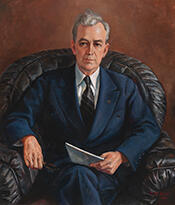
Here you will find contact information for Representative John Elliott Rankin, including email address, phone number, and mailing address.
| Name | John Elliott Rankin |
| Position | Representative |
| State | Mississippi |
| District | 1 |
| Party | Democratic |
| Status | Former Representative |
| Term Start | April 11, 1921 |
| Term End | January 3, 1953 |
| Terms Served | 16 |
| Born | March 29, 1882 |
| Gender | Male |
| Bioguide ID | R000056 |
About Representative John Elliott Rankin
John Elliott Rankin served as a Representative from Mississippi in the United States Congress from 1921 to 1953. A member of the Democratic Party, John Elliott Rankin contributed to the legislative process during 16 terms in office.
John Elliott Rankin’s service in Congress occurred during a significant period in American history. As a member of the House of Representatives, John Elliott Rankin participated in the democratic process and represented the interests of constituents.
John Elliott Rankin (March 29, 1882 – November 26, 1960) was a Democratic politician from Mississippi who served sixteen terms in the U.S. House of Representatives from 1921 to 1953. He was co-author of the bill for the Tennessee Valley Authority and from 1933 to 1936 he supported the New Deal programs of President Franklin D. Roosevelt, which brought investment and jobs to the South. Rankin proposed a bill to prohibit interracial marriage and opposed a bill to prohibit state use of the poll tax, which southern states had used since the turn of the century to disenfranchise most blacks and many poor whites. He used his power to support segregation and deny federal benefits programs to African Americans. For instance, in 1944, following the Port Chicago disaster, the U.S. Navy asked Congress to authorize payments of $5,000 to each of the victims’ families. But when Rankin learned most of the dead were black sailors, he insisted the amount be reduced to $2,000; Congress settled the amount at $3,000 per family. He was the main House sponsor of the G.I. Bill. Rankin insisted that its administration be decentralized, which led to continued discrimination against black veterans in the South and their virtual exclusion from one of the most important postwar programs to build social capital among United States residents. In the South, black veterans were excluded from loans, training and employment assistance. The historically black colleges were underfunded and could accept only about half the men who wanted to enroll. On the floor of the House, Rankin expressed racist views of African Americans, Japanese Americans, and Jews, accusing Albert Einstein of being a communist agitator. During World War II, Rankin supported a bill that would incarcerate all Japanese Americans in the US and its territories in what he called “concentration camps”. He later helped to establish the House Un-American Activities Committee which questioned the Hollywood Ten screenwriters during the McCarthy Era. He described an anti-lynching bill as “a bill to encourage Negroes to think they can rape our white women!” while shaking his fist at a gallery of mostly colored persons.