Representative John Edgar Reyburn
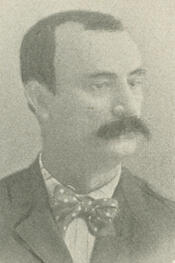
Here you will find contact information for Representative John Edgar Reyburn, including email address, phone number, and mailing address.
| Name | John Edgar Reyburn |
| Position | Representative |
| State | Pennsylvania |
| District | 2 |
| Party | Republican |
| Status | Former Representative |
| Term Start | December 2, 1889 |
| Term End | March 3, 1909 |
| Terms Served | 6 |
| Born | February 7, 1845 |
| Gender | Male |
| Bioguide ID | R000168 |
About Representative John Edgar Reyburn
John Edgar Reyburn (February 7, 1845 – January 4, 1914) was an American politician who served as a Republican member of the U.S. House of Representatives from Pennsylvania and later as mayor of Philadelphia. Over the course of a long public career, he held seats in both houses of the Pennsylvania legislature, represented Pennsylvania’s 4th and 2nd congressional districts in the United States Congress between 1890 and 1907, and led the Philadelphia municipal government from 1907 to 1911.
Reyburn was born on February 7, 1845, in New Carlisle, Ohio, to William and Lydia Reader Crane Reyburn. During his youth his family moved to Pennsylvania, and he was educated by a private tutor before attending the Saunders Institute in West Philadelphia. He pursued higher education at the University of Pennsylvania and then studied law under noted Philadelphia attorney E. Spencer Miller. Reyburn was admitted to the bar in 1870 and opened a law practice in Philadelphia, establishing himself professionally in the city that would remain the center of his legal, political, and business activities.
Reyburn entered public life soon after beginning his legal career. He was first elected to the Pennsylvania House of Representatives in 1871 and returned to that body for additional service from 1874 to 1876. In 1876 he advanced to the Pennsylvania State Senate, where he served continuously until 1890. During his long tenure in the state senate he rose to a position of leadership, serving as president pro tempore during the legislative session of 1883. His state legislative career coincided with the consolidation of Republican dominance in Pennsylvania politics, and he became an influential figure within the party’s organization.
Reyburn’s congressional service began when he was elected as a Republican to the U.S. House of Representatives to fill the vacancy caused by the death of Representative William D. Kelley. Representing Pennsylvania’s 4th congressional district, he took his seat on February 18, 1890, and was reelected three times, serving until March 3, 1897. His tenure in the House during this period spanned several Congresses in the late nineteenth century, a time of rapid industrial growth and significant national political realignment. Although he was an experienced incumbent, he was an unsuccessful candidate for renomination in 1896, which temporarily interrupted his federal legislative career.
Reyburn returned to Congress a decade later. He was elected again as a Republican to fill the vacancy created by the death of Representative Robert Adams Jr. and this time represented Pennsylvania’s 2nd congressional district. He won election to the Sixtieth Congress and served from November 6, 1906, to March 31, 1907. Over the course of his service in the House of Representatives, from 1890 to 1897 and again from 1906 to 1907, Reyburn participated in the legislative process during a significant period in American history and represented the interests of his Pennsylvania constituents over six terms in office. He resigned his seat in March 1907 to assume the mayoralty of Philadelphia.
Reyburn was elected mayor in the 1907 Philadelphia mayoral election and served from April 1, 1907, to December 4, 1911. As mayor, he stood at the head of the city’s powerful Republican political machine, which dominated Philadelphia politics in the early twentieth century. His administration was marked by ambitious public works and municipal initiatives but was also marred by allegations of corruption. Reyburn was charged with having received $450,000 from corporations and public officials in connection with city contracts and franchises. Several officials and contractors were convicted of bribery in matters associated with his administration, though Reyburn himself was not convicted and maintained that his name had been forged on incriminating documents.
Outside of elective office, Reyburn was engaged in manufacturing in Philadelphia and maintained a residence in Washington, D.C., reflecting his continued ties to both the political and business communities. In his personal life, he married Margaretta Eleanor Crozier in 1881. The couple had three children: Eleanor Reyburn Harrington, Robert Crozier Reyburn, and William Stuart Reyburn, the latter of whom would also serve as a member of Congress. Reyburn was known as a yachting enthusiast and owned several estates in the United States as well as one in Canada, underscoring the wealth and social standing he accumulated over his career.
John Edgar Reyburn died on January 4, 1914, at his residence in Washington, D.C. He was interred in Laurel Hill Cemetery in Philadelphia, Pennsylvania, closing a life that had been closely intertwined with the political, legal, and civic affairs of both Pennsylvania and its largest city for more than four decades.