Representative John Hovey Rice
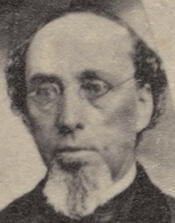
Here you will find contact information for Representative John Hovey Rice, including email address, phone number, and mailing address.
| Name | John Hovey Rice |
| Position | Representative |
| State | Maine |
| District | 4 |
| Party | Republican |
| Status | Former Representative |
| Term Start | July 4, 1861 |
| Term End | March 3, 1867 |
| Terms Served | 3 |
| Born | February 5, 1816 |
| Gender | Male |
| Bioguide ID | R000201 |
About Representative John Hovey Rice
John Hovey Rice (February 5, 1816 – March 14, 1911) was a Republican member of the United States House of Representatives from Maine who served three consecutive terms in Congress from 1861 to 1867. He was born in Mount Vernon, then in Massachusetts (now in Maine), to Nathaniel and Mary Jane (Swazey) Rice. He attended the common schools of the area, receiving a basic formal education typical of rural New England in the early nineteenth century.
As a young man, Rice entered public service and clerical work at an early age. From 1831 to 1841 he served as clerk in the office of the register of deeds in Augusta, Maine, gaining experience in land records and local administration. He also engaged in the mercantile business and served as a deputy sheriff, roles that broadened his familiarity with both commercial affairs and law enforcement. In 1838 he was appointed aide-de-camp to General Bachelor during the Aroostook War, the northeastern boundary dispute between the United States and Great Britain, providing him with exposure to military organization and the defense of Maine’s frontier.
In 1843 Rice moved to Piscataquis County, Maine, where he turned more directly to the study of law. After several years of preparation, he was admitted to the bar in 1848 and commenced legal practice in Piscataquis County. His abilities as a lawyer and public official were soon recognized, and he served as prosecuting attorney for Piscataquis County from 1852 to 1860. A committed member of the emerging Republican Party, he was chosen as a delegate to the Republican National Convention in 1856, participating in the formative years of the party’s national organization.
Rice’s legal and political experience led to his election as a Republican to the Thirty-seventh, Thirty-eighth, and Thirty-ninth Congresses, serving from March 4, 1861, to March 3, 1867. Representing Maine in the U.S. House of Representatives during the Civil War and the beginning of Reconstruction, he contributed to the legislative process at a time of profound national crisis. During his three terms in office he represented the interests of his Maine constituents while participating in the broader debates over war policy, national infrastructure, and postwar governance. In the House he served as chairman of the Committee on Public Buildings and Grounds during the Thirty-eighth and Thirty-ninth Congresses, overseeing matters related to federal buildings and property. After three terms, he declined to be a candidate for renomination.
Concurrent with and following his congressional service, Rice also held a significant federal administrative post. He served as United States collector of customs at the port of Bangor, Maine, from 1861 to 1871, a position of importance in overseeing customs revenues and maritime trade in one of Maine’s key ports. This role extended his influence in federal affairs beyond his legislative duties and into the executive administration of national revenue laws.
After leaving federal office in Maine, Rice relocated to the national capital. He moved to Washington, D.C., where he practiced law for twelve years, continuing his long professional engagement with legal work and federal institutions. In 1884 he moved to New York City, then the country’s leading commercial and financial center, and practiced law there until 1899. In May 1899 he moved again, this time to Chicago, Illinois, where he spent the remaining years of his life. John Hovey Rice died in Chicago on March 14, 1911, and was interred in Oakwood Cemetery.