Representative John Jacob Riley
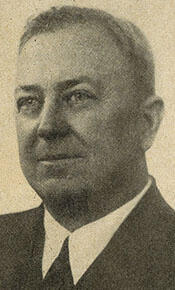
Here you will find contact information for Representative John Jacob Riley, including email address, phone number, and mailing address.
| Name | John Jacob Riley |
| Position | Representative |
| State | South Carolina |
| District | 2 |
| Party | Democratic |
| Status | Former Representative |
| Term Start | January 3, 1945 |
| Term End | January 3, 1963 |
| Terms Served | 8 |
| Born | February 1, 1895 |
| Gender | Male |
| Bioguide ID | R000260 |
About Representative John Jacob Riley
John Jacob Riley (February 1, 1895 – January 1, 1962) was a U.S. Representative from South Carolina and a member of the Democratic Party who served in the United States Congress from 1945 to 1963. Over the course of eight terms in office, he participated actively in the legislative process and represented the interests of his South Carolina constituents during a significant period in American history. He was married to Corinne Boyd Riley, who would later succeed him in Congress.
Riley was born on February 1, 1895, in South Carolina, where he spent his formative years. Growing up in the post-Reconstruction South, he came of age in an era marked by economic transition and the entrenchment of Jim Crow laws, developments that shaped the political and social environment in which he would later serve. His early life in the state provided him with a close familiarity with the agricultural economy and rural communities that would form a substantial portion of his political base.
In keeping with the expectations of public figures of his generation, Riley pursued an education that prepared him for professional and civic leadership. He attended local schools in South Carolina and went on to further his studies, gaining the academic foundation that would support his later work in public service. His education, combined with his regional roots, helped position him for a career that bridged local concerns and national policymaking.
Before entering Congress, Riley built a career that reflected both professional advancement and increasing involvement in public affairs. He worked within the state’s civic and political networks, developing relationships with community leaders and Democratic Party officials. Through this experience he gained practical knowledge of governance and constituent service, which would later inform his approach as a member of the House of Representatives.
Riley was first elected to the United States House of Representatives as a Democrat from South Carolina in 1944, taking office in January 1945. His congressional service, extending through eight terms until 1963, spanned the end of World War II, the beginning of the Cold War, the early years of the civil rights movement, and the domestic adjustments that followed wartime mobilization. As a member of the House of Representatives, John Jacob Riley participated in the democratic process and contributed to the legislative work of Congress, engaging in debates and votes on issues central to both his state and the nation.
During his years in Congress, Riley represented a largely rural Southern constituency whose concerns included agriculture, infrastructure, and economic development. He worked within the Democratic majority that dominated Southern politics at the time, aligning with party leadership on many national issues while also attending to local needs such as federal support for farms, transportation, and public services. His long tenure reflected the confidence of his constituents in his ability to advocate for their interests in Washington.
Riley’s congressional career unfolded during a transformative era in American history, marked by shifting national priorities and growing tensions over civil rights and federal authority. Within this context, he maintained his role as a steady representative of South Carolina, contributing to the legislative process over nearly two decades. He continued to serve in the House until his death on January 1, 1962. Following his passing, his wife, Corinne Boyd Riley, was elected to Congress, underscoring the family’s continued role in public service and extending the political legacy that John Jacob Riley had established through his years of representation.