Representative John Franklin Rixey
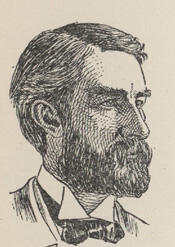
Here you will find contact information for Representative John Franklin Rixey, including email address, phone number, and mailing address.
| Name | John Franklin Rixey |
| Position | Representative |
| State | Virginia |
| District | -1 |
| Party | Democratic |
| Status | Former Representative |
| Term Start | March 15, 1897 |
| Term End | March 3, 1909 |
| Terms Served | 6 |
| Born | August 1, 1854 |
| Gender | Male |
| Bioguide ID | R000287 |
About Representative John Franklin Rixey
John Franklin Rixey (August 1, 1854 – February 8, 1907) was a Democratic U.S. Representative from Virginia who served six terms in the United States Congress between 1897 and 1909, representing Virginia’s 8th congressional district from March 4, 1897, until his death in 1907. His congressional service took place during a significant period in American history at the turn of the twentieth century, when he participated in the legislative process and represented the interests of his constituents in the House of Representatives.
Rixey was born on August 1, 1854, in the Catalpa district of Culpeper County, Virginia, to farmer Presley Morehead Rixey and his wife, the former Mary Frances Jones. He grew up in a family that would become notable in Virginia and national life. His older brothers included Charles J. Rixey (born 1849) and Presley Marion Rixey, who later achieved prominence as Surgeon General of the United States Navy. Through his younger brother, the banker Eppa Rixey (1857–1917), he was the uncle of major league baseball pitcher Eppa Rixey Jr. Raised in rural Virginia, he attended local schools and Bethel Academy, receiving the foundational education that prepared him for professional study.
After his early schooling, Rixey pursued legal studies at the University of Virginia, one of the leading institutions of higher learning in the South. He completed his legal training there and was admitted to the Virginia bar in 1875. Immediately thereafter, he began a private law practice in Culpeper, Virginia, building a reputation as a capable attorney. His legal work and standing in the community soon led him into public service and local politics.
In 1879, Rixey was elected Commonwealth’s Attorney (prosecutor) for Culpeper County, a position he held for twelve years, until 1891. In that role he was responsible for representing the state in criminal prosecutions, and his long tenure reflected the confidence of local voters in his judgment and integrity. His experience as a prosecutor, combined with his legal practice, established him as a prominent figure in Culpeper County and laid the groundwork for his later congressional career.
Rixey married Ella B. Barbour (1859–1946), daughter of James Barbour and his wife Fanny Thomas Beckham and granddaughter of John S. Barbour, who had served as a member of the U.S. House of Representatives from Virginia’s 15th congressional district. This marriage linked Rixey to an established Virginia political family. The couple had several children: Mary Barbour Compton (born 1884), John Strode Rixey (born 1891), James B. Rixey (born 1895), and Edith Presley Rixey Moore (born 1897). Their family life in Culpeper was closely intertwined with the region’s legal, political, and social circles.
Rixey’s national political career began when Democratic Congressman Elisha E. Meredith retired from representing Virginia’s 8th congressional district. In the 1896 election, voters chose Rixey to succeed Meredith in the 55th Congress. A member of the Democratic Party, he took his seat on March 4, 1897, and was subsequently re-elected five times. He thus served continuously in the House of Representatives from 1897 until his death in 1907 and had also been elected to the 60th Congress, which would have extended his service through 1909, underscoring his sustained support among constituents. During his tenure, he contributed to the legislative process in an era marked by industrial expansion, the aftermath of the Spanish–American War, and evolving national debates over veterans’ benefits and historic preservation.
Beginning in his third congressional term, Rixey became particularly associated with efforts to secure equitable treatment for Civil War veterans. He proposed measures to place all Civil War veterans in the same class with respect to admission and treatment in federal and state soldiers’ homes, seeking to regularize and broaden benefits for aging veterans. He also introduced bills to create a Manassas Battlefield Park, responding to advocacy from constituents Edmund Berkeley and George Carr Round who sought to preserve key Civil War sites. Although none of these battlefield preservation bills passed during his lifetime, they anticipated later federal action to commemorate and protect such historic landscapes. Rixey’s standing in national politics was reflected in his role in local events of national significance: he hosted President Theodore Roosevelt at Beauregard during Roosevelt’s 1902 visit to Culpeper County and the Cedar Run battlefield, and a troop of Culpeper County veterans from the Spanish–American War marched in Roosevelt’s inauguration, symbolizing the district’s connection to national service.
John Franklin Rixey died in office in Washington, D.C., on February 8, 1907, before the close of the 59th Congress and before he could begin the term to which he had been elected in the 60th Congress. His death placed him among the members of the United States Congress who died in office in the early twentieth century. In recognition of his service, memorial addresses were delivered in the House of Representatives and the Senate later in 1907, and a volume titled “John Franklin Rixey, late a representative from Virginia” was published with a frontispiece that year. In 1917, his portrait was placed in the Culpeper County courthouse as a lasting tribute to his contributions to the county and the Commonwealth. After a contested Democratic primary, Charles Creighton Carlin of Alexandria, Virginia, succeeded him as the representative of Virginia’s 8th congressional district, continuing the line of Democratic representation that Rixey had helped to shape.