Representative John Marshall Rose
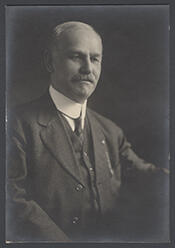
Here you will find contact information for Representative John Marshall Rose, including email address, phone number, and mailing address.
| Name | John Marshall Rose |
| Position | Representative |
| State | Pennsylvania |
| District | 19 |
| Party | Republican |
| Status | Former Representative |
| Term Start | April 2, 1917 |
| Term End | March 3, 1923 |
| Terms Served | 3 |
| Born | May 18, 1856 |
| Gender | Male |
| Bioguide ID | R000437 |
About Representative John Marshall Rose
John Marshall Rose (May 18, 1856 – April 22, 1923) was a Republican member of the U.S. House of Representatives from Pennsylvania who served three consecutive terms in Congress from 1917 to 1923. He was born in Johnstown, Cambria County, Pennsylvania, the son of Wesley J. Rose and Martha Given. Raised in western Pennsylvania during the post–Civil War era, he grew up in a region shaped by burgeoning industry and transportation, influences that would later inform his understanding of the needs and interests of his constituents.
Rose pursued higher education at Washington & Jefferson College in Washington, Pennsylvania, graduating in 1880. Following his graduation, he worked as a schoolteacher, an early career that reflected both his commitment to public service and his interest in education. While teaching, he studied law, preparing for a professional path that would combine legal training with political engagement. In 1884 he was admitted to the bar and commenced the practice of law in his native Johnstown, where he established himself as an attorney and became active in local affairs.
Rose’s formal political career began at the state level. He was elected to the Pennsylvania House of Representatives and served in the state legislature in 1889. During his term in the Pennsylvania State House of Representatives he became known as “the whistling statesman,” a nickname earned for his habit of whistling popular songs in the corridors and chambers of the capitol. Despite the visibility and recognition he gained, he declined to seek reelection, returning instead to his legal practice in Johnstown while maintaining his connections within the Republican Party and the civic life of his community.
Building on his legal and legislative experience, Rose later sought national office and was elected as a Republican to the Sixty-fifth, Sixty-sixth, and Sixty-seventh Congresses, serving in the U.S. House of Representatives from Pennsylvania from March 4, 1917, to March 3, 1923. His tenure in Congress coincided with a significant period in American history, encompassing the nation’s involvement in World War I, the immediate postwar transition, and the early years of the 1920s. As a member of the House of Representatives, John Marshall Rose participated in the democratic process, contributed to the legislative work of Congress, and represented the interests of his Pennsylvania constituents during debates over wartime mobilization, veterans’ issues, and domestic readjustment. A member of the Republican Party, he took part in shaping policy during a time when his party held substantial influence at the federal level.
After three terms in office, Rose declined to be a candidate for renomination in 1922, choosing to step away from congressional service rather than seek continued tenure. His decision marked the close of his federal legislative career, though his years in Washington had placed him among the notable Republican lawmakers of his era from Pennsylvania. He remained identified with the public life of his home state and with the legal profession that had first brought him to prominence.
John Marshall Rose died in Washington, D.C., on April 22, 1923, shortly after leaving Congress. He was interred in Grandview Cemetery in Johnstown, Pennsylvania, returning in death to the city where he had been born, educated, and long practiced law. His career spanned local, state, and national service, and his work as an attorney, state legislator, and three-term member of the U.S. House of Representatives reflected a lifelong engagement with the political and civic institutions of Pennsylvania and the United States.