Representative J. Edward Roush
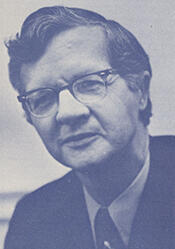
Here you will find contact information for Representative J. Edward Roush, including email address, phone number, and mailing address.
| Name | J. Edward Roush |
| Position | Representative |
| State | Indiana |
| District | 4 |
| Party | Democratic |
| Status | Former Representative |
| Term Start | January 7, 1959 |
| Term End | January 3, 1977 |
| Terms Served | 8 |
| Born | September 12, 1920 |
| Gender | Male |
| Bioguide ID | R000467 |
About Representative J. Edward Roush
John Edward Roush (September 12, 1920 – March 26, 2004) was an American lawyer, World War II veteran, and Democratic politician who served eight terms as a U.S. Representative from Indiana, holding office from January 3, 1959, to January 3, 1969, and again from January 3, 1971, to January 3, 1977. Over the course of his congressional career, he represented Indiana during a significant period in American history, contributing to the legislative process and representing the interests of his constituents through eight terms in the House of Representatives.
Roush was born in Barnsdall, Oklahoma, on September 12, 1920. His family later moved to Indiana, where he attended public schools and graduated from Huntington High School in Huntington, Indiana, in 1938. He continued his education at Huntington College in Huntington, Indiana, earning an A.B. degree in 1942. After military service, he pursued legal studies at the Indiana University School of Law in Bloomington, Indiana, where he received an LL.B. degree in 1949, preparing for a career in law and public service.
During World War II, Roush served in the United States Army from 1942 to 1946. He returned to military service during the Korean War era, serving again from 1950 to 1952. Following his active-duty service, he continued in the Army Reserve, where he was promoted to the rank of major. His military experience, spanning both wartime and reserve duty, informed his later work in Congress, particularly on matters affecting veterans and national defense.
After completing his legal education, Roush entered private law practice in Indiana and quickly became involved in state and local government. He served as a member of the Indiana state legislature from 1949 to 1950, marking his entry into elective office. He was then elected prosecuting attorney of Huntington County, Indiana, serving from 1954 to 1958. In addition to his legal and legislative work, he maintained close ties to his alma mater, serving on the Board of Trustees of Huntington College from 1958 to 1960 and later from 1981 to 1987.
Roush was elected as a Democrat to the Eighty-sixth and to the four succeeding Congresses, serving from January 3, 1959, to January 3, 1969. His early congressional tenure included a notable contested election following the 1960 race, in which his opponent, George Chambers, was initially declared the winner by 12 votes and certified by the State of Indiana. Roush contested the result, and because Indiana law at the time did not provide a procedure for recounts in such a contest, the U.S. House of Representatives undertook its own recount under House rules. During this period, neither candidate was seated, though both received a congressional salary and staff support. On June 14, 1961, after the House committee concluded its review and determined that Roush had won by 99 votes, the House voted to seat him, and he was sworn in. Throughout his service, he participated actively in the democratic process and legislative deliberations during a transformative era in American politics.
Following redistricting by the Indiana legislature, Roush’s original district was eliminated, and his home in Huntington was drawn into the Fort Wayne–based 4th Congressional District represented by Republican E. Ross Adair. In the 1968 election, Adair defeated Roush for reelection to the Ninety-first Congress. Roush sought a rematch in 1970 and narrowly defeated Adair, returning to the House of Representatives. He then served three additional terms, from January 3, 1971, to January 3, 1977, during which he won reelection against State Senator Allan Bloom in 1972 and State Senator Walter P. Helmke in 1974. Over these eight terms in Congress, Roush was particularly noted for his role in promoting and helping to establish the 911 emergency telephone system, which became a critical component of public safety infrastructure across the United States.
In 1976, Roush was an unsuccessful candidate for reelection to the Ninety-fifth Congress. He was defeated by Republican Dan Quayle, who would later serve as a U.S. Senator from Indiana and as Vice President of the United States. After leaving Congress, Roush continued his public service at the federal and educational levels. From 1977 to 1979, he served as director of regional and intergovernmental operations for the United States Environmental Protection Agency, working on coordination between federal, state, and local entities. He later returned to Huntington College, serving as interim president in 1989, further underscoring his long-standing commitment to higher education and his local community.
John Edward Roush died on March 26, 2004, in Huntington, Indiana. He was interred in Pilgrim’s Rest Cemetery in Huntington. In recognition of his service and contributions, particularly to his home region, the Huntington Reservoir was renamed J. Edward Roush Lake following congressional passage of a resolution authored by U.S. Representative Mark E. Souder. His legacy includes his long tenure in the House of Representatives, his instrumental role in the establishment of the 911 emergency telephone system, and his decades of service to Indiana in military, legal, legislative, and educational capacities.