Senator John Ruggles
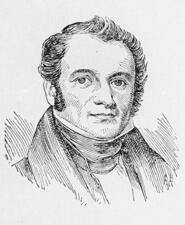
Here you will find contact information for Senator John Ruggles, including email address, phone number, and mailing address.
| Name | John Ruggles |
| Position | Senator |
| State | Maine |
| Party | Democratic |
| Status | Former Representative |
| Term Start | December 7, 1835 |
| Term End | March 3, 1841 |
| Terms Served | 1 |
| Born | October 8, 1789 |
| Gender | Male |
| Bioguide ID | R000502 |
About Senator John Ruggles
John Ruggles (October 8, 1789 – June 20, 1874) was an American lawyer, jurist, inventor, and Democratic politician who represented Maine in the United States Senate from 1835 to 1841. His congressional service occurred during a significant period in American history, and as a member of the Senate he participated in the democratic process and represented the interests of his Maine constituents during one full term in office. Over the course of his public career, he held several important state legislative and judicial positions and later became closely associated with the development and reorganization of the United States patent system.
Ruggles was born in Westborough, Massachusetts, on October 8, 1789. He attended the public schools in his native town before pursuing higher education. In 1813, he graduated from Brown University in Providence, Rhode Island, an education that prepared him for a professional career in the law. After completing his legal studies, he was admitted to the bar in 1815 and began the practice of law in Skowhegan, in what was then the District of Maine, still part of Massachusetts. In 1817, he moved to Thomaston, Maine, which would remain his principal home for the rest of his life and the base from which he entered public service.
Ruggles’s political and legal career in Maine advanced rapidly. In 1823, he was elected to the Maine House of Representatives. He served continuously in the state House until 1831 and was chosen speaker for multiple terms, holding the speakership from 1825 to 1829 and again in 1831. His leadership in the legislature established him as a prominent figure in Maine politics. In 1831, he resigned from the Maine House to accept a judicial appointment as a justice of the Supreme Judicial Court of Maine, succeeding Samuel E. Smith, who had been elected governor. Ruggles served on the state’s highest court until 1834, gaining further distinction as a jurist before being called to national office.
The Maine legislature elected Ruggles to the United States Senate as a Democrat aligned with the Jacksonian, or Democratic-Republican, faction. He was chosen to fill the vacancy created by the resignation of Senator Peleg Sprague and took his seat on January 20, 1835. He was subsequently elected for the full term beginning March 4, 1835, and in total served in the Senate from January 20, 1835, to March 3, 1841. A member of the Democratic Party, Ruggles contributed to the legislative process during this one full term in office. During his tenure, he served as chairman of the Committee on Patents and the Patent Office in the 25th Congress. In that capacity, he framed the important 1836 bill that reorganized the United States Patent Office, a measure that modernized the administration of patents and helped shape the federal government’s approach to intellectual property.
Ruggles was widely known for his interest in inventions and patents, both as a legislator and as an inventor in his own right. Because of his central role in the 1836 reorganization of the Patent Office and his broader advocacy for inventors, he became known as the “Father of the U.S. Patent Office.” On July 13, 1836, he received U.S. Patent No. 1 under the new numbering system, for a form of traction wheel for railroad cars designed to improve performance on steep grades and under adverse weather conditions. This was not the first patent ever issued by the United States government, as earlier patents—later called the “X-Patents”—had been granted before a devastating fire destroyed the original records; however, Ruggles’s patent was the first issued after the reorganization and renumbering of the system. Samuel Hopkins had received the first of the earlier X-Patents. Ruggles’s legislative and inventive work placed him at the center of national efforts to encourage technological innovation during a period of rapid economic and industrial change.
Politically, Ruggles was regarded as a conservative Democrat. He opposed the radical Loco-Foco influence within the administration of President Martin Van Buren and broke with many in his party over economic and policy questions. In 1840, he publicly endorsed the Whig presidential candidate, William Henry Harrison, describing Harrison as a man of “enlightened patriotism, great practical wisdom, and sound Republican principles,” while denouncing Van Buren’s policies as “ruinous to the enterprise and business of the people.” That same year, Ruggles was an unsuccessful candidate for reelection to the Senate, and his term concluded on March 3, 1841, bringing his federal legislative service to a close.
After leaving Congress, Ruggles returned to Thomaston, Maine, where he resumed the practice of law. In retirement he continued to invent, developing several additional devices and maintaining his long-standing interest in mechanical and technical improvements. He was also well known as a political writer and orator, contributing to public debates through speeches and published writings. Ruggles was financially successful; he and his wife, Margaret George Ruggles, had children and resided in the largest house on Thomaston’s Main Street, a visible symbol of his standing in the community. John Ruggles died in Thomaston on June 20, 1874, a few months before his eighty-fifth birthday. He was interred in Elm Grove Cemetery, leaving a legacy as a state legislator, jurist, U.S. senator, and pioneering figure in the history of the United States patent system.