Senator John Rutherfurd
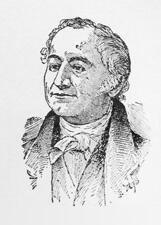
Here you will find contact information for Senator John Rutherfurd, including email address, phone number, and mailing address.
| Name | John Rutherfurd |
| Position | Senator |
| State | New Jersey |
| Party | Federalist |
| Status | Former Representative |
| Term Start | October 24, 1791 |
| Term End | March 3, 1799 |
| Terms Served | 2 |
| Born | September 20, 1760 |
| Gender | Male |
| Bioguide ID | R000550 |
About Senator John Rutherfurd
John Rutherfurd (September 20, 1760 – February 23, 1840) was an American politician, land surveyor, and lawyer who represented New Jersey in the United States Senate as a member of the Federalist Party during the formative years of the federal government. He served in the Senate from 1791 to 1798, a period often described as encompassing two terms in office, and contributed to the legislative process at a time when the institutions and precedents of the new republic were being established.
Rutherfurd was born on September 20, 1760, in New York City to Walter Rutherfurd (1723–1804) and Catherine Alexander (1727–1801). His father, a veteran of the British Army, was taken hostage by Patriot forces during the American Revolutionary War while John was still a teenager, an experience that placed the family at the intersection of imperial and revolutionary loyalties. Through his mother, he was a member of the prominent Alexander family: his maternal grandfather was James Alexander, and his grandmother was Mary Spratt Provoost. His family connections extended deeply into the political and military elite of the era. His maternal uncle William Alexander, known as Lord Stirling (1726–1783), served as a general in the Continental Army. Rutherfurd’s sister, Mary Rutherfurd, married Major General Matthew Clarkson. He was also related to several notable British and colonial figures, including Gilbert Elliot-Murray-Kynynmound, 4th Baronet (1751–1814), William Eden, 1st Baron Auckland (1745–1814), John Elliott (1732–1808), Governor of Newfoundland, and Arthur St. Clair (1736–1818), a general and territorial governor of the Northwest Territory. On his father’s side, his paternal uncle John Rutherfurd served as a member of Parliament in Britain and was killed at Fort Ticonderoga during the Battle of Carillon; that uncle’s son, also named John Rutherfurd, later sat in Parliament for Roxburghshire.
Rutherfurd was educated at the College of New Jersey, now Princeton University, where he studied law. After completing his studies, he practiced law in New York City for several years, gaining experience in legal matters that would later inform his public service. In 1782, he married Helena Magdalena Morris (1762–1840), daughter of Congressman Lewis Morris, thereby linking himself to another influential colonial and early national family. The couple remained married until his death in 1840, with Helena dying shortly afterward. They had eight children, among them Mary Rutherfurd (1784–1868), who never married and later served as executor of her father’s estate; Robert Walter Rutherfurd (1788–1852), who became a member of the New Jersey State Legislature and married his first cousin Sabina Elliott Morris (1789–1857); Helena Rutherfurd (1790–1873), who married Peter Gerard Stuyvesant (1778–1847), a wealthy New Yorker and a descendant of colonial governor Peter Stuyvesant; Louisa Morris Rutherfurd (1792–1857), who died unmarried; and Anna Rutherfurd (1794–1852), who married Dr. John Watts (1786–1834), son of Robert Watts and Mary (née Alexander) Watts, further reinforcing the family’s ties to the Alexander and Lord Stirling line.
By 1787, Rutherfurd had shifted his base of life and work from New York City to New Jersey. That year he moved to a farm near what was then Green Township in Sussex County, New Jersey. Following the drawing of new county boundaries in 1824, his former holdings came to straddle both Sussex and the newly formed Warren County, illustrating the changing administrative geography of the state in the early nineteenth century. In 1788, he entered public life in New Jersey, serving in the New Jersey General Assembly until 1790. His early legislative experience at the state level prepared him for national office and placed him among the cohort of Federalist leaders who supported a strong central government under the new Constitution.
Rutherfurd was elected as a Federalist to the United States Senate from New Jersey and served from 1791 to 1798, a tenure often described as encompassing two terms in office. His service in Congress occurred during a significant period in American history, when the first party system was taking shape and foundational questions of federal power, finance, and foreign policy were being contested. As a member of the Senate, he participated in the democratic process and represented the interests of his New Jersey constituents while aligning with the Federalist program of strong national institutions. He distinguished himself by several notable votes: he was the only senator to vote against the First Militia Act of 1792, which organized the state militias under federal standards, and he was one of only two senators to vote against the Eleventh Amendment to the United States Constitution, which limited the ability of individuals to bring suits against states in federal court. These votes suggest a willingness to depart from the majority when his interpretation of constitutional or policy principles so required. He left the Senate in 1798, concluding his formal congressional service.
After his retirement from national politics, Rutherfurd continued to play an important role in public affairs, particularly in matters of land, infrastructure, and urban planning, drawing on his skills as a land surveyor. From 1807 to 1811, he served as one of the three commissioners appointed to lay out the street plan for Manhattan north of 14th Street, a project that produced the famous Manhattan street grid and had a lasting impact on the development of New York City. Around 1816, he investigated the feasibility of constructing a canal to connect the Delaware, Raritan, and Hudson rivers, an early contribution to the era’s broader movement for internal improvements and enhanced commercial transportation. From 1827 to 1833, he was involved in settling New Jersey’s boundaries with New York and Pennsylvania, helping to resolve long-standing interstate disputes and clarify jurisdictional lines that remain in place to this day.
In 1808, Rutherfurd moved with his family to a farm on the banks of the Passaic River near the area that would later become the borough of Rutherford, New Jersey. He named the estate “Edgerston,” and it remained his principal residence for the rest of his life. He died there on February 23, 1840. His wife Helena died shortly thereafter in the same year. His descendants continued to be prominent in American public and scientific life. Through his son Robert, he was the grandfather of Lewis Morris Rutherfurd (1816–1892), a pioneering astrophotographer who produced some of the first telescopic photographs of the moon, the sun, and various stars and planets, contributing significantly to the emerging field of astrophotography. The borough of Rutherford, New Jersey, was named at least in part in his honor, reflecting his extensive landholdings in the area during his lifetime; the spelling of the town’s name was later influenced by the national prominence of President Rutherford B. Hayes in the 1870s, when the municipality was created.