Representative John P. Saylor
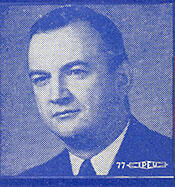
Here you will find contact information for Representative John P. Saylor, including email address, phone number, and mailing address.
| Name | John P. Saylor |
| Position | Representative |
| State | Pennsylvania |
| District | 12 |
| Party | Republican |
| Status | Former Representative |
| Term Start | January 3, 1949 |
| Term End | January 3, 1975 |
| Terms Served | 13 |
| Born | July 23, 1908 |
| Gender | Male |
| Bioguide ID | S000102 |
About Representative John P. Saylor
John Phillips Saylor (July 23, 1908 – October 28, 1973) was a Republican member of the U.S. House of Representatives from Pennsylvania, serving from 1949 until his death from a heart attack in Houston, Texas, in 1973. Over the course of 13 consecutive terms in Congress, he represented his constituents during a significant period in American history and became particularly noted for his work on conservation and natural resources policy.
Saylor was born on July 23, 1908, in Johnstown, Cambria County, Pennsylvania. He grew up in western Pennsylvania, a region shaped by heavy industry and rich natural landscapes, influences that later informed his legislative interests in both economic development and environmental protection. His early life in Johnstown, a community familiar with both industrial growth and environmental challenges, provided him with firsthand understanding of the needs and concerns of working families and local businesses.
He pursued higher education at Franklin & Marshall College in Lancaster, Pennsylvania, where he graduated in 1929. Following his undergraduate studies, Saylor attended law school at the Dickinson School of Law in Carlisle, Pennsylvania, earning his law degree in 1933. After admission to the bar, he returned to Johnstown to practice law. During these early professional years, he established himself in the legal community and became active in local civic affairs, building the foundation for his later entry into public service and elective office.
Saylor’s political career advanced within the Republican Party in Pennsylvania, and he was elected to the U.S. House of Representatives in a special election in 1949. He took his seat in the Eighty-first Congress and was subsequently reelected to each succeeding Congress, serving continuously until 1973. As a member of the House of Representatives, John Phillips Saylor participated actively in the legislative process and represented the interests of his Pennsylvania constituents through a period that encompassed the post–World War II era, the Cold War, the civil rights movement, and the early stages of the modern environmental movement.
During his congressional service, Saylor became widely recognized for his leadership on conservation issues and public lands policy. He was a prominent advocate for the protection of rivers, wilderness areas, and national parks, and he played a key role in shaping landmark federal conservation legislation. His efforts contributed to the development and passage of measures that preserved scenic rivers and protected significant natural areas for future generations. Within the broader work of the House, he also supported infrastructure and economic initiatives important to his industrial Pennsylvania district, balancing local concerns with a national vision for environmental stewardship.
Saylor continued to serve in Congress into the early 1970s, maintaining his focus on both constituent service and national policy. His tenure extended through 13 terms, reflecting sustained electoral support and a reputation as a diligent and principled legislator. While in office, he remained engaged in committee work and legislative negotiations that affected not only Pennsylvania but also federal policy on natural resources, public lands, and outdoor recreation, earning respect from colleagues across party lines.
John Phillips Saylor’s career was cut short when he died in office on October 28, 1973, in Houston, Texas, following a heart attack. His death ended nearly a quarter-century of continuous service in the U.S. House of Representatives. Remembered as a dedicated Republican representative from Pennsylvania and a leading congressional voice for conservation, he left a legacy that reflected both his commitment to his constituents and his enduring influence on the nation’s environmental and natural resources policy.