Representative John J.H. "Joe" Schwarz
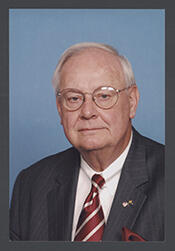
Here you will find contact information for Representative John J.H. "Joe" Schwarz, including email address, phone number, and mailing address.
| Name | John J.H. "Joe" Schwarz |
| Position | Representative |
| State | Michigan |
| District | 7 |
| Party | Republican |
| Status | Former Representative |
| Term Start | January 4, 2005 |
| Term End | January 3, 2007 |
| Terms Served | 1 |
| Born | November 15, 1937 |
| Gender | Male |
| Bioguide ID | S001161 |
About Representative John J.H. "Joe" Schwarz
John Joseph Henry Schwarz, commonly known as Joe Schwarz, is an American physician and independent politician from Michigan who served as a Republican Representative from Michigan in the United States Congress from 2005 to 2007. Born on November 15, 1937, he was elected to the United States House of Representatives in 2004 as a moderate Republican and represented Michigan’s 7th congressional district from January 3, 2005, to January 3, 2007. During his one term in office, Schwarz contributed to the legislative process in the House of Representatives and participated in the democratic process on behalf of his constituents during a significant period in American history.
Schwarz was born in Battle Creek, Michigan, where his family had moved in 1935 so that his father could work as a physician at the Veterans Administration Hospital. He was raised in Battle Creek with two older siblings, Frank and Janet. He attended Fremont Elementary School and W.K. Kellogg Junior High School, and graduated from Battle Creek Central High School, where he was active in athletics, playing on the baseball, swimming, and football teams. He went on to attend the University of Michigan in Ann Arbor, earning a Bachelor of Arts degree in history in 1959. While at the University of Michigan, he played as a center on the 1956 reserve football team, reflecting a continued interest in competitive sports alongside his academic pursuits.
Following his undergraduate studies, Schwarz enrolled at Wayne State University School of Medicine in Detroit, where he received his medical degree in 1964. He then completed an internship at Los Angeles County Hospital. After his internship, he enlisted in the United States Navy and began a period of service that would take him to Southeast Asia. For approximately five years, Schwarz served first with the U.S. Navy in Vietnam and then as an assistant naval attaché in Indonesia. He subsequently joined the Defense Intelligence Agency and later served with the Central Intelligence Agency for three years in Indonesia, Laos, and Vietnam. During his time in Indonesia, he met President Suharto on several occasions and, at the direction of U.S. Ambassador to Indonesia Marshall Green, taught Suharto basic English phrases for about six weeks. He was later stationed with the CIA in Laos during the Laotian Civil War. Schwarz left the CIA in 1970 to further his medical training at Harvard University, where he completed a residency in otolaryngology in 1973.
In 1974, Schwarz returned to Battle Creek with his new family and established himself as a practicing physician in his hometown. He has practiced medicine in Battle Creek since that time and has been associated with the Family Health Center in Battle Creek, a federally qualified health center, where he has continued to see patients. A specialist in otolaryngology, he became a Fellow of the American College of Surgeons, reflecting his professional standing in the medical community. His personal life included marriage and family; his first wife, Anne, died in 1990, and he later divorced his second wife. He has one daughter from his first marriage.
Schwarz’s entry into public office began at the local level. In 1984, he was elected mayor of Battle Creek, marking his first major political role. Two years later, in 1986, he was elected to the Michigan State Senate, where he served for multiple terms and developed a reputation as a pragmatic and moderate Republican. In 2002, he sought higher office by running for governor of Michigan in the Republican primary. He was defeated by Lieutenant Governor Dick Posthumus, receiving 19 percent of the vote to Posthumus’s 81 percent. Despite this loss, Schwarz remained active in state politics and public affairs, maintaining his profile as a centrist Republican voice.
In 2004, Schwarz ran for the U.S. House of Representatives from Michigan’s 7th congressional district. In a competitive Republican primary, he emerged with 28 percent of the vote, defeating Brad Smith (22 percent), Tim Walberg (18 percent), Clark Bisbee (14 percent), Gene DeRossett (11 percent), and Paul DeWeese (7 percent). In the general election that year, he won the seat with 58 percent of the vote against Democrat Sharon Renier, who received 36 percent. Taking office on January 3, 2005, Schwarz served one term in the 109th Congress as a Republican member of the House of Representatives. Known as a moderate Republican, he supported abortion rights and favored embryonic stem cell research, positions that distinguished him from many in his party at the time. During his congressional service, he participated in debates and votes on major national issues and represented the interests of his constituents in Michigan’s 7th district.
Schwarz’s moderate positions contributed to a contested renomination effort in 2006. In the Republican primary for the 7th district that year, he was challenged by former state legislator Tim Walberg. Walberg defeated Schwarz, receiving 53 percent of the vote to Schwarz’s 47 percent. In the subsequent 2006 general election, Walberg won the seat with 50 percent of the vote, while Democrat Sharon Renier received 46 percent, David Horn of the U.S. Taxpayers Party 1 percent, Robert Hutchinson of the Libertarian Party 2 percent, and Schwarz himself garnered 1 percent as a write-in candidate. During his term in Congress, Schwarz cast several notable votes, including a vote in 2006 against the proposed Federal Marriage Amendment, which would have amended the U.S. Constitution to prohibit states from legally recognizing same-sex marriage. His stance on this issue was consistent with his broader reputation as a socially moderate Republican.
After leaving Congress in January 2007, Schwarz continued to play an active role in public policy and civic affairs at both the state and national levels. He was reappointed in February 2007 to the Board of Trustees of the Altarum Institute, a nonprofit health policy research organization based in Ann Arbor, Michigan, a position he had also held prior to his congressional service. That same year, he accepted a teaching position at the University of Michigan’s Gerald R. Ford School of Public Policy, beginning in the fall of 2007, where he contributed his experience in medicine, intelligence, and politics to the education of future public leaders. On the state level, he was appointed to Governor Jennifer Granholm’s Emergency Financial Advisory Panel, led by former Michigan governors William Milliken, a Republican, and James Blanchard, a Democrat, reflecting bipartisan confidence in his judgment on fiscal and policy matters.
Schwarz also remained engaged in health care and professional organizations. As of 2012, he served on the board of directors of the Michigan State Medical Society, continuing his long-standing involvement in organized medicine. From 1991 to 2005, he served as a trustee of Olivet College, and he later acted as campaign chair for the college’s capital campaign during the 2007–2009 academic years, supporting the institution’s development and fundraising efforts. In 2010, he considered running for governor of Michigan as an independent candidate but announced on June 2, 2010, that he would not enter the race due to fundraising challenges. On June 16, 2014, he signed a legal brief in support of same-sex marriage, underscoring his continued advocacy for moderate and inclusive social policies. Throughout his later career, Schwarz has remained active as a physician in Battle Creek and as a public commentator and participant in policy discussions, reflecting the dual commitments to medicine and public service that have characterized his life.