Representative John F. Seiberling
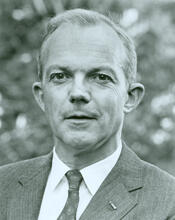
Here you will find contact information for Representative John F. Seiberling, including email address, phone number, and mailing address.
| Name | John F. Seiberling |
| Position | Representative |
| State | Ohio |
| District | 14 |
| Party | Democratic |
| Status | Former Representative |
| Term Start | January 21, 1971 |
| Term End | January 3, 1987 |
| Terms Served | 8 |
| Born | September 8, 1918 |
| Gender | Male |
| Bioguide ID | S000230 |
About Representative John F. Seiberling
John Frederick Seiberling, Jr. (September 8, 1918 – August 2, 2008) was a United States Representative from Ohio who served eight consecutive terms in the U.S. House of Representatives from 1971 to 1987. A member of the Democratic Party, he represented his constituents during a significant period in American history marked by the Vietnam War, the Watergate scandal, and major shifts in environmental and conservation policy. Over the course of his sixteen-year tenure in Congress, he became particularly noted for his leadership on environmental issues and his role in landmark legislative efforts.
Seiberling’s early life and formative experiences helped shape his later commitment to conservation and public service. He grew up with a strong appreciation for the natural landscape of Ohio, especially the Cuyahoga Valley, which would later become central to his legislative legacy. This childhood connection to the region informed his long-standing dream of seeing the valley preserved as part of the National Park System. His upbringing in an era of economic hardship and global conflict also contributed to his interest in public policy and the responsibilities of democratic governance.
Following his education, Seiberling embarked on a career that combined legal training, public affairs, and an emerging interest in environmental protection. Before entering Congress, he gained experience that acquainted him with the workings of government and the law, preparing him for the complexities of legislative service. This background enabled him to navigate the policy challenges of the 1970s and 1980s, including questions of land use, federal authority, and the balance between economic development and environmental stewardship.
Seiberling was elected to the U.S. House of Representatives in 1970 and took office in January 1971, beginning a congressional career that would last until January 1987. As a member of the House of Representatives, he participated actively in the democratic process and contributed to the legislative work of the chamber during a period of intense national debate. He served on the House Judiciary Committee, where he played a notable role in the impeachment hearings against President Richard Nixon arising from the Watergate scandal. His participation in those proceedings placed him at the center of one of the most consequential constitutional crises of the twentieth century and underscored his commitment to the rule of law and congressional oversight.
A defining focus of Seiberling’s congressional service was environmental conservation. In 1974 he helped to establish what later became the Cuyahoga Valley National Park, fulfilling his long-held aspiration to see the Cuyahoga Valley permanently protected. Widely regarded as the “Founding Father” of the Cuyahoga Valley National Park, he worked tirelessly throughout his sixteen years in Congress to secure the valley’s status as a protected part of the National Park System. His efforts extended beyond Ohio, as he was also involved in major national conservation initiatives, including the passage of the Alaska National Interest Lands Conservation Act, which set aside vast tracts of wilderness and national parks in Alaska. His work in this area is documented in the film “A Tree Grows in Washington – The John Seiberling Story,” which chronicles his role in creating the Cuyahoga Valley National Park and advancing the Alaska conservation legislation.
Seiberling’s leadership on environmental and conservation issues earned him wide recognition and numerous honors. In 1986 the National Audubon Society awarded him the Audubon Medal, one of its highest distinctions, in acknowledgment of his significant contributions to the protection of wildlife and natural habitats. In 1988 the Garden Club of America presented him with the Frances K. Hutchinson Medal, further recognizing his national impact on conservation policy and the preservation of open spaces. These awards reflected both his legislative accomplishments and his broader influence on the environmental movement in the United States.
In the years following his retirement from Congress in 1987, Seiberling continued to be honored for his public service and environmental advocacy. On January 8, 2001, he was presented with the Presidential Citizens Medal by President Bill Clinton, one of the nation’s highest civilian honors, for his contributions to the country and his leadership in conservation. On October 12, 2006, President George W. Bush signed into law H.R. 6051, designating the federal building and United States courthouse in Akron, Ohio, as the John F. Seiberling Federal Building and United States Courthouse, a lasting tribute in his home state. His legacy is also commemorated at 2370 Everett Road and at a covered bridge in Peninsula, Ohio, within the Cuyahoga Valley National Park, symbolizing his central role in the park’s creation and preservation.
John Frederick Seiberling, Jr. died on August 2, 2008, leaving behind a legacy as a dedicated public servant, a key figure in the environmental legislative achievements of the late twentieth century, and a prominent advocate for the protection of natural landscapes. His appearances on C-SPAN and in documentary film continue to provide insight into his work in Congress and his enduring influence on national conservation policy.