Representative John B. Shadegg
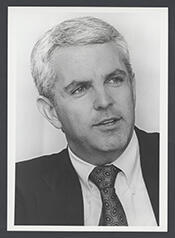
Here you will find contact information for Representative John B. Shadegg, including email address, phone number, and mailing address.
| Name | John B. Shadegg |
| Position | Representative |
| State | Arizona |
| District | 3 |
| Party | Republican |
| Status | Former Representative |
| Term Start | January 4, 1995 |
| Term End | January 3, 2011 |
| Terms Served | 8 |
| Born | October 22, 1949 |
| Gender | Male |
| Bioguide ID | S000275 |
About Representative John B. Shadegg
John Barden Shadegg (born October 22, 1949) is an American politician and attorney who served as a Republican member of the United States House of Representatives from Arizona from 1995 to 2011. He represented Arizona’s 4th congressional district from January 3, 1995, until it was renumbered as the 3rd district following the 2000 census, and then continued to represent the 3rd district through January 3, 2011. Over eight consecutive terms in Congress, Shadegg participated actively in the legislative process and represented a district that included much of northern Phoenix.
Shadegg was born in 1949 and came of age during a period of significant political and social change in the United States, developments that would later inform his strongly held views on limited government and individual liberty. Although detailed public information about his early childhood is limited, his later political career reflected a longstanding engagement with conservative principles and the politics of the American West. By the time he entered national office, he had established himself within Arizona’s Republican circles and was positioned to play a role in the broader conservative movement that gained strength in the 1990s.
Before his election to Congress, Shadegg pursued a career in law and public policy, building the professional foundation that would support his later legislative work. His legal training and practice helped shape his approach to statutory interpretation, regulatory issues, and constitutional questions, and he became known for his interest in the structure and limits of federal power. This background contributed to his reputation as a committed advocate of free-market policies and a critic of what he viewed as federal overreach into private economic and personal decision-making.
Shadegg entered the U.S. House of Representatives in the Republican wave election of 1994 and took office on January 3, 1995. As a member of the House of Representatives from Arizona, he served during a period marked by debates over federal spending, health care, national security, and the role of government in the economy. He consistently aligned with the conservative wing of the Republican Party and was an active participant in efforts to reduce the size and scope of the federal government. Throughout his eight terms, he contributed to the legislative process on a wide range of issues and was a visible figure in intra-party debates over strategy and policy.
During his congressional service, Shadegg became particularly known for his positions on internet gambling, health care reform, and federal economic policy. A staunch advocate of a federal prohibition of online poker, he cosponsored H.R. 4411, the Goodlatte–Leach Internet Gambling Prohibition Act, and H.R. 4777, the Internet Gambling Prohibition Act, in 2006, reflecting his concern about the social and financial consequences of internet gambling. On economic matters, he opposed the Emergency Economic Stabilization Act of 2008, which created the Troubled Assets Relief Program (TARP), voting against the measure on September 29, 2008. Although he supported a subsequent economic stimulus package, he voted “no” on the first economic package and became a proponent of the 2009 Tea Party protests that condemned government bailouts, even speaking at a rally in Phoenix.
Shadegg was also a prominent and vocal critic of health care reform efforts during the Obama administration. He vehemently opposed the health care reform package debated in 2009, characterizing it as “Soviet-style gulag health care” and suggesting it would reduce American health care to a level comparable to that available to prisoners in the Russian gulag system. On March 17, 2010, after criticizing proposals that lacked a single-payer system or a public option, he remarked in an interview, “I would support single-payer,” a statement that drew attention because it appeared to conflict with his earlier rhetoric. His spokeswoman later clarified that he believed forcing private insurers to compete, even through a public option, would be preferable to an individual mandate, which he argued would not work. Shadegg also took controversial positions on national security and civil liberties issues. On October 14, 2009, he joined three fellow representatives in calling for an investigation of the Council on American–Islamic Relations (CAIR) over allegations that the organization sought to place Muslim interns in congressional offices as “spies,” a charge based on a CAIR memo describing plans for “Lobby Day” and internship initiatives. CAIR responded that such programs were common among advocacy groups and accused Shadegg and his colleagues of attempting to intimidate American Muslims who participated in the political process. In November 2009, after New York City Mayor Michael Bloomberg expressed confidence in the security of trying five 9/11 suspects in lower Manhattan, Shadegg responded rhetorically, “Well mayor, how are you going to feel when it is your daughter that is kidnapped at school by a terrorist?” He later apologized to the mayor and his family for the insensitivity of his remarks. In late 2010, he also drew attention for opposing an extension of unemployment benefits, arguing on November 30, 2010, that “the unemployed will spend as little of that money as they possibly can,” and telling commentator Mike Barnicle that he did not accept the view that consumer spending was the primary driver of economic growth.
Electorally, Shadegg maintained a strong hold on his district for most of his tenure. In the 2006 election cycle, he faced Democratic nominee Herb Paine, who had narrowly won his party’s primary to challenge him in November. Shadegg retained his seat with nearly 60 percent of the vote, underscoring his continued popularity among constituents in northern Phoenix and surrounding areas. On February 11, 2008, he announced that he would not run for an eighth term, stating that he wished to “seek a new challenge in a different venue to advance the cause of freedom.” Ten days later, on February 21, he reversed course and declared that he would seek reelection, amid speculation that he might pursue a U.S. Senate seat in 2010 if Senator John McCain were elected president. Shadegg publicly indicated at that time that he intended to leave public life and return to the private sector, but ultimately chose to remain in the House for one more term. On January 14, 2010, he announced that he would not run for reelection to a ninth term, explaining that he would “pursue my commitment to fight for freedom in a different venue.” His service in Congress concluded on January 3, 2011, marking the end of sixteen years in the House of Representatives.
Following his departure from Congress, Shadegg transitioned to work in the policy and legal arenas. Early in 2011, he joined the Goldwater Institute in Phoenix as a senior fellow, aligning himself with an organization known for its advocacy of limited government and constitutional conservatism, although he later ended his formal affiliation with the group. That same year, he joined the law firm Steptoe & Johnson LLP as a partner, dividing his time between the firm’s Washington, D.C., and Phoenix offices and drawing on his legislative experience to advise clients on federal policy and regulatory matters. In 2016, he became a partner at the law firm Polsinelli PC in Phoenix, continuing his involvement in legal practice and public policy. Through these roles, Shadegg has remained engaged in national debates over regulation, economic policy, and individual liberty, extending his influence beyond his years in elected office.