Senator John Franklin Shafroth
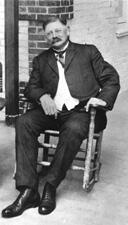
Here you will find contact information for Senator John Franklin Shafroth, including email address, phone number, and mailing address.
| Name | John Franklin Shafroth |
| Position | Senator |
| State | Colorado |
| Party | Democratic |
| Status | Former Representative |
| Term Start | December 2, 1895 |
| Term End | March 3, 1919 |
| Terms Served | 6 |
| Born | June 9, 1854 |
| Gender | Male |
| Bioguide ID | S000279 |
About Senator John Franklin Shafroth
John Franklin Shafroth (June 9, 1854 – February 20, 1922) was an American lawyer and politician who served as a representative, member of the United States Senate, and Governor of Colorado during the late nineteenth and early twentieth centuries. A member of the Democratic Party for much of his later career, he also played prominent roles in the Republican and Silver Republican parties at earlier stages of his public life. Over the course of his service in Congress, he contributed to the legislative process during six terms in office and participated in the democratic process during a significant period in American history, representing the interests of his Colorado constituents in both the House of Representatives and the Senate.
Shafroth was born in Fayette, Missouri, on June 9, 1854. He attended the common schools in his native state and went on to study at the University of Michigan at Ann Arbor, from which he graduated in 1875. He then read law, was admitted to the bar in 1876, and began the practice of law in Fayette. Seeking broader opportunities in the rapidly developing West, he moved to Denver, Colorado, in 1879, where he continued the practice of law and quickly became involved in the city’s legal and civic affairs. His family life in Colorado included the birth of his son, John F. Shafroth Jr., on March 31, 1887; the younger Shafroth would later become a vice admiral in the United States Navy during World War II.
In Denver, Shafroth established a successful legal practice and became associated with other prominent attorneys. Beginning in 1889, one of the attorneys with whom he practiced in partnership for several years was Charles W. Waterman, who would later serve as a United States Senator from Colorado. Shafroth’s growing reputation in the legal community led to his appointment as city attorney of Denver, a position he held from 1887 to 1891. His work as city attorney, combined with his advocacy skills and interest in public policy, positioned him for a transition into elective office and laid the groundwork for his subsequent congressional career.
Shafroth was first elected to national office as a Republican, winning a seat in the United States House of Representatives in the election for the 54th Congress. He presented his credentials and began his service in the House on March 4, 1895. During his early years in Congress, the debate over monetary policy and the free silver issue deeply divided the Republican Party in the West. Shafroth joined other Colorado officials, including Senator Henry M. Teller, in leaving the Republican Party to join the Silver Republican Party. Under the Silver Republican banner, he was re-elected to the 55th, 56th, and 57th Congresses. For the 58th Congress, he presented credentials as a Democratic member-elect, reflecting his gradual alignment with the Democratic Party. He thus served in the House of Representatives from March 4, 1895, until his resignation on February 15, 1904, a period encompassing six consecutive terms in Congress.
Shafroth’s resignation from the House in 1904 was a defining moment in his public life and contributed to his later reputation. After a contested election, he concluded that fraud in twenty-nine electoral precincts made it impossible for him to assert with confidence that he had legitimately won his seat. On that basis, he voluntarily resigned and requested that his opponent, Robert W. Bonynge, be seated in his place. This unusual act of political self-sacrifice led to Shafroth being widely referred to as “Honest John,” a sobriquet used both admiringly and, at times, sarcastically by his contemporaries, but one that underscored his public image as a man of principle.
After leaving the House, Shafroth remained active in Colorado politics and reform movements, and in 1908 he was elected Governor of Colorado. He served as governor from 1909 to 1913. During his tenure in the state’s highest office, he presided over a series of progressive reforms, particularly in the areas of labor and democratic governance. His administration advanced measures to improve working conditions and was instrumental in establishing Colorado’s ballot-initiative and referendum institutions, expanding direct participation by citizens in the legislative process. These reforms placed Colorado among the leading states in the Progressive Era movement for direct democracy and labor protections.
In 1912, Shafroth returned to federal office when he was elected as a Democrat to the United States Senate from Colorado. He began his Senate service on March 4, 1913, and served one full term, ending on March 3, 1919. During this period, he played a significant role in shaping U.S. policy toward America’s overseas territories. He served as chairman of the Committee on Pacific Islands and Puerto Rico during the 63rd, 64th, and 65th Congresses, and he was the leading Senate sponsor of the Jones–Shafroth Act of 1917, landmark legislation that granted United States citizenship to the residents of Puerto Rico and restructured the island’s civil government. He also served as a member of the Committee on the Philippines in the 65th Congress. Shafroth’s Senate career unfolded during a transformative era that included World War I and major domestic reforms, and he sought to represent Colorado’s interests while engaging with national and imperial questions. He was an unsuccessful candidate for re-election in 1918, concluding his Senate service in 1919.
Following his departure from the Senate, Shafroth continued to serve the federal government in a specialized capacity. From 1919 to 1921, he was chairman of the War Minerals Relief Commission, an agency created to address claims arising from wartime mineral production and contracts during World War I. In this role, he oversaw efforts to compensate businesses and individuals affected by abrupt changes in government purchasing and policy at the war’s end. His post-Senate work reflected his ongoing engagement with issues of fairness and economic adjustment in the aftermath of national mobilization.
John Franklin Shafroth died on February 20, 1922. He was interred in Fairmount Cemetery in Denver, Colorado, a city that had been the center of his legal and political career for more than four decades. His personal and official papers, documenting his service as a representative, governor, and senator, are preserved in several archival collections, including the Colorado State Archives (which holds his gubernatorial papers), the Colorado Historical Society Library, and the Denver Public Library’s Western History and Genealogy Department. These collections provide extensive documentation of his contributions to Colorado’s political development, his role in national legislative affairs, and his influence on the governance of America’s overseas territories.