Representative John Gilbert Shaw
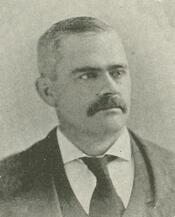
Here you will find contact information for Representative John Gilbert Shaw, including email address, phone number, and mailing address.
| Name | John Gilbert Shaw |
| Position | Representative |
| State | North Carolina |
| District | 3 |
| Party | Democratic |
| Status | Former Representative |
| Term Start | December 2, 1895 |
| Term End | March 3, 1897 |
| Terms Served | 1 |
| Born | January 16, 1859 |
| Gender | Male |
| Bioguide ID | S000309 |
About Representative John Gilbert Shaw
John Gilbert Shaw (January 16, 1859 – July 21, 1932) was a Democratic U.S. Representative from North Carolina who served one term in the United States Congress from 1895 to 1897. Over the course of his public career, he was active in state and local government as a legislator and prosecutor before representing his district in the national legislature during a period of significant political and economic change in the United States.
Shaw was born on January 16, 1859, near Fayetteville, Cumberland County, North Carolina. He attended the common schools in and around Fayetteville, receiving a basic formal education typical of the period. As a young man, he entered the naval-stores business, an important regional industry in the post–Civil War South that involved the production and trade of tar, pitch, turpentine, and related products derived from the area’s extensive pine forests. His early work in this field provided him with practical experience in commerce and the economic life of his region.
While engaged in business, Shaw pursued the study of law. After completing his legal studies, he was admitted to the bar in 1888. He commenced the practice of law in Fayetteville, North Carolina, that same year, establishing himself as an attorney in his home community. His legal practice quickly intersected with public service, and he became involved in state and county affairs as both a legislator and a prosecutor.
In 1888, Shaw was elected to the North Carolina House of Representatives, where he served as a member of the State house of representatives. In this role, he participated in the legislative process at the state level, contributing to the formulation of laws and policies affecting North Carolina during the late nineteenth century. Following his term in the state legislature, he continued his public service as prosecuting attorney for Cumberland County from 1890 to 1894. As county prosecutor, he was responsible for representing the state in criminal proceedings, further solidifying his reputation as a capable lawyer and public official.
Shaw’s experience in law and state government led to his election to the United States House of Representatives. A member of the Democratic Party, he was elected as a Democrat to the Fifty-fourth Congress and served as a Representative from North Carolina from March 4, 1895, to March 3, 1897. During this single term in office, he contributed to the legislative process in the House of Representatives and represented the interests of his constituents at the federal level. His service in Congress occurred during a significant period in American history marked by debates over economic policy, currency, and the role of the federal government in regulating commerce and industry.
In 1896, Shaw was an unsuccessful candidate for reelection to the Fifty-fifth Congress, bringing his congressional career to a close after one term. After leaving the national legislature, he returned to Fayetteville and resumed the practice of law. He continued his legal work in his hometown for the remainder of his life, remaining a figure in the civic and professional life of Cumberland County.
John Gilbert Shaw died in Fayetteville, North Carolina, on July 21, 1932. He was interred in Cross Creek Cemetery in Fayetteville. His career reflected a progression from local business and law to state politics and national office, and his single term in Congress formed part of a broader record of service to his community and state.