Representative John Francis Shelley
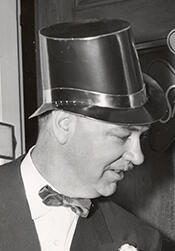
Here you will find contact information for Representative John Francis Shelley, including email address, phone number, and mailing address.
| Name | John Francis Shelley |
| Position | Representative |
| State | California |
| District | 5 |
| Party | Democratic |
| Status | Former Representative |
| Term Start | January 3, 1949 |
| Term End | January 3, 1965 |
| Terms Served | 8 |
| Born | September 3, 1905 |
| Gender | Male |
| Bioguide ID | S000327 |
About Representative John Francis Shelley
John Francis Shelley (September 3, 1905 – September 1, 1974) was an American politician and labor leader who served as a Democratic member of the United States House of Representatives from California from 1949 to 1965 and as the 35th mayor of San Francisco from 1964 to 1968. He was the first Democrat elected mayor of San Francisco in 50 years and the first in an unbroken line of Democratic mayors that continues to the present (as of 2025). His tenure in the House of Representatives, immediately prior to his mayoralty, likewise broke a 44‑year streak of Republican representation from San Francisco and began a continuous succession of Democratic representatives from the city and, coincidentally, from California’s 5th congressional district that also continues to the present (as of 2025).
Shelley was born in San Francisco, California, on September 3, 1905, the oldest of nine children of Dennis Shelley and Mary Casey Shelley. His father emigrated from County Cork, Ireland—then part of the United Kingdom—and worked as a longshoreman on the California waterfront. Shelley was raised in San Francisco’s Mission District, then a tough working‑class neighborhood, where he developed a lasting belief that disputes were best resolved by “working it out instead of fighting it out.” He attended Mission High School, where he was elected student body president in 1923. He went on to the University of San Francisco, where he studied law and played varsity football while supporting himself as a bakery driver. He earned his law degree from the University of San Francisco School of Law in 1932.
After receiving his law degree in 1932, Shelley became a business agent for the Bakery Wagon Drivers Union, marking the beginning of a long and influential career in organized labor. In 1936 he advanced within the American Federation of Labor (AFL), defeating an incumbent to become vice president of the San Francisco Labor Council. In that capacity he represented the council at the Pacific Coast’s first industrial development conference aimed at girls, hosted by several Northern California YWCAs. Shelley was elected president of the San Francisco Labor Council in 1937, just as the council began organizing state agricultural and cannery workers under the AFL banner. He emerged as one of the leaders of the California People’s Legislative Conference, a group that supported Washington State’s minimum wage law while the Supreme Court was considering its constitutionality in West Coast Hotel Co. v. Parrish. Beginning in the spring of 1937, he confronted mounting labor unrest and jurisdictional conflict between the AFL and the Committee for Industrial Organization (CIO). He played a prominent role in efforts to settle strikes and threatened strikes in Northern California following the General Motors sit‑down strike and work stoppages at Works Progress Administration projects around the San Francisco Bay Area. Despite his efforts, on May 1, 1937, some 3,500 members of six unions struck 16 leading San Francisco hotels, and the same day the AFL purged the CIO from the Alameda Labor Council in a move the San Francisco Labor Council strongly opposed. During the hotel strike, 2,100 elevator operators and janitors voted to strike, and other unions, including the milk wagon drivers, also considered walkouts. At the California AFL “loyalty” convention in September 1937, Shelley and his former superior in the Bakery Wagon Drivers Union, George G. Kidwell, were beaten for introducing a resolution calling for an AFL‑CIO merger. A decade later, Shelley was elected president of the state AFL organization, serving in that post until 1950.
Shelley’s prominence in labor affairs led naturally into elective office. He served in the United States Coast Guard during World War II and was elected to the California State Senate, where he served from 1939 to 1947. In the state senate he was identified with pro‑labor causes and fought unsuccessfully to secure confirmation of labor leader Germain Bulcke to the San Francisco Harbor Commission. In 1946 he ran for lieutenant governor of California as a Democrat but was defeated by Republican Goodwin Knight. Shelley then emerged as a key figure in national party politics as a leader of the California delegation to the 1948 Democratic National Convention, where he helped marshal the state’s votes in support of a strong civil rights plank in the party platform.
In 1949 Shelley entered the United States House of Representatives, winning a special election as a Democrat to replace Republican Richard J. Welch, who had died in office. (Data for this special election is not available.) He represented a San Francisco‑based district from 1949 until 1965, serving eight consecutive terms. His service in Congress occurred during a significant period in American history, spanning the post‑World War II era, the early Cold War, and the beginnings of the modern civil rights movement. As a member of the House of Representatives, John Francis Shelley participated actively in the legislative process and represented the interests of his San Francisco constituents, helping to establish a durable Democratic presence in the city’s federal delegation. Prior to his election to Congress, he had been included in the Federal Bureau of Investigation’s Custodial Detention (DETCOM) files, a program identifying individuals for priority arrest in the event of a national emergency. A memorandum by Warren Olney III alerted FBI Director J. Edgar Hoover that Shelley, recently elected to Congress, remained listed as a security risk, along with fellow San Francisco congressman Franck R. Havenner, to be detained in case of a Soviet attack. A July 23, 1962, FBI search slip on Shelley was marked for “subversive references only” and remains heavily redacted, with numerous documents still unreleased.
Shelley resigned from Congress in 1964 after winning election as mayor of San Francisco in November 1963. He defeated his nearest opponent, Harold Dobbs, by nearly a 12‑point margin, 50 percent to 38.5 percent, and was inaugurated in 1964 as the city’s 35th mayor. His mayoralty coincided with a period of rapid social change and urban tension. Shelley’s term was marked by several major labor and civil rights disputes, including strikes over discriminatory hiring practices against African Americans at the Palace Hotel, a public nurses’ strike in 1966, and a threatened strike by the San Francisco Symphony Orchestra in 1967. He was mayor during the Summer of Love in 1967, when the Haight‑Ashbury district became a focal point of youth counterculture, and he confronted broader turmoil in the city, including Black anger directed at the automobile dealerships along Van Ness Avenue’s “auto row.” On September 27, 1966, following the fatal shooting of a Black youth accused of auto theft by a white police officer, riots erupted in the Bayview–Hunters Point neighborhood. Shelley declared a state of emergency in San Francisco for six days. After order was restored, he took public steps to improve relations between city government and the African American community, most notably by appointing Terry Francois as the first African American member of the San Francisco Board of Supervisors. At the same time, Shelley adopted an aggressive stance against several anti‑development movements, including opposition to redevelopment projects at Yerba Buena Gardens and in the Western Addition. He declined to seek a second term as mayor; while he cited health reasons, many observers believed that influential elements of the city’s political and business establishment favored a more strongly pro‑development mayor.
In his later years, Shelley remained an influential figure in San Francisco’s political and labor circles, and his family continued his tradition of public service and union leadership. His son, Kevin Shelley, served on the San Francisco Board of Supervisors from 1990 to 1996, in the California State Assembly from 1997 to 2003, and as California Secretary of State from 2003 to 2005. His daughter, Joan‑Marie Shelley, taught French for three decades at Abraham Lincoln High School and Lowell High School in the San Francisco Unified School District and became a prominent union leader. She served as vice president (1978–1984) and president (1984–1989) of the San Francisco Federation of Teachers and was the founding president (1989–1997) of United Educators of San Francisco, a merged local of the American Federation of Teachers and the National Education Association. John Francis Shelley died in San Francisco on September 1, 1974, two days before his sixty‑ninth birthday. His papers, preserved in the “John F. ‘Jack’ Shelley Papers” collection at the San Francisco Public Library, document his long career in labor, state politics, Congress, and municipal government.