Senator John Sherman
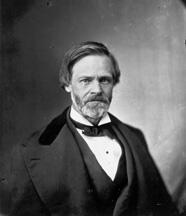
Here you will find contact information for Senator John Sherman, including email address, phone number, and mailing address.
| Name | John Sherman |
| Position | Senator |
| State | Ohio |
| Party | Republican |
| Status | Former Representative |
| Term Start | December 3, 1855 |
| Term End | December 31, 1897 |
| Terms Served | 9 |
| Born | May 10, 1823 |
| Gender | Male |
| Bioguide ID | S000346 |
About Senator John Sherman
John Sherman served as a Senator from Ohio in the United States Congress from 1855 to 1897. A member of the Republican Party, John Sherman contributed to the legislative process during 9 terms in office.
John Sherman’s service in Congress occurred during a significant period in American history. As a member of the Senate, John Sherman participated in the democratic process and represented the interests of constituents.
John Sherman (May 10, 1823 – October 22, 1900) was an American politician from Ohio who served in federal office throughout the Civil War and into the late nineteenth century. A member of the Republican Party, he served in both houses of the U.S. Congress. He also served as Secretary of the Treasury and Secretary of State. Sherman sought the Republican presidential nomination three times, coming closest in 1888, but was never chosen by the party. Between 1861-1897, John Sherman served in the U.S. Senate for nearly 32 years and holds the record for longest serving senator from the state of Ohio (1861–1877; 1881–1897). Born in Lancaster, Ohio, Sherman later moved to Mansfield, Ohio, where he began a law career before entering politics. He was the younger brother of Union general William Tecumseh Sherman, with whom he had a close relationship. Initially a Whig, Sherman was among those anti-slavery activists who formed what became the Republican Party. He served three terms in the House of Representatives. As a member of the House, Sherman traveled to Kansas to investigate the unrest between pro- and anti-slavery partisans there. He rose in party leadership and was nearly elected Speaker in 1859. Sherman was elected to the Senate in 1861. As a senator, he was a leader in financial matters, helping to redesign the United States’ monetary system to meet the needs of a nation torn apart by civil war. He also served as the chair of the Senate Agriculture Committee during his 32 years in the Senate. After the war, he worked to produce legislation that would restore the nation’s credit abroad and produce a stable, gold-backed currency at home. Serving as Secretary of the Treasury in the administration of Rutherford B. Hayes, Sherman continued his efforts for financial stability and solvency, overseeing an end to wartime inflationary measures and a return to gold-backed money. He returned to the Senate after his term expired, serving there for a further sixteen years. During that time he continued his work on financial legislation, as well as writing and debating laws on immigration, business competition law, and the regulation of interstate commerce. Sherman was the principal author of the Sherman Antitrust Act, which was signed into law by President Benjamin Harrison in 1890. In 1897, President William McKinley appointed him Secretary of State. Failing health and declining faculties made him unable to handle the burdens of the job, and he retired in 1898 at the start of the Spanish–American War. Sherman died at his home in Washington, D.C., in 1900 at age 77.