Representative John Humphrey Small
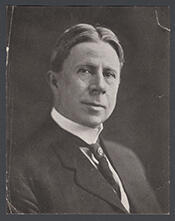
Here you will find contact information for Representative John Humphrey Small, including email address, phone number, and mailing address.
| Name | John Humphrey Small |
| Position | Representative |
| State | North Carolina |
| District | 1 |
| Party | Democratic |
| Status | Former Representative |
| Term Start | December 4, 1899 |
| Term End | March 3, 1921 |
| Terms Served | 11 |
| Born | August 29, 1858 |
| Gender | Male |
| Bioguide ID | S000500 |
About Representative John Humphrey Small
John Humphrey Small (August 29, 1858 – July 13, 1946) was an American attorney and Democratic politician who served eleven consecutive terms as a U.S. Representative from North Carolina from 1899 to 1921. Over more than two decades in the House of Representatives, he represented North Carolina’s 1st congressional district and contributed to the legislative process during a significant period in American history, including the Progressive Era and World War I.
Small was born in Washington, Beaufort County, North Carolina, on August 29, 1858. He was educated in private schools before attending Trinity College in Durham, North Carolina, which later became Duke University. While at Trinity, he was a member of the Chi Phi fraternity. After leaving college, he began his professional life in education, teaching school from 1876 to 1880. During this period he also prepared for a career in law, studying as a legal apprentice rather than through formal law school, a common practice of the time.
In 1881 Small was admitted to the bar and commenced the practice of law in his hometown of Washington, North Carolina. That same year he was elected reading clerk of the North Carolina State Senate, marking his early involvement in state government. Also in 1881 he was appointed superintendent of public instruction for Beaufort County, reflecting his continued interest in education and local public affairs. From 1882 to 1885 he served as solicitor of the inferior court of Beaufort County, gaining further experience in the legal system and public service.
Small’s local influence expanded as he took on multiple roles in Beaufort County and the city of Washington. From 1883 to 1886 he served as editor of the Washington Gazette, using the press as a platform in an era when newspapers were central to political life. He was appointed attorney to the Board of Commissioners of Beaufort County, a position he held from 1888 to 1896. At the municipal level, he was elected to the Washington city council, serving from 1887 to 1890, and he held the office of mayor of Washington in 1889 and 1890, at a time when the mayoralty rotated among council members. Active in the Democratic Party, Small was a delegate to every Democratic State convention from 1889 to 1920, solidifying his role as a party leader in eastern North Carolina.
Building on his local and state experience, Small was elected as a Democrat to the Fifty-sixth Congress and to the ten succeeding Congresses, serving from March 4, 1899, to March 3, 1921. Representing North Carolina’s 1st congressional district, he participated in the national legislative process during a transformative era that encompassed industrial expansion, regulatory reform, and the First World War. During the Sixty-fifth Congress he served as chairman of the House Committee on Rivers and Harbors, a key committee responsible for federal legislation and appropriations related to waterways, ports, and infrastructure. In that capacity he played a significant role in shaping policies affecting navigation, commerce, and internal improvements, matters of particular importance to his coastal and riverine district.
After more than two decades in Congress, Small declined to be a candidate for renomination in 1920 and retired from elective office at the close of his term in March 1921. He remained in Washington, D.C., where he revived and continued his legal practice until 1931. His post-congressional years thus combined legal work with the perspective and experience of a long-serving former legislator, allowing him to remain engaged in the legal and political milieu of the nation’s capital.
In later life, Small returned to his native Washington, North Carolina. He inherited Rosedale Plantation, a property that would later be recognized for its historical significance and listed on the National Register of Historic Places in 1982. John Humphrey Small died in Washington, North Carolina, on July 13, 1946. He was interred in Oakdale Cemetery, leaving a legacy as a prominent eastern North Carolina lawyer, local official, party leader, and long-serving member of the United States House of Representatives.