Senator John Coit Spooner
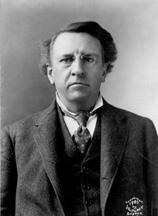
Here you will find contact information for Senator John Coit Spooner, including email address, phone number, and mailing address.
| Name | John Coit Spooner |
| Position | Senator |
| State | Wisconsin |
| Party | Republican |
| Status | Former Representative |
| Term Start | December 7, 1885 |
| Term End | April 30, 1907 |
| Terms Served | 3 |
| Born | January 6, 1843 |
| Gender | Male |
| Bioguide ID | S000741 |
About Senator John Coit Spooner
John Coit Spooner (January 6, 1843 – June 11, 1919) was an American lawyer and Republican politician from Hudson, Wisconsin, who served three terms as a United States Senator from Wisconsin between 1885 and 1907. A leading conservative, or “stalwart,” Republican of his era, he was widely regarded as one of the most influential members of the Senate and was considered one of the “Big Four” key Republicans—along with Orville H. Platt of Connecticut, William B. Allison of Iowa, and Nelson W. Aldrich of Rhode Island—who largely controlled the Senate’s major decisions at the turn of the twentieth century. He is perhaps best known as the author of the Spooner Act, which authorized the United States to purchase the Panama Canal Zone.
Spooner was born in Lawrenceburg, Dearborn County, Indiana, on January 6, 1843, the son of Philip Loring Spooner and Lydia (Coit) Spooner. His father was an attorney and judge who served on the bench in both Indiana and Wisconsin, providing an early model of legal and public service. In 1859 the family moved to Madison, Wisconsin, where Spooner attended the local common schools. He enrolled at the University of Wisconsin and graduated in 1864 with the degree of Bachelor of Philosophy (Philosophiae Baccalaureus, or P.B.). While in college he joined the Psi Upsilon fraternity and was elected to membership in Phi Beta Kappa, reflecting both his social engagement and academic distinction.
During the American Civil War, Spooner enlisted in the Union Army as a private in Company D, 40th Wisconsin Infantry, a three‑month regiment. After completing his 100 days of service, he returned home and recruited a company largely from among his college classmates, forming Company A, 50th Wisconsin Infantry, which he commanded as a captain. At the close of the war he received a brevet promotion to major in recognition of his service. Following the war, he entered state service as private secretary to Wisconsin Governor Lucius Fairchild, later becoming the governor’s military secretary with the rank of colonel. He subsequently served as quartermaster general of the Wisconsin Militia with the rank of brigadier general, roles that furthered his experience in administration and public affairs.
Spooner studied law under the guidance of his father from 1865 to 1867 and was admitted to the bar in 1867. He was appointed assistant attorney general of Wisconsin and served in that capacity from 1869 to 1870. In 1869 the University of Wisconsin awarded him an honorary Master of Arts degree. In 1870 he moved to Hudson, Wisconsin, where he practiced law from 1870 to 1884, specializing in railroad and corporation law. He served as counsel for the West Wisconsin Railway and the Chicago, St. Paul and Minneapolis Railway, establishing himself as a prominent attorney in a rapidly expanding field. His early political career included service as a member of the Wisconsin State Assembly in 1872, and he later served on the University of Wisconsin Board of Regents from 1882 to 1886, maintaining close ties to his alma mater and to state educational policy.
On January 27, 1885, Spooner was elected as a Republican to the United States Senate, representing Wisconsin from 1885 to 1891. During this first term he served as chairman of the Senate Committee on Claims from 1886 to 1891 and contributed to the legislative process during a period of significant economic and political change in the United States. He was defeated for reelection in 1891 by Democrat William F. Vilas. In 1888 and again in 1892, Spooner served as a delegate to the Republican National Convention and chaired Wisconsin’s delegation on both occasions. He was the unsuccessful Republican nominee for governor of Wisconsin in 1892. Following that defeat, he moved back to Madison and resumed the practice of law in 1893, remaining an influential figure in state and national Republican circles.
Spooner returned to the Senate in 1897, when he was elected to succeed William F. Vilas. He was reelected in 1903 and served from 1897 until his resignation in 1907. During this second and more prominent period of congressional service, he chaired the Committee on Canadian Relations from 1897 to 1899 and the powerful Committee on Rules from 1899 to 1907. As a member of the Senate during a transformative era in American foreign and domestic policy, Spooner was credited with drafting the provision of the Sherman Antitrust Act of 1890 that enabled the federal government to prosecute the Standard Oil Company. He also played a leading role in promoting legislation that established a civil government for the Philippines following the Spanish–American War. His most famous legislative achievement, the Spooner Act of 1902, authorized President Theodore Roosevelt to purchase the Panama Canal Zone, thereby enabling the eventual construction of the Panama Canal. A popular and respected figure among Republicans, Spooner declined three cabinet offers during his career: Secretary of the Interior under President William McKinley in 1898, Attorney General under McKinley in 1901, and Secretary of State under President William Howard Taft in 1909.
Politically, Spooner was a conservative Republican and a leading figure of the party’s stalwart wing. In Wisconsin he engaged in a bitter and long‑running rivalry with his progressive Republican contemporary, U.S. Senator Robert M. “Fighting Bob” La Follette, over control of the state’s Republican organization and the direction of its policies. Spooner strongly opposed La Follette’s progressive reforms and was one of the early and vocal opponents of direct primary elections, favoring traditional party conventions and organizational control. He warned that direct primaries would “destroy the party machinery … and would build up a lot of personal machines, and would make every man a self‑seeker, and would degrade politics by turning candidacies into bitter personal wrangles.” His conservative stance on party organization and reform placed him at odds with the rising progressive movement within his own state and party.
In March 1907, Spooner shocked Wisconsin and much of the national political community by announcing his sudden resignation from the Senate, with nearly two years remaining in his term. In his letter to the governor, he explained that he felt compelled to return to private legal practice to secure his financial future and provide for his retirement and his heirs, and he emphasized that he had not intended to seek reelection. Political observers speculated that he had also timed his resignation to catch the La Follette faction unprepared for a Senate contest. President Theodore Roosevelt, upon learning of Spooner’s decision, remarked, “I can not sufficiently express my regret at Senator Spooner’s resignation. We lose one of the ablest, most efficient, most fearless, and most upright public servants that the nation has had.” After leaving Congress, Spooner moved to New York City, where he resumed the practice of law. In 1910 he and Joseph P. Cotton formed the firm of Spooner & Cotton, in which he practiced until his death.
Spooner’s later years were spent in New York, though he maintained his connections to Wisconsin. He received the honorary degree of Doctor of Laws (LL.D.) from the University of Wisconsin in 1894, and later received honorary LL.D. degrees from Yale University in 1908 and Columbia University in 1909, reflecting national recognition of his legal and political stature. The town of Spooner, Wisconsin, was named in his honor, a testament to his prominence in the state’s history. On June 11, 1919, he died at his home at 205 West 57th Street in Manhattan, following a nervous breakdown. He was interred in Forest Hill Cemetery in Madison, Wisconsin, returning in death to the state that had been the center of his public life.
In his personal life, Spooner married Annie Main of Madison in 1868. The couple had four children: Charles Philip Spooner (1869–1947), Willet Main Spooner (1871–1928), John C. Spooner (1877–1881), and Philip Loring Spooner (1879–1945), three of whom survived to adulthood. His life and career have been the subject of scholarly study, including Dorothy Ganfield Fowler’s biography “John Coit Spooner: Defender of Presidents” (1961) and James Richard Parker’s doctoral dissertation “Senator John C. Spooner, 1897–1907” (1972), as well as Parker’s article “Paternalism and Racism: Senator John C. Spooner and American Minorities, 1897–1907” in the Wisconsin Magazine of History. Through his long legal career, his three terms in the United States Senate from 1885 to 1891 and 1897 to 1907, and his leadership in major legislative initiatives, Spooner played a significant role in shaping American policy during a pivotal period in the nation’s development.