Representative John M. Spratt, Jr.
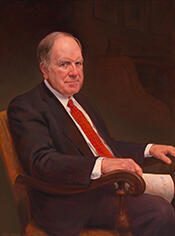
Here you will find contact information for Representative John M. Spratt, Jr., including email address, phone number, and mailing address.
| Name | John M. Spratt, Jr. |
| Position | Representative |
| State | South Carolina |
| District | 5 |
| Party | Democratic |
| Status | Former Representative |
| Term Start | January 3, 1983 |
| Term End | January 3, 2011 |
| Terms Served | 14 |
| Born | November 1, 1942 |
| Gender | Male |
| Bioguide ID | S000749 |
About Representative John M. Spratt, Jr.
John McKee Spratt Jr. (November 1, 1942 – December 14, 2024) was an American politician, attorney, and educator who represented South Carolina’s 5th congressional district in the U.S. House of Representatives from 1983 to 2011. A member of the Democratic Party, he served 14 consecutive terms in Congress, during which his district covered all or part of 14 counties in north-central South Carolina, including the cities of Rock Hill and Sumter. Over the course of his tenure, he became the dean of the South Carolina congressional delegation, chairman of the House Committee on the Budget, and the second-ranking Democrat on the House Committee on Armed Services, emerging as a key figure in national fiscal and defense policy.
Spratt was born in Charlotte, North Carolina, on November 1, 1942, and raised in York, South Carolina. His father founded the Bank of Fort Mill and the York law firm where Spratt would later practice law, embedding him early in the civic and business life of the region. His only sibling, Jane Bratton Spratt McColl, married Hugh McColl, who would become chairman and chief executive officer of Bank of America Corporation. Spratt attended York High School, where he was student body president, and went on to Davidson College, earning a bachelor’s degree in history in 1964 and again serving as student body president. He continued his education as a Marshall Scholar at Corpus Christi College, Oxford University, receiving a master’s degree in philosophy, politics, and economics in 1966, and then earned an LL.B. from Yale Law School in 1969, completing a rigorous academic training that prepared him for a career in law, public service, and national policymaking.
Following law school, Spratt served on active duty in the United States Army from 1969 to 1971, attaining the rank of captain. He was assigned to the Operations Analysis Group in the Office of the Assistant Secretary of Defense (Comptroller) at the Pentagon, where he worked on analytical and budget-related issues and was awarded the Meritorious Service Medal for his performance. After completing his military service, he returned to York in 1971 and joined the family firm, Spratt, McKeown, and Spratt. In private practice he served as county attorney and school board attorney, roles that deepened his engagement with local governance and public institutions. He also became president of the Bank of Fort Mill, ran a small insurance agency, and owned a farm in Fort Mill, reflecting a broad involvement in the legal, financial, and agricultural life of his community.
Spratt’s political involvement began early within the Democratic Party. At age 22, he was elected a delegate to the 1964 Democratic National Convention, signaling his emergence as a young party activist. He was first elected to the U.S. House of Representatives in 1982, succeeding Democrat Kenneth Holland, and took office on January 3, 1983. Although parts of his district were becoming more receptive to Republican candidates at the national level, the Republican Party remained relatively weak locally for many years, and from 1984 to 1992 he faced a Republican opponent only twice, winning easily in both contests. In the 1994 Republican wave election he was nearly unseated by Republican Larry Bigham, surviving by about 6,300 votes, but he defeated Bigham again by a somewhat larger margin in 1996. From 1998 through 2008, Spratt generally won reelection with relatively little difficulty, owing to his popularity, his reputation for diligence, and his skill in campaigning in a politically mixed district. During his House career he typically stayed out of presidential primary politics because the national Democratic brand was not always popular in his district; for example, he did not endorse a candidate in the 2008 Democratic presidential primaries. Nonetheless, he was regarded in Washington as a serious budget expert and was rumored to have been considered by President Barack Obama for the post of Director of the Office of Management and Budget, a position that ultimately went to Peter R. Orszag, whom Spratt had helped hire as director of the Congressional Budget Office.
During his 28 years in Congress, Spratt became one of the House’s leading authorities on budgetary and defense matters. As chairman of the House Committee on the Budget and a senior member of the Committee on Armed Services, he played a central role in shaping fiscal and national security policy. On Armed Services, he served on the Subcommittee on Oversight and Investigations, the Subcommittee on Strategic Forces, and the Subcommittee on Air and Land Forces. He co-chaired several caucuses, including the Textile Caucus, the Bearing Caucus, and the Nuclear Energy Caucus, reflecting his attention to both regional economic interests and national energy and industrial policy. He was widely recognized for his legislative skill and bipartisan approach: Columbia’s newspaper The State described him as “one of his party’s most reliable ‘bridges’ to the Republican side,” National Journal featured him as “a stand-out” in Congress, likening his legislative skills to the “best infielders in baseball,” and a Washingtonian magazine survey of congressional staff rated him a “Workhorse” and a “House Member I’d Like to See Win the Presidency in 2008.”
Spratt’s legislative record was marked by significant contributions to federal fiscal policy and major domestic initiatives. He co-authored the Balanced Budget Act of 1997, which helped bring the federal budget into surplus for the first time in three decades. In 2003, he engineered an amendment to the defense appropriations bill that shifted $30 million to the Airborne Laser program, underscoring his influence on defense spending priorities. In the 111th Congress, he supported a broad range of legislation responding to the financial crisis and recession, including the American Recovery and Reinvestment Act of 2009, extensions of unemployment benefits, increased infrastructure and workforce funding, expanded federal financial aid, and measures to assist homeowners facing foreclosure and small businesses under economic strain. He backed legislation to reduce estate taxes for 99.8 percent of estates, strengthen clean water protections, reform health insurance markets, expand the State Children’s Health Insurance Program, adjust Medicare payment systems, and promote clean energy. He supported “pay as you go” budget rules, defense authorizations for ongoing operations in Afghanistan and Iraq, and increased investment in Veterans Affairs hospitals. On March 21, 2010, as chairman of the House Budget Committee, he made the floor motion that brought H.R. 3590, the Patient Protection and Affordable Care Act, to a vote in the House, joining the majority in approving the Senate version of the health care reform bill. He later recalled that “it was like sharing a moment in history,” as he stood at the clerk’s desk when the bill was called.
Spratt’s expertise in fiscal matters was further recognized on March 24, 2010, when he was appointed to the president’s National Commission on Fiscal Responsibility and Reform. In covering the appointment, Dow Jones Newswires described him as “one of the staunchest fiscal conservatives among House Democrats.” Near the end of his congressional tenure, he helped compile a 65-page report on options for addressing the nation’s budget deficit, reflecting his long-standing concern with federal fiscal sustainability. Despite his record and seniority, by 2010 the political climate in his district had shifted significantly. His close ties to the Democratic leadership, the district’s double-digit unemployment rate, and a growing Republican base made his reelection prospects uncertain and the subject of national political commentary. In the 2010 election he was defeated by Republican Mick Mulvaney, who won by a margin of 55 percent to 45 percent—one of the largest margins of defeat for an incumbent in that election cycle. Mulvaney and national Republican strategists sought to turn Spratt’s bipartisan and fiscal credentials against him, arguing that he was no longer the budget hawk he had been in 1997 and criticizing his relationship with Speaker Nancy Pelosi. The National Republican Congressional Committee labeled him “amnesiac,” claiming he had lost touch with developments in Washington. President Barack Obama campaigned with Spratt, flying with him into Charlotte on Air Force One, but the national political headwinds proved insurmountable. Spratt was one of three Democratic House committee chairmen to lose to Tea Party–backed challengers that year. His service in Congress formally concluded on January 3, 2011.
Beyond his public career, Spratt maintained a long and active family and community life. On May 31, 1968, he married Jane Stacy of Filbert, South Carolina. They had three daughters—Susan Spratt, Sarah Spratt, and Catherine Spratt—and five grandchildren: Lily Tendler, Jack Tendler, Max Tendler, Jane Grace Brennan, and James Brennan. Spratt resided in York, South Carolina, where he was a member of First Presbyterian Church and participated in the United Way and other civic and charitable organizations. His family connections extended into the national business community through his brother-in-law Hugh McColl, who served as chief executive officer of NationsBank and later Bank of America. After leaving Congress, Spratt continued his engagement with public affairs and education as Visiting Distinguished Professor of Public Policy at Winthrop University, sharing his experience in budgeting, defense, and legislative process with students and the broader academic community.
In 2010, Spratt was diagnosed with Parkinson’s disease, a condition that would ultimately end his life. He died at his home in York on December 14, 2024, at the age of 82. His funeral service was held on December 18, 2024, at First Presbyterian Church in York, followed by burial at Rose Hill Cemetery. The service included a eulogy by Representative Jim Clyburn of South Carolina’s 6th congressional district, his colleague in the House from 1993 to 2011, who described Spratt as “an inconspicuous genius and the most ordinary, extraordinary person I have ever known.” In recognition of his decades of service to the state and the nation, Governor Henry McMaster ordered flags in South Carolina flown at half-staff on the day of his funeral.