Representative John Henry Starin
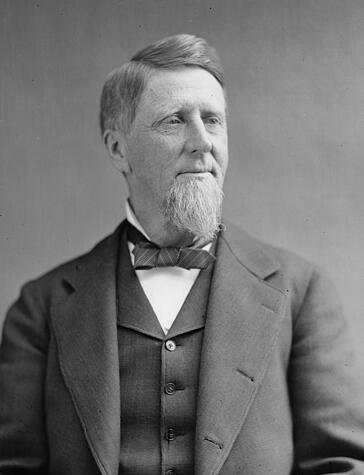
Here you will find contact information for Representative John Henry Starin, including email address, phone number, and mailing address.
| Name | John Henry Starin |
| Position | Representative |
| State | New York |
| District | 20 |
| Party | Republican |
| Status | Former Representative |
| Term Start | October 15, 1877 |
| Term End | March 3, 1881 |
| Terms Served | 2 |
| Born | August 27, 1825 |
| Gender | Male |
| Bioguide ID | S000808 |
About Representative John Henry Starin
John Henry Starin (August 27, 1825 – March 21, 1909) was an American entrepreneur, transportation magnate, and Republican politician who served as a Representative from New York in the United States Congress from 1877 to 1881. Over the course of a long and varied career, he became a leading figure in the freight and passenger transportation industries, a prominent banker, and the founder of Starin’s Glen Island Resort, widely regarded as America’s first amusement park.
Starin was born on August 27, 1825, in Sammonsville, Fulton County, then a part of Montgomery County, New York. He was the grandson of Thomas Sammons, linking him to a locally prominent family in upstate New York. He pursued academic studies in Esperance, New York, where in 1842 he began the study of medicine. Although he did not ultimately practice as a physician, this early training reflected the breadth of his interests and provided a foundation for his later business and public service activities.
Abandoning a medical career, Starin turned to commerce in the mid-1840s. He established and operated a drug and medicine business in Fultonville, New York, from 1845 to 1858, building his first substantial enterprise in a growing canal-side community. From 1848 to 1852 he also served as postmaster of Fultonville, an appointment that placed him at the center of local communications and commerce and introduced him to the logistical challenges of moving goods and information. These experiences drew him toward the transportation field, where he would make his greatest mark.
Starin entered the freight and logistics business as the founder and president of the Starin City River & Harbor Transportation Co., a firm that capitalized on the rapid expansion of river and harbor traffic in the mid-nineteenth century. By the mid-1870s he was considered the “heaviest operator in the freight business in the United States,” controlling extensive fleets of steamboats, barges, and tugboats that served New York Harbor and inland waterways. At the time of his death he was likely the largest individual owner of such vessels in the country. His success in transportation led him into related ventures, including railroading, and he later served as a member of the New York City Rapid Transit Commission, contributing to the early planning and oversight of urban transit development.
Building on his prominence in business and local affairs, Starin entered national politics as a member of the Republican Party. He was elected as a Republican to the Forty-fifth and Forty-sixth Congresses and served in the U.S. House of Representatives from March 4, 1877, to March 3, 1881. Representing a New York district during a significant period in American history following the Civil War and Reconstruction, he participated in the legislative process and the broader democratic governance of the era. During his two terms in office, he represented the interests of his constituents while bringing to Congress the perspective of a large-scale transportation and business operator.
After leaving Congress, Starin continued to expand his business and financial activities. From 1883 to 1909 he served as president of the Fultonville National Bank, reflecting his standing in the financial community of upstate New York. He was also a director of the North River Bank in New York City and the Mohawk River National Bank, positions that underscored his influence in both regional and metropolitan banking. His engagement in railroading and his service on the New York City Rapid Transit Commission further demonstrated his ongoing role in shaping the infrastructure and economic development of New York State and its principal city.
One of Starin’s most notable and enduring achievements was in the field of recreation and tourism. In 1878 he purchased a series of small islands off the coast of New Rochelle, New York, initially for use as a country estate. He soon transformed the property into an amusement and resort complex known as Starin’s Glen Island. Operated as a select summer resort, Glen Island is widely recognized as America’s first amusement park. Starin maintained a fleet of twelve steamboats to transport visitors between New York City and the islands, and the resort quickly became a major attraction. By 1882 attendance reached half a million visitors annually, and within six years it exceeded one million. The park’s attractions included a zoo, a natural history museum, a railway, a German beer garden built around a castle-like structure that still stands, a bathing beach, and a Chinese pagoda. A chain ferry carried visitors from a mainland dock on Neptune Island. Starin emphasized order and decorum at Glen Island, promoting what he described as a “middle-class code of conduct” to ensure a well-behaved, orderly environment in contrast to the rougher entertainments of New York City. The popularity of Glen Island contributed to a building boom in New Rochelle at the turn of the twentieth century, helping to transform it into a thriving summer resort community.
Starin also made elaborate arrangements for his and his family’s final resting place. In the early 1880s, the Starin Mausoleum was constructed in Fultonville Cemetery in Fultonville, New York. The structure was approximately 50 feet tall, 33 feet across, and 24 feet deep, reflecting both his wealth and his desire for a prominent memorial. When John H. Starin died, he left the ownership and care of the mausoleum to the Starin Benevolent & Industrial Association. Over time, however, the association ceased to exist in 1917, and by the 1970s the mausoleum had fallen into disrepair. Around that period it was vandalized, including an incident on Halloween in which most of the caskets and remains were desecrated. In the summer of 1975 the mausoleum, then largely deteriorated, was taken down. The remaining human remains were reinterred in front of the original site, and markers were placed on the graves. Today, a modest upright granite slab with a bronze face marks the graves of Starin and his family members where the mausoleum once stood.
John Henry Starin died in New York City on March 21, 1909, at his residence at 9 West 38th Street in Manhattan. At the time of his death he was widely regarded as one of the most significant individual owners of steamboats, barges, and tugboats in the United States, as well as a notable former member of Congress and a pioneer in the development of modern amusement parks and resort tourism. He was interred in the Starin Mausoleum in Fultonville Cemetery, Fultonville, New York, and although the mausoleum no longer stands, his legacy endures in the history of American transportation, recreation, and public service.