Representative John Allen Sterling
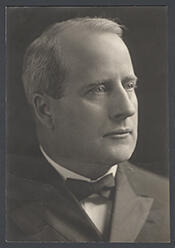
Here you will find contact information for Representative John Allen Sterling, including email address, phone number, and mailing address.
| Name | John Allen Sterling |
| Position | Representative |
| State | Illinois |
| District | 17 |
| Party | Republican |
| Status | Former Representative |
| Term Start | November 9, 1903 |
| Term End | March 3, 1919 |
| Terms Served | 7 |
| Born | February 1, 1857 |
| Gender | Male |
| Bioguide ID | S000870 |
About Representative John Allen Sterling
John Allen Sterling (February 1, 1857 – October 17, 1918) was a Republican member of the United States House of Representatives from Illinois who served seven terms in Congress between 1903 and 1919. A prominent lawyer and party leader from McLean County, he was the brother of Thomas Sterling, who later served as a United States senator from South Dakota. His congressional career spanned a significant period in American history, during which he participated actively in the legislative process and represented the interests of his Illinois constituents.
Sterling was born on February 1, 1857, near Le Roy in McLean County, Illinois, to Charles Sterling (1821–1905) and Anna Kessler (1827–1908). He was educated in the public schools of the region, reflecting the expanding system of common schooling in the post–Civil War Midwest. Showing early aptitude for scholarship and public service, he pursued higher education at Illinois Wesleyan University in Bloomington, Illinois, from which he graduated in 1881. His upbringing in a rural Illinois community and his education at a local university helped shape his later commitment to public education and civic life.
Immediately after graduating, Sterling embarked on a career in education. From 1881 to 1883 he served as superintendent of the public schools of Lexington, Illinois (now within Lexington Community Unit School District 7). In this role he oversaw local educational administration at a time when communities were working to standardize and improve public schooling. His experience as an educator provided him with firsthand knowledge of the needs of students, teachers, and local governments, experience that later informed his legislative perspective.
Sterling subsequently turned to the study of law. He read law in the traditional manner of the period, was admitted to the bar in December 1884, and commenced the practice of law in Bloomington, Illinois. Building a reputation as a capable attorney, he entered public office as state’s attorney of McLean County, serving from 1892 to 1896. In that capacity he was responsible for prosecuting criminal cases and representing the county in legal matters, further enhancing his standing in the community. He also became active in party affairs, serving as a member of the Republican State Central Committee from 1896 to 1898, a position that placed him within the organizational leadership of the Illinois Republican Party during a time of national political realignment.
On the strength of his legal and political record, Sterling was elected as a Republican to the Fifty-eighth Congress and took his seat in the U.S. House of Representatives on March 4, 1903. He was subsequently reelected to the Fifty-ninth, Sixtieth, Sixty-first, and Sixty-second Congresses, serving continuously from March 4, 1903, to March 3, 1913. During these years he contributed to the legislative process in an era marked by the Progressive movement, debates over regulation of commerce, and reforms in federal administration. His service in Congress occurred during a significant period in American history, and he participated in the democratic process as a representative of his Illinois district, working to advance the interests of his constituents within the broader national agenda.
Sterling’s prominence in the House was underscored by his selection in 1912 as one of the managers appointed by the House of Representatives to conduct the impeachment proceedings against Robert W. Archbald, a judge of the United States Commerce Court. In this quasi-prosecutorial role before the Senate, he helped present the case that led to Archbald’s conviction and removal from office, a notable episode in the history of congressional oversight of the federal judiciary. Although he lost his bid for reelection to the Sixty-third Congress in 1912, his defeat proved temporary. He returned to the House after winning election to the Sixty-fourth and Sixty-fifth Congresses, resuming service on March 4, 1915. In total, he served seven terms in Congress between 1903 and 1919, reflecting sustained support from his district and a long-standing role in Republican legislative efforts.
Sterling remained in office until his death in 1918. On October 17, 1918, while still serving as a member of the House of Representatives, he died near Pontiac, Illinois, as the result of an automobile accident. His death placed him among the members of the United States Congress who died in office in the first half of the twentieth century. He was interred in Park Hill Cemetery in Bloomington, Illinois, returning to the community where he had built his legal career and begun his public life.