Representative John Cirby Sturtevant
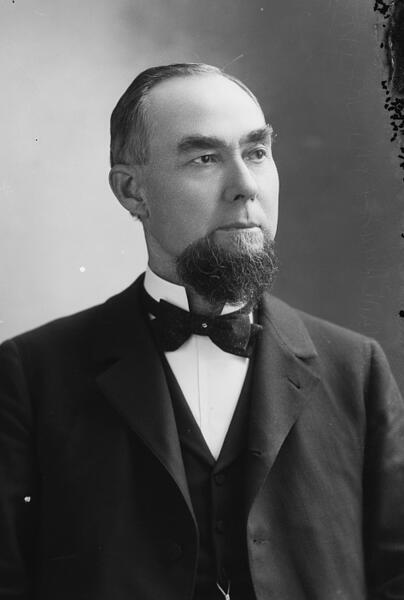
Here you will find contact information for Representative John Cirby Sturtevant, including email address, phone number, and mailing address.
| Name | John Cirby Sturtevant |
| Position | Representative |
| State | Pennsylvania |
| District | 26 |
| Party | Republican |
| Status | Former Representative |
| Term Start | March 15, 1897 |
| Term End | March 3, 1899 |
| Terms Served | 1 |
| Born | February 20, 1835 |
| Gender | Male |
| Bioguide ID | S001050 |
About Representative John Cirby Sturtevant
John Cirby Sturtevant (February 20, 1835 – December 20, 1912) was a Republican member of the United States House of Representatives from Pennsylvania who served one term in Congress from 1897 to 1899. He was born in Spring Township, Crawford County, Pennsylvania, on February 20, 1835. Raised in rural western Pennsylvania, he attended the common schools of his community, receiving the basic education typical of mid-19th-century public instruction in the region.
As a young man, Sturtevant worked as both a teacher and a farmer, occupations that reflected the agrarian character of Crawford County at the time and provided him with early experience in local affairs and community leadership. His familiarity with the concerns of rural Pennsylvanians would later inform his political career and his representation of constituents at the state and national levels.
Sturtevant’s formal involvement in public life began in Harrisburg, where he served as an officer in the Pennsylvania State House of Representatives in 1861, 1862, and 1864, during and immediately after the early years of the Civil War. He was subsequently elected as a member of the Pennsylvania House of Representatives, serving in 1865 and 1866. During this period he also became active in party politics, serving as a delegate to seven Republican state conventions between 1865 and 1890, which established him as a consistent and influential participant in Republican Party affairs in Pennsylvania.
In 1867, Sturtevant moved to Conneautville, Pennsylvania, where he embarked on a series of business ventures that would occupy much of his later life. He engaged in the hardware business until 1873, then turned to manufacturing and milling, activities in which he remained involved until 1888. He also entered the banking field, becoming associated with the First National Bank of Conneautville, where he served successively as cashier and president. These business and financial pursuits strengthened his standing in the community and provided him with practical experience in commerce and finance.
Sturtevant was elected as a Republican to the Fifty-fifth Congress and served as a Representative from Pennsylvania in the United States House of Representatives from March 4, 1897, to March 3, 1899. His single term in Congress coincided with a significant period in American history, including the lead-up to the Spanish–American War and debates over economic and monetary policy. As a member of the House of Representatives, John Cirby Sturtevant participated in the legislative process, contributed to the work of the Republican majority, and represented the interests of his Pennsylvania constituents in the national legislature. He was not a candidate for renomination in 1898, thereby concluding his congressional service after one term in office.
Following his retirement from Congress, Sturtevant returned to Conneautville and resumed his banking and business interests, continuing his role as a local civic and financial leader. He remained active in Republican politics and served as a delegate to the 1908 Republican National Convention, underscoring his long-standing engagement with party affairs at both the state and national levels.
John Cirby Sturtevant died in Conneautville, Pennsylvania, on December 20, 1912. He was interred in Conneautville Cemetery, closing a life that spanned the pre–Civil War era through the early twentieth century and that encompassed service as a teacher, farmer, businessman, banker, state legislator, party delegate, and member of the United States Congress.