Representative John William Summers
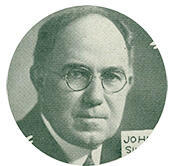
Here you will find contact information for Representative John William Summers, including email address, phone number, and mailing address.
| Name | John William Summers |
| Position | Representative |
| State | Washington |
| District | 4 |
| Party | Republican |
| Status | Former Representative |
| Term Start | May 19, 1919 |
| Term End | March 3, 1933 |
| Terms Served | 7 |
| Born | April 29, 1870 |
| Gender | Male |
| Bioguide ID | S001067 |
About Representative John William Summers
John William Summers (April 29, 1870 – September 25, 1937) was an American physician and politician who served seven terms as a U.S. Representative from Washington from 1919 to 1933. A member of the Republican Party, he contributed to the legislative process during a significant period in American history, representing the interests of his constituents in the U.S. House of Representatives.
Summers was born on April 29, 1870, in Valeene, a small community in Orange County, Indiana. He attended the local public schools and showed early academic promise. Seeking further education, he enrolled at Southern Indiana Normal College in Mitchell, Indiana, an institution devoted to training teachers and professionals for public service. He was graduated from Southern Indiana Normal College in 1889, laying the groundwork for his subsequent professional and medical training.
Following his normal school education, Summers turned to the study of medicine. He entered the Kentucky School of Medicine in Louisville, one of the region’s leading medical institutions at the time, and was graduated in 1892. Determined to deepen his medical expertise, he pursued postgraduate studies at the Louisville Medical College and then broadened his training through advanced study in major medical centers in New York, London, and Berlin, as well as at the University of Vienna in Austria. This extensive international medical education placed him among the more thoroughly trained physicians of his generation and prepared him for a career that combined professional practice with public service.
Summers established himself as a practicing physician and became an active figure in his community, where his medical work and civic engagement helped build his reputation. His background in science and public health, coupled with his experience in education and international study, informed his outlook on public policy and contributed to his eventual entry into politics. As he moved into public life, he drew on his medical training to address issues affecting the welfare and daily lives of his constituents.
In 1919, Summers began his national political career when he took office as a U.S. Representative from the State of Washington. Elected as a Republican, he served continuously in the House of Representatives from 1919 to 1933, encompassing seven consecutive terms. His tenure in Congress spanned the closing years of World War I’s aftermath, the prosperity of the 1920s, and the onset of the Great Depression. During these years he participated in the democratic process at the federal level, contributing to debates and legislation on economic, social, and infrastructural matters that affected both Washington State and the nation as a whole. As a member of the House, he represented the interests of his constituents, bringing to bear his professional background and experience in addressing public health and broader policy concerns.
Summers’s congressional service concluded in 1933, at the end of his seventh term, as the political landscape shifted during the early New Deal era. After leaving Congress, he returned to private life, where his long experience as a physician and legislator continued to shape his standing in the community. He remained identified with the Republican Party and with the generation of lawmakers who had guided the country through a period of rapid economic and social change.
John William Summers died on September 25, 1937. His career reflected a combination of professional medical achievement and sustained public service, marked by his seven-term tenure in the U.S. House of Representatives from Washington and his participation in the legislative life of the nation during a transformative era in American history.