Representative John Philip Swasey
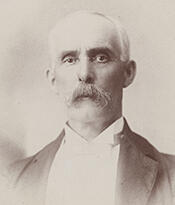
Here you will find contact information for Representative John Philip Swasey, including email address, phone number, and mailing address.
| Name | John Philip Swasey |
| Position | Representative |
| State | Maine |
| District | 2 |
| Party | Republican |
| Status | Former Representative |
| Term Start | December 2, 1907 |
| Term End | March 3, 1911 |
| Terms Served | 2 |
| Born | September 4, 1839 |
| Gender | Male |
| Bioguide ID | S001098 |
About Representative John Philip Swasey
John Philip Swasey (September 4, 1839 – May 27, 1928) was a Republican U.S. Representative from Maine who served in the United States Congress from 1907 to 1911, with his formal congressional tenure recorded from November 3, 1908, to March 3, 1911. Over the course of two terms in office, he contributed to the legislative process during a significant period in American history, participating in the democratic process and representing the interests of his constituents in the U.S. House of Representatives.
Swasey was born in Canton, Oxford County, Maine, on September 4, 1839. He was educated in the Canton public schools and continued his studies at Dearborn Academy and Hebron Academy, both in Maine. He then attended Maine State Seminary in Lewiston, an institution that later became Bates College, and pursued further education at Tufts College in Massachusetts. This combination of local schooling and advanced study at regional academies and colleges provided him with a solid academic foundation for his later legal and political career.
During the American Civil War, Swasey served in the Union Army, reflecting the commitment of many young men from Maine to the preservation of the Union. He held the rank of first lieutenant in Company K of the Seventeenth Regiment, Maine Volunteer Infantry. His service in this regiment placed him among the numerous citizen-soldiers who participated in some of the major campaigns of the war, and his experience as an officer contributed to the leadership skills he later brought to public office.
After the Civil War, Swasey returned to his native Canton and, in 1863, became an attorney there. Establishing a legal practice in his home community, he quickly became involved in public affairs. Over the ensuing years he served as a county attorney, gaining experience in the administration of justice at the local level. He also served as a member of the state legislature, participating in the formulation of state laws, and worked as a revenue assessor, a position that involved oversight of tax and revenue matters. These roles collectively built his reputation as a capable lawyer and public servant and laid the groundwork for his eventual election to national office.
Swasey’s congressional service began during a transitional moment in Maine’s representation in Washington. A member of the Republican Party, he was elected on November 3, 1908, to the Sixtieth Congress to fill the vacancy caused by the resignation of Representative Charles E. Littlefield. At the same time, he was elected to the succeeding Sixty-first Congress, giving him two consecutive terms in the House of Representatives. He served from November 3, 1908, to March 3, 1911, a period that spanned the later years of Theodore Roosevelt’s administration and the beginning of William Howard Taft’s presidency. During these years, he took part in the legislative deliberations of a Congress that addressed issues of economic regulation, tariff policy, and progressive-era reforms, and he represented the interests of his Maine constituents within the broader national debates of the time.
Swasey’s time in Congress, recorded as extending from 1907 to 1911 in contemporary accounts of his service and formally dated from November 3, 1908, to March 3, 1911, marked the culmination of a long career in law and public office. After leaving Congress, he returned to private life, having completed his role in national politics following two terms in the House. He remained a figure identified with the Republican Party and with the civic life of his home state, his congressional tenure remembered as part of Maine’s early twentieth-century political history.
John Philip Swasey died on May 27, 1928. He was interred in Pine Grove Cemetery, where his burial marked the close of a life that had spanned from the antebellum era through the Civil War and into the modernizing United States of the early twentieth century.