Representative John Taber
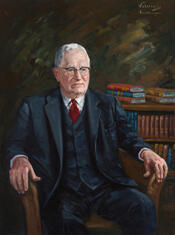
Here you will find contact information for Representative John Taber, including email address, phone number, and mailing address.
| Name | John Taber |
| Position | Representative |
| State | New York |
| District | 36 |
| Party | Republican |
| Status | Former Representative |
| Term Start | December 3, 1923 |
| Term End | January 3, 1963 |
| Terms Served | 20 |
| Born | May 5, 1880 |
| Gender | Male |
| Bioguide ID | T000001 |
About Representative John Taber
John Taber served as a Representative from New York in the United States Congress from 1923 to 1963. A member of the Republican Party, John Taber contributed to the legislative process during 20 terms in office.
John Taber’s service in Congress occurred during a significant period in American history. As a member of the House of Representatives, John Taber participated in the democratic process and represented the interests of constituents.
John Tyler (March 29, 1790 – January 18, 1862) was the tenth president of the United States, serving from 1841 to 1845, after briefly holding office as the tenth vice president in 1841. He was elected vice president on the 1840 Whig ticket with William Henry Harrison, succeeding to the presidency following Harrison’s death 31 days after assuming office as president. Tyler was a stalwart supporter and advocate of states’ rights, including regarding slavery, and he adopted nationalistic policies as president only when they did not infringe on the states’ powers. His unexpected rise to the presidency posed a threat to the presidential ambitions of Senator Henry Clay and other Whig politicians and left Tyler estranged from both major political parties at the time: the Whigs and the Democrats. Tyler was born into a prominent slaveholding Virginia family. He became a national figure at a time of political upheaval. In the 1820s, the Democratic-Republican Party, at the time the nation’s only political party, split into multiple factions. Initially a Jacksonian Democrat, Tyler opposed President Andrew Jackson during the nullification crisis as he saw Jackson’s actions as infringing on states’ rights and criticized Jackson’s expansion of executive power during Jackson’s veto on banks. This led Tyler to ally with the southern faction of the Whig Party. He served as a Virginia state legislator and governor, U.S. representative, and U.S. senator. Tyler was a regional Whig vice-presidential nominee in the 1836 presidential election, which Democrat Martin Van Buren won. He was the sole nominee on the 1840 Whig presidential ticket as William Henry Harrison’s running mate. Under the campaign slogan “Tippecanoe and Tyler Too”, the Harrison–Tyler ticket defeated Van Buren. President Harrison died just one month after taking office, and Tyler became the first vice president to succeed to the presidency. Amid uncertainty as to whether a vice president succeeded a deceased president, or merely took on his duties, Tyler immediately took the presidential oath of office, setting the Tyler Precedent. He signed into law some of the Whig-controlled Congress’s bills, but he was a strict constructionist and vetoed the party’s bills to create a national bank and raise tariff rates. He believed that the president, rather than Congress, should set policy, and sought to bypass the Whig establishment led by Henry Clay. Almost all of Tyler’s cabinet resigned shortly into his term, and the Whigs expelled him from the party and dubbed him “His Accidency”. Tyler was the first president to have his veto of legislation overridden by Congress. He faced a stalemate on domestic policy, though had some foreign-policy achievements, including the Webster–Ashburton Treaty with Britain and the Treaty of Wanghia with China. Tyler believed in manifest destiny and saw the annexation of Texas as economically and internationally advantageous to the United States, signing a bill to offer Texas statehood just before leaving office. He initially ran for re-election under the banner of the Tyler Party in 1844 before withdrawing and endorsing Democrat James K. Polk, who also supported annexing Texas and defeated Clay in the election. When the American Civil War began in 1861, Tyler at first supported the Peace Conference. After it failed, he sided with the Confederacy. He presided over the opening of the Virginia Secession Convention and served as a member of the Provisional Congress of the Confederate States. Tyler subsequently won election to the Confederate House of Representatives but died before it assembled. Some scholars have praised his political influence, but historians have generally put him in or very near to the bottom quartile when ranking U.S. presidents. Tyler is praised for helping in the creation of the Webster–Ashburton Treaty, which peacefully settled the border between Maine and Canada. He also helped in stopping African slave trafficking, which was made illegal under the administration of Thomas Jefferson. In the 21st century, Tyler is seldom remembered when in comparison to other presidents and maintains only a limited presence in American cultural memory.