Representative John Kemble Tarbox
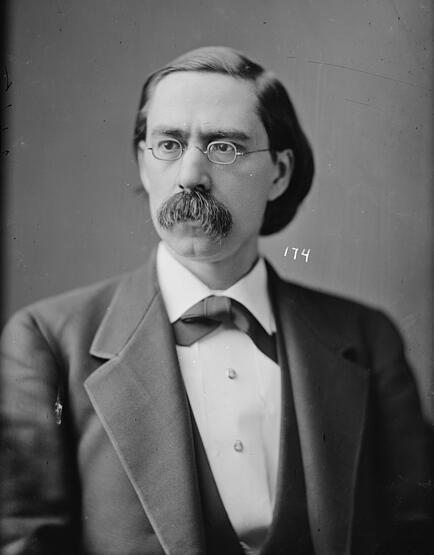
Here you will find contact information for Representative John Kemble Tarbox, including email address, phone number, and mailing address.
| Name | John Kemble Tarbox |
| Position | Representative |
| State | Massachusetts |
| District | 7 |
| Party | Democratic |
| Status | Former Representative |
| Term Start | December 6, 1875 |
| Term End | March 3, 1877 |
| Terms Served | 1 |
| Born | May 6, 1838 |
| Gender | Male |
| Bioguide ID | T000041 |
About Representative John Kemble Tarbox
John Kemble Tarbox (May 6, 1838 – May 28, 1887) was a U.S. Representative from Massachusetts and a prominent Democratic politician and public official in that state during the mid- to late nineteenth century. He served as a Representative from Massachusetts in the United States Congress from 1875 to 1877, completing one term in office during a significant period in American history following the Civil War and Reconstruction.
Tarbox was born on May 6, 1838, in that part of Methuen, Massachusetts, which was later incorporated into the city of Lawrence, Massachusetts. He pursued classical studies in his youth and subsequently engaged in newspaper work, an early involvement with public affairs that helped shape his later political and legal career. On May 21, 1859, he married Sarah Ann Harmon; the marriage continued until her death in 1874. Alongside his literary and journalistic pursuits, Tarbox studied law, was admitted to the bar in 1860, and commenced the practice of law in Massachusetts.
With the outbreak of the Civil War, Tarbox entered military service in the Union Army. He served as a first lieutenant in Company B of the Fourth Regiment, Massachusetts Volunteer Infantry. His period of service included participation in the Union war effort until he was mustered out with his regiment on August 28, 1863. After his military service, he returned to civic life and, drawing on his earlier experience in journalism, became the political editor of the Lawrence Sentinel, a role that further established his standing in Democratic Party circles and local politics.
Tarbox’s formal political career advanced rapidly after the war. He was a delegate to the Democratic National Convention in 1864 and later served as an alternate delegate to the Democratic National Convention in 1868, reflecting his growing influence within the party. In state politics, he was elected to the Massachusetts House of Representatives, serving in 1868, 1870, and 1871, and then to the Massachusetts State Senate in 1872. He also held municipal office as the sixteenth mayor of Lawrence, Massachusetts, serving from 1873 to 1874, a period during which he combined legal expertise and political experience in the administration of a rapidly industrializing city.
As a member of the Democratic Party, Tarbox was elected to the Forty-fourth Congress and served as a U.S. Representative from Massachusetts from March 4, 1875, to March 3, 1877. His service in Congress occurred during a significant period in American history, as the nation grappled with the end of Reconstruction and the challenges of economic adjustment after the Civil War. During his single term in the House of Representatives, Tarbox participated in the legislative process and represented the interests of his Massachusetts constituents. He was an unsuccessful candidate for reelection in 1876 to the Forty-fifth Congress, which concluded his federal legislative service.
After leaving Congress, Tarbox continued to play an active role in public affairs and the legal profession. He served as city solicitor of Lawrence, Massachusetts, in 1882 and 1883, providing legal counsel to the municipality and further cementing his reputation as a skilled attorney and public servant. On April 21, 1883, he was appointed Massachusetts State Insurance Commissioner, a position he held until his death. In this statewide office, which he occupied from April 21, 1883, to May 28, 1887, Tarbox oversaw the regulation and supervision of the insurance industry in Massachusetts, a growing and increasingly complex sector of the state’s economy.
John Kemble Tarbox died in Boston, Massachusetts, on May 28, 1887, while still serving as Massachusetts State Insurance Commissioner. His death was noted as the passing of a faithful public servant who had devoted many years to state and local government. He was interred in Bellevue Cemetery in Lawrence, Massachusetts, the city that had shaped much of his personal, professional, and political life.