Representative John Tod
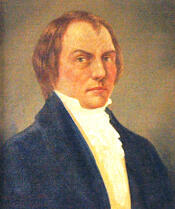
Here you will find contact information for Representative John Tod, including email address, phone number, and mailing address.
| Name | John Tod |
| Position | Representative |
| State | Pennsylvania |
| District | 13 |
| Party | Republican |
| Status | Former Representative |
| Term Start | December 3, 1821 |
| Term End | March 3, 1825 |
| Terms Served | 2 |
| Gender | Male |
| Bioguide ID | T000290 |
About Representative John Tod
John Tod (1779 – March 27, 1830) was an American judge and politician who served as a Democratic-Republican member of the United States House of Representatives from Pennsylvania during the early decades of the republic. A member of the Republican (Democratic-Republican) Party, he represented Pennsylvania’s 8th congressional district from 1821 to 1823 and its 13th congressional district from 1823 to 1824, contributing to the legislative process during two terms in Congress. His national service took place during a significant period in American history marked by the aftermath of the War of 1812, the “Era of Good Feelings,” and the evolving party system.
Tod was born in 1779, in the closing years of the American Revolutionary era, and came of age as the new nation was establishing its political and legal institutions. Details of his early life and family background are sparse in the historical record, but his subsequent career in law and politics indicates that he received a solid education for the time, likely including legal training that prepared him for both legislative and judicial service. He settled in Pennsylvania, where he became active in public affairs and aligned himself with the Democratic-Republican Party, which dominated state and national politics in the early nineteenth century.
Tod’s formal political career began in the Pennsylvania House of Representatives, where he served from 1810 to 1813. During this period he quickly rose to prominence, being chosen Speaker of the Pennsylvania House for two terms. His leadership in the state legislature coincided with the years leading up to and including the War of 1812, when Pennsylvania’s government was engaged in questions of state defense, finance, and support for national war measures. His effectiveness as a presiding officer and legislator helped establish his reputation as a capable public servant within the Commonwealth.
Following his service in the lower house, Tod was elected to the Pennsylvania State Senate for the 14th district, serving from 1815 to 1818. He again assumed a leadership role, serving as Speaker of the Pennsylvania Senate from 1815 to 1816. In this capacity he oversaw deliberations on issues of postwar recovery, internal improvements, and the ongoing development of Pennsylvania’s legal and political framework. His tenure in both chambers of the state legislature demonstrated his skill in managing legislative business and navigating the factional politics of the Democratic-Republican Party.
Tod advanced to national office when he was elected to the U.S. House of Representatives as a Democratic-Republican. He represented Pennsylvania’s 8th congressional district from 1821 to 1823 and, following redistricting or reassignment, Pennsylvania’s 13th congressional district from 1823 to 1824. Serving in the Seventeenth and early part of the Eighteenth Congresses, he participated in the democratic process at the federal level and represented the interests of his Pennsylvania constituents during a time when Congress addressed issues such as tariffs, internal improvements, and the balance of power between the federal government and the states. His service in Congress, from 1821 to 1825, placed him among the generation of legislators who bridged the period between the Jeffersonian era and the emerging Second Party System.
After leaving Congress, Tod turned to a distinguished judicial career in Pennsylvania. He was appointed presiding judge of the Pennsylvania Courts of Common Pleas for the 16th district, serving from 1824 to 1827. In that role he oversaw trial-level civil and criminal matters, applying state law in a period when Pennsylvania’s courts were helping to shape American common law traditions. His performance on the bench led to further advancement, and in 1827 he was appointed an associate judge of the Pennsylvania Supreme Court. As a member of the state’s highest court, he participated in decisions that influenced the development of Pennsylvania jurisprudence and addressed questions arising from the state’s rapid economic and social change in the late 1820s.
John Tod remained on the Pennsylvania Supreme Court until his death on March 27, 1830. By the time of his passing, he had held leadership positions in both houses of the Pennsylvania legislature, served in the U.S. House of Representatives for two different congressional districts, and occupied important judicial posts at both the trial and appellate levels. His career reflected the trajectory of many early nineteenth-century American public figures who moved between legislative and judicial service, contributing to the consolidation of state and national institutions in the formative years of the United States.