Representative John William Henderson Underwood
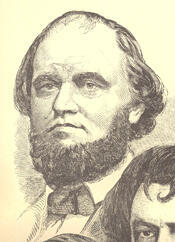
Here you will find contact information for Representative John William Henderson Underwood, including email address, phone number, and mailing address.
| Name | John William Henderson Underwood |
| Position | Representative |
| State | Georgia |
| District | 5 |
| Party | Democratic |
| Status | Former Representative |
| Term Start | December 5, 1859 |
| Term End | March 3, 1861 |
| Terms Served | 1 |
| Born | November 20, 1816 |
| Gender | Male |
| Bioguide ID | U000010 |
About Representative John William Henderson Underwood
John William Henderson Underwood (November 20, 1816 – July 18, 1888) was an American lawyer and Democratic politician who represented Georgia in the United States House of Representatives on the eve of the Civil War. A member of the Democratic Party, he served one term in Congress from 1859 to 1861, during a critical period in the nation’s history, and later aligned himself with the Confederacy.
Underwood was born on November 20, 1816, in Ellenton, Georgia. Little is recorded in standard references about his family background or early schooling, but his subsequent legal and political career indicates that he received a level of education sufficient to prepare him for the study and practice of law in antebellum Georgia. Growing up in a state that was rapidly developing politically and economically, he came of age in an environment in which questions of states’ rights, expansion, and slavery were central to public life.
Pursuing a legal career, Underwood studied law in Georgia and was admitted to the state bar in 1835. He began the practice of law in Clarkesville, Georgia, where he established himself professionally and entered public affairs. His legal work and growing reputation at the bar led to increasing involvement in state politics, and he became an active participant in Georgia’s political life for the duration of his adult years.
Underwood’s first major public office was in the state judicial system. He served as solicitor general of the western judicial circuit of Georgia from 1843 to 1847, a position that made him the chief prosecuting officer for that circuit. In this role he was responsible for representing the state in criminal matters and helping to administer justice in a period marked by population growth and legal development in Georgia. His service as solicitor general strengthened his standing within the Democratic Party and provided a platform for further political advancement.
Building on his legal and prosecutorial experience, Underwood was elected as a Democrat to the United States House of Representatives from Georgia. He took his seat in the Thirty-sixth Congress on March 4, 1859, representing his constituents in the House during a time of mounting sectional tension between North and South. As a member of the House of Representatives, John William Henderson Underwood participated in the legislative process and represented the interests of his Georgia constituents as the national debate over slavery, secession, and the balance of power between the federal government and the states intensified.
Underwood’s congressional service was cut short by the secession crisis. Serving from March 4, 1859, until January 23, 1861, he withdrew from Congress after Georgia seceded from the Union and he joined the Confederacy. His departure from the House reflected the broader realignment of Southern political leaders who left federal office to support their states’ decision to secede. His term thus coincided precisely with the final months of the Union as it had existed before the Civil War, underscoring the historical significance of his brief service in Congress.
After leaving Congress and aligning with the Confederacy, Underwood returned to Georgia. While detailed records of his specific activities during and after the Civil War are limited in the standard biographical references, he remained identified with Georgia’s legal and political community in the postwar years. He continued to be recognized as one of the many antebellum Democratic officeholders whose careers bridged the Union and Confederate periods.
John William Henderson Underwood died in Rome, Georgia, on July 18, 1888. He was buried in Myrtle Hill Cemetery in Rome, a resting place for many of the city’s prominent citizens. His life and career reflect the trajectory of a Georgia lawyer and Democratic politician whose service in the U.S. House of Representatives spanned the final phase of the Union before secession and the onset of the Civil War.