Representative John Gregg Utterback
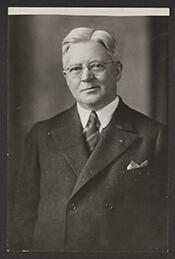
Here you will find contact information for Representative John Gregg Utterback, including email address, phone number, and mailing address.
| Name | John Gregg Utterback |
| Position | Representative |
| State | Maine |
| District | 3 |
| Party | Democratic |
| Status | Former Representative |
| Term Start | March 9, 1933 |
| Term End | January 3, 1935 |
| Terms Served | 1 |
| Born | July 12, 1872 |
| Gender | Male |
| Bioguide ID | U000037 |
About Representative John Gregg Utterback
John Gregg Utterback (July 12, 1872 – July 11, 1955) was an American businessman, local and federal officeholder, and U.S. Representative from Maine, and a cousin of Congressman Hubert Utterback. A member of the Democratic Party, he served one term in the United States House of Representatives from 1933 to 1935, representing a Maine district during a significant period in American history marked by the early New Deal and the repeal of Prohibition.
Utterback was born in Franklin, Johnson County, Indiana, on July 12, 1872. He was educated in the public schools of Franklin, where he spent his youth before entering the workforce at a relatively young age. In 1889, he began working in a local carriage factory in Franklin, an experience that introduced him to the transportation and vehicle trade that would shape his later business career. He remained employed in the carriage factory until 1892, gaining practical knowledge of manufacturing and sales.
From 1892 to 1905, Utterback worked as a traveling salesman, representing a variety of products across several states. During this period he lived successively in Jackson, Michigan, Rochester, New York, and Winchester, Massachusetts. His years on the road broadened his commercial experience and contacts and helped establish him as an experienced businessman in the transportation and vehicle field. This background prepared him for his later transition into automobile sales and for his eventual prominence in Maine’s business community.
In 1905, Utterback settled permanently in Bangor, Maine, where he opened a carriage dealership that soon evolved into a successful automobile dealership as motor vehicles supplanted horse-drawn conveyances. Over time he sold the King automobile and later specialized in Atlas trucks and the trucks of the Commerce Motor Car Company. He became president of the Utterback Corporation, which operated truck and car dealerships, and he remained active in the automobile business for decades. His prominence in the motor vehicle trade led to broader involvement in transportation policy; by 1930 he was serving as chairman of the Maine Motor Vehicle Conference Committee, reflecting his recognized expertise in automotive and highway matters.
Utterback also became active in Democratic politics in Bangor. He served on the Bangor city council from 1912 to 1913 and then as an alderman from 1913 to 1914. Building on this local experience, he was elected mayor of Bangor, serving from 1914 to 1915. In these municipal roles he participated directly in city governance during a period of urban growth and modernization. His political profile within the Democratic Party continued to rise, and in 1932 he was chosen as a delegate to the Democratic National Convention, which nominated Franklin D. Roosevelt for the presidency.
Riding the national Democratic wave of 1932, Utterback was elected as a Democrat to the Seventy-third United States Congress, serving from March 4, 1933, to January 3, 1935. He defeated Republican Owen Brewster by a narrow margin of 324 votes. Brewster contested the result, alleging fraud in the French-Canadian districts of Aroostook County, but Utterback ultimately prevailed. The challenge was undermined by a lack of enthusiasm among the Republican “old guard” who heard Brewster’s claims, and outgoing Republican Governor William Tudor Gardiner publicly dismissed as “preposterous” Brewster’s suggestion that the governor personally investigate the allegations. As a member of the House of Representatives, Utterback participated in the legislative process during the early New Deal era and represented the interests of his Maine constituents in a time of economic crisis and political realignment.
Utterback’s congressional campaign and service were closely associated with the issue of Prohibition. Coming from “wet” Bangor, a city whose saloons had long been a major target of Maine’s statewide prohibition law—then the oldest such law in the nation—he built his campaign around support for repeal. The Maine prohibition statute enjoyed strong backing in rural areas but was far less popular in the cities. In contrast, his opponent Owen Brewster, though practicing law in Bangor and hailing from the town of Dexter, continued to favor prohibition even as the national Republican Party was moving toward repeal. Fittingly, Utterback’s first speech in Congress was in support of the repeal of Prohibition, aligning him with the prevailing national trend and the sentiments of many of his urban constituents. In the 1934 election, however, Brewster again opposed him and this time defeated him. Among the issues that worked against Utterback was Congress’s failure to support a proposed tidal power project in Passamaquoddy Bay, a major public-works initiative that he and others had promoted as a significant job-creation measure for his district.
After leaving Congress, Utterback continued his public service at the federal level. In 1935, he was appointed United States Marshal for the District of Maine, a position he held until his resignation in 1944. In this capacity he oversaw federal law enforcement responsibilities within the district during a period that included the latter years of the Great Depression and most of World War II. Throughout these years he also remained engaged in his longstanding automobile enterprises as president of the Utterback Corporation, maintaining his dual identity as both businessman and public official.
John Gregg Utterback died in Bangor, Maine, on July 11, 1955, one day short of his eighty-third birthday. He was interred in Mount Hope Cemetery in Bangor. His career spanned local and national politics, business leadership in the early automobile era, and federal law enforcement, and his single term in Congress placed him at the center of significant national debates over Prohibition and New Deal policy.