Senator John Vining
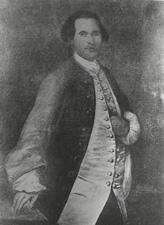
Here you will find contact information for Senator John Vining, including email address, phone number, and mailing address.
| Name | John Vining |
| Position | Senator |
| State | Delaware |
| Party | Federalist |
| Status | Former Representative |
| Term Start | March 4, 1789 |
| Term End | March 3, 1799 |
| Terms Served | 3 |
| Born | December 23, 1758 |
| Gender | Male |
| Bioguide ID | V000104 |
About Senator John Vining
John Middleton Vining (December 23, 1758 – February 1802) was an American lawyer and Federalist politician from Dover, in Kent County, Delaware, who served in the Delaware General Assembly, in the Continental Congress, and as both a United States Representative and United States Senator from Delaware. A member of the Federalist Party, he participated actively in the formative years of the federal government and represented Delaware in the United States Congress from the opening of the First Congress through the late 1790s, including service in the Senate from 1789 to 1799 as reflected in contemporary accounts of his three terms in national office.
Vining was born in Dover in the Delaware Colony, the son of John Vining and Phoebe Wynkoop Vining. His father was a prominent and successful lawyer and landholder who served as Speaker of the Colonial Assembly and Chief Justice of Delaware, and was a close friend of Caesar Rodney, who stood as godfather for young John. When Vining’s father died in 1770, the boy was about eleven years old; he and his sister Mary (“Polly”) inherited a large fortune that placed them among the most affluent families in the colony. The Vining family’s connections extended through Delaware and the mid-Atlantic region, and their social prominence would later shape John Vining’s political and social life. His sister Mary became a notable figure in her own right in Delaware society and was a frequent companion of Revolutionary War General Anthony Wayne.
Educated in the law, Vining read law under George Read, one of Delaware’s leading lawyers and a signer of the Declaration of Independence and the Constitution, in New Castle, Delaware. He was admitted to the Delaware Bar in 1782 and began a legal practice in Dover. His legal training, combined with his inherited wealth and family reputation, quickly propelled him into public life. By his mid-twenties he was already regarded as a rising young Federalist with strong ties to the state’s political elite, and his early professional years coincided with the closing phase of the American Revolution and the Confederation period, when Delaware’s leaders were deeply engaged in debates over the shape of the new national government.
Vining’s political career began at the national level under the Articles of Confederation. Because of his family’s prominence and his own emerging reputation, he was elected three times to represent Delaware in the Continental Congress. First chosen on April 8, 1784, he served in that body until October 27, 1786. Like many delegates of the era, his attendance was irregular, but his repeated election reflected the confidence Delaware’s General Assembly placed in him. Returning to state politics, he was elected to the Delaware House of Assembly for the 1787/1788 and 1788/1789 sessions, participating in the state’s legislative affairs during the critical years in which the new federal Constitution was debated and ratified. These roles in both the Continental Congress and the Delaware General Assembly established him as a key Federalist voice from Delaware in the transition from the Confederation to the constitutional system.
With the establishment of the new federal government, Vining moved into the United States Congress. In a special election on January 7, 1789, he defeated four other candidates to become Delaware’s sole member of the 1st U.S. House of Representatives. He took office on March 4, 1789, and was re-elected to a second term, serving in the 1st and 2nd Congresses. Although he often arrived weeks late for each session, he was regarded as an energetic and conscientious legislator once present. A committed Federalist, he consistently supported the Washington administration and favored a strong executive branch. In the 1st Congress he served on thirty-eight committees, including the important committee that considered the first proposed amendments to the Constitution, which would become the Bill of Rights, and the joint committee on rules. His positions were generally loose-constructionist and Hamiltonian; he strongly supported the federal assumption of state Revolutionary War debts as part of Alexander Hamilton’s financial program. During the debate over the location of the national capital, he advocated consideration of Wilmington, Delaware, but when that prospect failed, he supported the compromise that called for an immediate move to Philadelphia and the later construction of a permanent capital on the Potomac River.
Vining’s service in the United States Senate followed his tenure in the House. In 1793 he returned briefly to Dover as a member of the State Senate in the Delaware General Assembly, but he was soon chosen by the legislature to represent Delaware in the U.S. Senate. He took his seat on March 4, 1793, and served until his resignation on January 19, 1798. His Senate service thus spanned the 3rd through part of the 5th Congresses, a period marked by the emergence of organized Federalist and Democratic-Republican parties, the controversies surrounding the French Revolution, and the administration of President George Washington and the early years of President John Adams. Throughout this time, Vining remained aligned with the Federalist Party and participated in the legislative process during a significant period in American history, representing the interests of his Delaware constituents in debates over foreign policy, finance, and the scope of federal authority. After his resignation in 1798, he retired from public life.
Vining’s personal life was closely intertwined with his political and social standing. On November 29, 1790, while serving as a U.S. Representative in New York City, he married Anna Maria Seton, a poet and musician and the daughter of William Seton of New York. She was well suited to his social milieu, and together they became known for their hospitality and entertainment. The couple had four sons: John Vining (1791–1817), who served in the U.S. Navy; William Henry Vining (1794–1822), a lawyer; Benjamin Vining (c. 1796–1822), who served in the U.S. Army; and Charles Ridgely Vining (1798–1821). Vining and his sister Mary maintained a lively household and entertained frequently and lavishly in Dover and elsewhere, contributing to his reputation as “the pet of Delaware.” Contemporary observers described him as handsome, friendly, and outspoken, a “colorful” speaker who “brandished a florid metaphor,” though also as verbose and sometimes inclined to inflammatory language.
In his later years, Vining’s fortunes declined sharply. His generosity and style of living, combined with what contemporaries described as indolence, led him to spend through much of the wealth he had inherited. He also struggled with alcoholism, and the premature death of his wife Anna Maria in 1800 dealt him a severe personal blow. Elizabeth Montgomery, in her Reminiscences in Wilmington, later wrote of him: “His brilliant talents, not nourished by application, withered in the bud. Indolence and generosity engendered extravagance that wasted his substance.” After leaving the Senate and withdrawing from public life, Vining lived quietly in Dover, increasingly impoverished and in poor health. He died there in February 1802 and was buried in an unmarked grave in the Christ Episcopal Church Cemetery in Dover. His sister Mary devoted herself to raising his four sons, but they too died young, all within a year of her own death in 1821, bringing a poignant close to the story of one of Delaware’s most prominent early Federalist families.