Representative John Martin Vorys
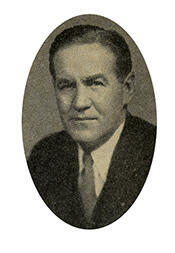
Here you will find contact information for Representative John Martin Vorys, including email address, phone number, and mailing address.
| Name | John Martin Vorys |
| Position | Representative |
| State | Ohio |
| District | 12 |
| Party | Republican |
| Status | Former Representative |
| Term Start | January 3, 1939 |
| Term End | January 3, 1959 |
| Terms Served | 10 |
| Born | June 16, 1896 |
| Gender | Male |
| Bioguide ID | V000119 |
About Representative John Martin Vorys
John Martin Vorys (June 16, 1896 – August 25, 1968) was a U.S. Representative from Ohio who served ten consecutive terms in the United States House of Representatives from 1939 to 1959 as a member of the Republican Party. Over the course of two decades in Congress, he contributed to the legislative process during a significant period in American history, representing the interests of his Ohio constituents through the end of the Great Depression, the Second World War, the early Cold War, and the dawn of the civil rights era.
Vorys was born in Lancaster, Fairfield County, Ohio, on June 16, 1896, and attended the public schools in both Lancaster and Columbus, Ohio. He came from a family with established legal roots in the state; his grandfather founded the Columbus law firm that would later become Vorys, Sater, Seymour and Pease. After completing his early education, he enrolled at Yale University, where he distinguished himself academically and socially, becoming a member of the influential senior society Skull and Bones. He graduated from Yale in 1918, in the midst of World War I, and subsequently pursued legal studies at Ohio State University Law School in Columbus, from which he graduated in 1923.
During World War I, Vorys served overseas as a pilot in the famed “Yale Unit” of the United States Naval Air Service, one of the earliest American naval aviation units composed largely of Yale undergraduates and alumni. He saw active duty as a naval aviator and retired to inactive service in 1919 with the rank of lieutenant. Immediately after the war, he broadened his international experience by serving as a teacher at the College of Yale in Changsha, China, from 1919 to 1920, reflecting an early interest in international affairs and education. He further deepened his involvement in foreign policy when he served as assistant secretary to the American delegation at the Conference on the Limitation of Armaments in Washington, D.C., in 1921 and 1922, an important early effort at multilateral arms control following the First World War.
Upon completion of his legal education, Vorys was admitted to the bar in 1923 and commenced the practice of law in Columbus, Ohio, joining the firm founded by his grandfather, Vorys, Sater, Seymour and Pease. At the same time, he began a career in public service at the state level. He was elected to the Ohio House of Representatives, serving in 1923 and 1924, and then to the Ohio Senate, where he served in 1925 and 1926. His interest in aviation, rooted in his wartime service, led to his appointment as director of aeronautics for the State of Ohio in 1929 and 1930, a position in which he oversaw the development and regulation of aviation activities in the state during a formative period for commercial and civil aviation.
Vorys was elected as a Republican to the Seventy-sixth Congress and to the nine succeeding Congresses, serving from January 3, 1939, to January 3, 1959. His twenty years in the House of Representatives coincided with major developments in domestic and foreign policy. As a member of the House Foreign Affairs Committee during World War II and the early Cold War, he became known for his strong views on foreign policy. A confidential 1943 analysis of the committee by Isaiah Berlin for the British Foreign Office described Vorys as the “real leader of the Opposition Bloc” on the committee, noting that he had voted against all major foreign policy measures up to that time and had authored the June 1939 amendment providing for a mandatory embargo on the export of arms to belligerent nations. Berlin characterized him as a shrewd and active member, “a formidable nationalist,” who persistently pressed for precise “dollar and cent” estimates of the balance between Lend-Lease and Reciprocal Aid and who proposed amendments—later defeated—under which only Congress could authorize final settlements. A Methodist and, at the time of that assessment, age forty-seven, Vorys was regarded as one of the most determined and influential members of the committee.
During his congressional service, Vorys participated directly in historic events related to World War II and its aftermath. On April 11, 1945, U.S. forces liberated the Buchenwald concentration camp, established in 1937 and responsible for the deaths of at least 56,545 people. General Dwight D. Eisenhower ordered that the rotting corpses be left unburied so visiting legislators could fully comprehend the scale and horror of Nazi atrocities. Vorys was among the group of U.S. legislators who traveled to Buchenwald to inspect the camp and witness firsthand the enormity of the Nazi Final Solution and the treatment of other prisoners. The delegation included Alben W. Barkley, Ed Izac, John M. Vorys, Dewey Short, C. Wayland Brooks, and Kenneth S. Wherry, accompanied by General Omar N. Bradley and journalists Joseph Pulitzer, Norman Chandler, William I. Nichols, and Julius Ochs Adler. Later, in the early Cold War period, Vorys served on the Herter Committee in 1947–1948, a congressional study mission that examined U.S. foreign aid and helped lay the groundwork for the Marshall Plan and broader American engagement in postwar Europe. In domestic policy, he supported early civil rights legislation, voting in favor of the Civil Rights Act of 1957, the first federal civil rights law enacted since Reconstruction.
Beyond his work in the House, Vorys held several significant national and international assignments while still a member of Congress. He served as a delegate to the United Nations General Assembly in 1951, participating in the early years of the UN’s efforts to manage international tensions and promote collective security in the postwar world. From 1949 to 1959, he was a Regent of the Smithsonian Institution, helping oversee one of the nation’s leading scientific and cultural institutions during a decade of expansion and modernization. After ten terms in office, he chose not to seek reelection in 1958 and concluded his congressional service on January 3, 1959.
Following his retirement from Congress, Vorys returned to Columbus and resumed the practice of law with Vorys, Sater, Seymour and Pease, continuing his association with the family firm that had anchored his legal career. He remained a respected figure in Ohio’s legal and political circles, drawing on his extensive experience in state government, national politics, and international affairs. John Martin Vorys died in Columbus, Ohio, on August 25, 1968. He was interred in Green Lawn Cemetery in Columbus, closing a life marked by military service, legal practice, state and national legislative leadership, and engagement with some of the central foreign and domestic policy issues of the mid-twentieth century.