Senator John Walker
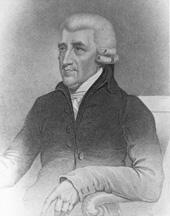
Here you will find contact information for Senator John Walker, including email address, phone number, and mailing address.
| Name | John Walker |
| Position | Senator |
| State | Virginia |
| Party | Pro-Administration |
| Status | Former Representative |
| Term Start | January 1, 1790 |
| Term End | March 3, 1791 |
| Terms Served | 1 |
| Born | February 13, 1744 |
| Gender | Male |
| Bioguide ID | W000059 |
About Senator John Walker
John Walker (February 13, 1744 – December 2, 1809) was an American soldier, public official, and United States Senator from Virginia whose brief service in the First Congress coincided with the formative years of the federal government under the Constitution. Born in Albemarle County, Virginia, he came of age in the colonial era and belonged to the same regional milieu as many of the early national leaders. His early life unfolded against the backdrop of British colonial rule and the rising tensions that would culminate in the American Revolution, shaping his later military and political commitments.
Details of Walker’s formal education are not extensively documented, but as a Virginia gentleman of his generation he was likely educated through a combination of private tutoring and classical studies that prepared him for public life. This education, typical of the planter and professional class in colonial Virginia, would have emphasized rhetoric, law, and political philosophy, equipping him for both military service and later legislative responsibilities. His intellectual formation and social standing facilitated his entry into public affairs as the colonies moved toward independence.
During the Revolutionary era, Walker served as a soldier, participating in the struggle that led to the creation of the United States. His military experience, combined with his status as a public official in Virginia, positioned him among those regional leaders who bridged the transition from colonial governance to state and then federal institutions. In the post-Revolutionary period he continued in public service within Virginia, contributing to the political life of the Commonwealth as it adjusted to its role in the new union.
Walker’s national prominence came with his selection to the United States Senate from Virginia. A member of the Pro-Administration Party, he served as a Senator in the First Congress from 1789 to 1791, during the critical initial years after the Constitution took effect on March 4, 1789. Representing Virginia in the upper chamber, he participated in the legislative process at a time when Congress was establishing foundational precedents for federal authority, finance, and administration. In this capacity, he took part in the democratic process and represented the interests of his constituents while generally supporting the policies of the Washington administration. His single term in office placed him among the earliest group of federal legislators who helped define the practical workings of the new constitutional system.
Walker’s congressional service occurred during a significant period in American history, as the federal government organized its departments, addressed war debts, and began to shape national economic policy. As a Pro-Administration Senator, he aligned with those favoring a stronger central government and a constructive national program, contributing his vote and counsel to the deliberations that would influence the country’s early trajectory. Although his tenure in the Senate was relatively brief, it coincided with debates that laid the groundwork for the emerging party system and the long-term structure of federal governance.
After leaving the Senate in 1791, Walker returned to private life and to his ongoing role as a Virginia public figure. He remained part of the generation of Revolutionary veterans and early national statesmen who witnessed the consolidation of the federal union and the peaceful transfer of power between competing political factions. Spending his later years in Virginia, he lived through the administrations of George Washington, John Adams, and Thomas Jefferson, observing the maturation of the institutions he had helped to inaugurate. John Walker died on December 2, 1809, in Virginia, closing a life that spanned from the colonial period through the Revolution and into the first decades of the United States under the Constitution.