Representative John Thomas Watkins
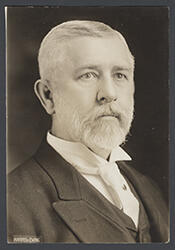
Here you will find contact information for Representative John Thomas Watkins, including email address, phone number, and mailing address.
| Name | John Thomas Watkins |
| Position | Representative |
| State | Louisiana |
| District | 4 |
| Party | Democratic |
| Status | Former Representative |
| Term Start | December 4, 1905 |
| Term End | March 3, 1921 |
| Terms Served | 8 |
| Born | January 15, 1854 |
| Gender | Male |
| Bioguide ID | W000193 |
About Representative John Thomas Watkins
John Thomas Watkins (January 15, 1854 – April 25, 1925) was an American lawyer, jurist, and Democratic politician who served eight consecutive terms as a U.S. Representative for Louisiana’s 4th congressional district from March 4, 1905, to March 3, 1921. Over the course of his sixteen years in the House of Representatives, he participated actively in the legislative process during a significant period in American history, representing the interests of his northwestern Louisiana constituents and rising to chair the Committee on Revision of the Laws.
Watkins was born in Minden, Webster Parish, Louisiana, on January 15, 1854, the elder of two sons of J. D. Watkins and Mary Morrow Watkins. His father was a prominent figure in Louisiana public life, serving as both a judge and a state senator, and this legal and political environment strongly influenced Watkins’s early development. He attended the Minden Male Academy, a local institution that provided his foundational education, and later pursued higher studies at Cumberland University in Lebanon, Tennessee, where he spent three years. Although he did not complete a formal degree there, he devoted himself to the study of law upon his return to Louisiana.
After reading law, Watkins was admitted to the bar in 1878. He began his legal career in Minden, entering practice with his father and quickly establishing himself as a capable attorney in the region. On a personal level, he married Elizabeth Murrell in 1879, when he was twenty-five years old. The couple shared deep roots in their local Baptist community; as children, both had been baptized on the same day in the same Baptist church in Minden, a fact often noted as emblematic of their long-standing connection. Watkins’s early professional years were spent building a reputation in private practice and participating in local civic and religious affairs.
Watkins’s legal abilities and standing in the community led to his election as judge of the district court, a position he won three times and in which he served from 1892 to 1904. During this twelve-year tenure on the bench, he presided over a broad range of civil and criminal matters in his judicial district, reinforcing his stature as a jurist of experience and judgment. After leaving the bench in 1904, he resumed the private practice of law. At the same time, he became increasingly active in religious and denominational leadership. In 1902, rather than immediately pursuing a congressional campaign against incumbent Representative Phanor Breazeale, he chose to focus on the Louisiana Baptist Convention. That year he delivered the keynote address to the convention and was subsequently elected president for the 1902–1903 term, reflecting his prominence within the state’s Baptist community.
Following his term as president of the Louisiana Baptist Convention, Watkins turned his attention to national politics. Deciding that the time was right to challenge the long-serving Breazeale, he entered the 1904 congressional race as a Democrat. In that election he defeated Breazeale with 58 percent of the vote and took his seat in the Fifty-ninth Congress on March 4, 1905. He was re-elected to seven succeeding Congresses, serving continuously until March 3, 1921. As a member of the House of Representatives, Watkins participated in the democratic process during an era that encompassed the Progressive movement, major legislative reforms, and World War I. He represented Louisiana’s 4th congressional district, which included Minden and much of northwestern Louisiana, and worked to advance the interests of his constituents in areas such as infrastructure, legal reform, and regional development.
Within the House, Watkins rose to a position of influence, particularly in matters of statutory law. He became chairman of the Committee on Revision of the Laws, a post he held during the Sixty-second through Sixty-fifth Congresses. In that capacity, he played a role in organizing, clarifying, and updating federal statutes, an important though often less visible aspect of congressional work. His legislative career, however, was deeply affected by the internal politics of the Democratic Party during the 1910s. In the 1912 presidential election, Watkins supported Speaker of the House Champ Clark of Missouri for the Democratic nomination. Clark, as Speaker, had significant control over Watkins’s legislative priorities, and Watkins’s alignment with him was both ideological and strategic. When Clark lost the nomination to New Jersey Governor Woodrow Wilson, Watkins found himself on unfriendly terms with the incoming Wilson administration.
The strained relationship with President Wilson worsened as foreign policy and war issues came to dominate national politics. Initially, Watkins sided with Speaker Clark in opposing Wilson’s proposal for U.S. involvement in World War I, a stance that placed him at odds with the administration at a critical moment. Perceived as politically vulnerable because of this opposition and his earlier support for Clark, Watkins faced a serious challenge in the 1918 Democratic primary from Judge John N. Sandlin of Louisiana. Sandlin had served alongside Watkins as a delegate to the 1912 Democratic National Convention, where Sandlin had supported Wilson, and he now presented himself as more closely aligned with the president’s policies. After a bitter and hard-fought campaign, Watkins narrowly defeated Sandlin in the 1918 primary, securing what would be his final term in Congress. In 1920, Sandlin again challenged him and this time defeated Watkins by a large margin, ending his sixteen-year congressional career.
Following his electoral defeat, Watkins chose to remain in Washington, D.C., rather than return immediately to Louisiana. He established a legal practice in the capital, drawing on his long experience as both a lawyer and legislator. His later years were marked by personal loss. His wife, Elizabeth, died shortly after the 1920 election, compounding the grief he had already experienced with the death of a daughter in 1916. In 1923, his son also died, leaving Watkins with two surviving adult daughters as his closest family. Despite these tragedies, he continued his legal work in Washington until his final illness.
John T. Watkins died in Washington, D.C., on April 25, 1925. His body was returned to his native Louisiana, where he was interred in Murrell Cemetery in Minden, Louisiana. His life and career reflected the trajectory of a regional lawyer and judge who rose to national office, participated in the major political and legislative debates of the early twentieth century, and maintained enduring ties to his home community and religious tradition.