Representative John Baptiste Weber
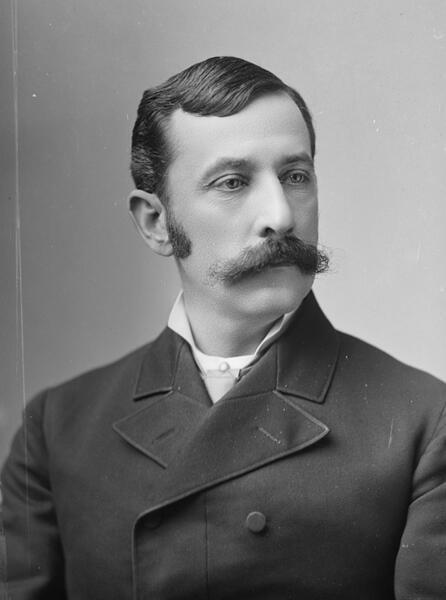
Here you will find contact information for Representative John Baptiste Weber, including email address, phone number, and mailing address.
| Name | John Baptiste Weber |
| Position | Representative |
| State | New York |
| District | 33 |
| Party | Republican |
| Status | Former Representative |
| Term Start | December 7, 1885 |
| Term End | March 3, 1889 |
| Terms Served | 2 |
| Born | September 21, 1842 |
| Gender | Male |
| Bioguide ID | W000236 |
About Representative John Baptiste Weber
John Baptiste Weber (September 21, 1842 – December 18, 1926) was a Republican member of the United States House of Representatives from New York who served two terms in Congress from 1885 to 1889. His public career spanned service as a Civil War officer, local and federal officeholder, and the first Commissioner of Immigration at the port of New York, where he played a notable role in the early history of Ellis Island.
Weber was born on September 21, 1842, at his parents’ cottage on Oak Street in Buffalo, New York. His parents, Philippe Jacob Weber and Mary Anne (Young) Weber, had emigrated to the United States from Leutenheim, in Alsace, France, in 1833 and settled in Buffalo. John was the youngest boy in a family of four children. He began attending Public School No. 4 at the age of four and later continued his studies at Central School of Buffalo. While still a youth he left formal schooling to work as an errand boy, contributing to the family’s support. In 1856, at the age of fourteen, he joined the New York State Militia, serving in Company F of the 65th Regiment as a color guard, an early indication of the military career he would pursue during the Civil War.
With the outbreak of the Civil War, Weber enlisted as a private in the Forty-fourth Regiment, New York Volunteer Infantry, on August 7, 1861. His rise through the ranks was rapid: he was promoted to corporal on August 30, 1861, and to sergeant on January 2, 1862. During the Peninsula Campaign, at the Battle of Yorktown on April 3, 1862, he was promoted from sergeant of Company A to sergeant major. He later received a commission as a lieutenant in the regiment and was promoted to first lieutenant and appointed adjutant by Colonel Stephen W. Chapin. In this capacity he assisted in recruiting for the newly formed One Hundred and Sixteenth New York Regiment in the summer of 1862, helping to organize additional forces for the Union war effort.
On September 19, 1863, two days before his twenty-first birthday, Weber attained the rank of colonel when he accepted command of the Eighty-ninth United States Colored Infantry. He chose this appointment to a colored regiment over an offered commission in a Massachusetts regiment. The 89th Regiment was organized at Port Hudson, Louisiana, between October 8 and November 9, 1863, and was initially designated the 18th Infantry, Corps d’Afrique. Early in 1864, during the Red River Campaign, most of his men were reassigned, leaving him with only a small detachment. He was promised replacements from enslaved people expected to be liberated during the campaign, but these reinforcements never materialized, and he learned from a member of General Nathaniel P. Banks’s staff that his unit was to be consolidated. Rather than await discharge in that fashion, Weber tendered his resignation and returned to Buffalo, arriving home on July 8, 1864. The war ended before he received another command, and his grave would later be marked with the inscription “Colonel 89th U.S. Infantry,” reflecting the rank and regiment with which he was most closely associated.
Following the war, Weber became active in Republican politics in Buffalo and Erie County. He helped organize the Republican Third Ward “Grant Club” and served as its president in 1867, supporting the presidential candidacy of General Ulysses S. Grant in the 1868 election. In local party affairs, he worked to reform the rules governing the election of county committeemen, promoting changes that gave voters a greater voice in selecting candidates for these offices. He entered public administration as assistant postmaster of Buffalo, serving from 1871 to 1873, and then was elected sheriff of Erie County, holding that office from 1874 to 1876. After his term as sheriff, he engaged in the wholesale grocery business in Buffalo, combining commercial pursuits with continued political involvement.
Weber’s congressional career began with his nomination at the Republican convention for New York’s Thirty-third Congressional District, held at Niagara Falls, New York, on September 3, 1884, where he secured the candidacy by a vote of 10 to 8. He was elected as a Republican to the Forty-ninth and Fiftieth Congresses and served in the U.S. House of Representatives from March 4, 1885, to March 3, 1889. During these two terms he represented his New York constituents in the House of Representatives and contributed to the legislative process at a time of significant economic and political change in the post–Civil War United States. A member of the Republican Party, he participated in the democratic process and advocated for the interests of his district. He sought reelection in 1888 to the Fifty-first Congress but was unsuccessful. In the same year, 1888, he served as a delegate to the Republican National Convention in Chicago, reflecting his standing within the party at both the local and national levels.
After leaving Congress, Weber continued to hold important public positions. He was appointed Grade-Crossing Commissioner of the city of Buffalo in 1888, a post he held for two decades until 1908, overseeing efforts to improve public safety and manage the interaction of rail and street traffic during a period of rapid urban and industrial growth. In 1890, he was appointed the first Commissioner of Immigration at the port of New York, a newly significant federal role as immigration increasingly came under national regulation. On January 1, 1892, the opening day of the federal immigration station at Ellis Island, he personally welcomed the first immigrant processed there, 17-year-old Annie Moore of Ireland, to whom he presented a $10 gold Liberty coin in commemoration. He served as Commissioner of Immigration until 1893. Later, he was named commissioner general of the Pan-American Exposition held in Buffalo in 1901, contributing to the organization of the international fair that showcased the economic and cultural ties of the Western Hemisphere.
John Baptiste Weber spent his later years in the Buffalo area. He died at his home on Abbott Road in Lackawanna, New York, on December 18, 1926, at the age of 84. He was interred in Forest Lawn Cemetery in Buffalo, where his grave marker bears the inscription “Colonel 89th U.S. Infantry,” underscoring his Civil War service and command of the Eighty-ninth United States Colored Infantry. In recognition of his military and civic contributions, a local Veterans of Foreign Wars post in Lackawanna was named in his honor, preserving his name in the community where he had lived and served.